Division of Vector-Borne Diseases, National Center for Emerging Zoonotic Infectious Diseases, Centers for Disease Control and Prevention, Fort Collins, CO, USA.
Division of Vector-Borne Diseases, National Center for Emerging Zoonotic Infectious Diseases, Centers for Disease Control and Prevention, Fort Collins, CO, USA.
Trends Parasitol. 2018 Apr;34(4):295-309. doi: 10.1016/j.pt.2017.12.006. Epub 2018 Jan 11.
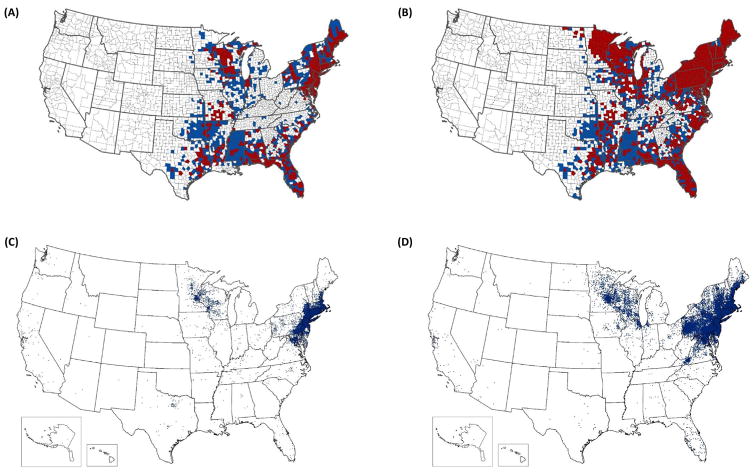
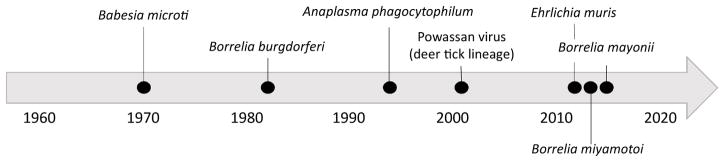
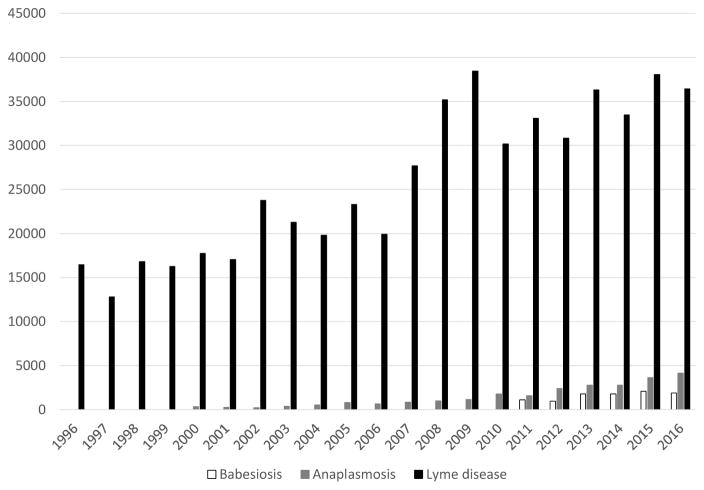
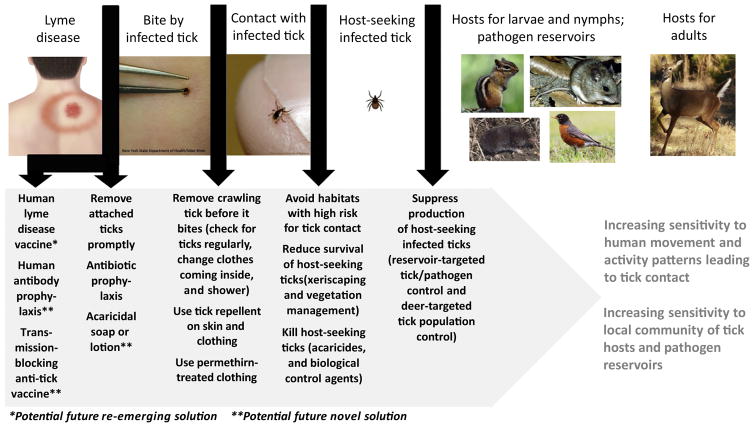
In the United States, the blacklegged tick, Ixodes scapularis, is a vector of seven human pathogens, including those causing Lyme disease, anaplasmosis, babesiosis, Borrelia miyamotoi disease, Powassan virus disease, and ehrlichiosis associated with Ehrlichia muris eauclarensis. In addition to an accelerated rate of discovery of I. scapularis-borne pathogens over the past two decades, the geographic range of the tick, and incidence and range of I. scapularis-borne disease cases, have increased. Despite knowledge of when and where humans are most at risk of exposure to infected ticks, control of I. scapularis-borne diseases remains a challenge. Human vaccines are not available, and we lack solid evidence for other prevention and control methods to reduce human disease. The way forward is discussed.
在美国,黑腿蜱(Ixodes scapularis)是七种人类病原体的载体,包括导致莱姆病、无形体病、巴贝斯虫病、伯氏疏螺旋体病、波瓦桑病毒病和埃立克体病(与埃立希体属鼠埃立克体相关)的病原体。除了在过去二十年中发现黑腿蜱携带的病原体的速度加快之外,蜱的地理范围、蜱携带疾病的发病率和范围都有所增加。尽管我们了解人类何时何地最容易接触到感染的蜱,但控制黑腿蜱携带的疾病仍然是一个挑战。目前还没有针对这些疾病的人类疫苗,我们也缺乏其他预防和控制方法的有力证据,以减少人类疾病。本文讨论了前进的方向。