Centre for Molecular and Biomolecular Informatics (CMBI), Radboud University Medical Center (RadboudUMC), Nijmegen, The Netherlands.
Division of Medicinal Chemistry, Faculty of Science, Amsterdam Institute for Molecules, Medicines and Systems (AIMMS), Vrije Universiteit Amsterdam, Amsterdam, The Netherlands.
ChemMedChem. 2018 Mar 20;13(6):614-626. doi: 10.1002/cmdc.201700754. Epub 2018 Feb 14.
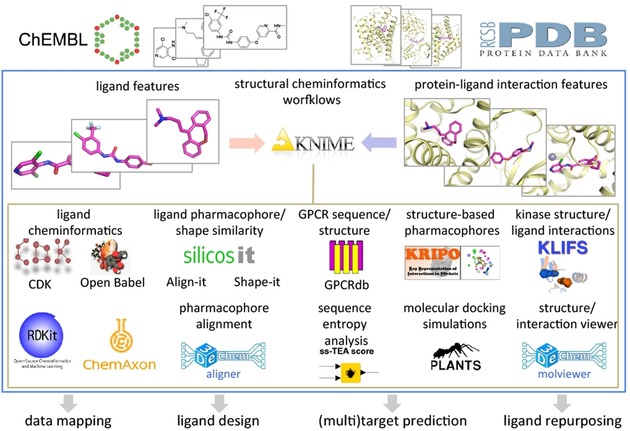
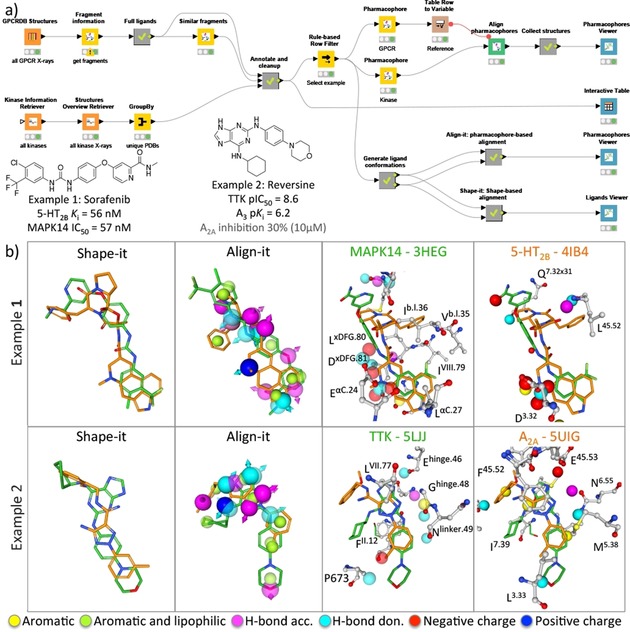
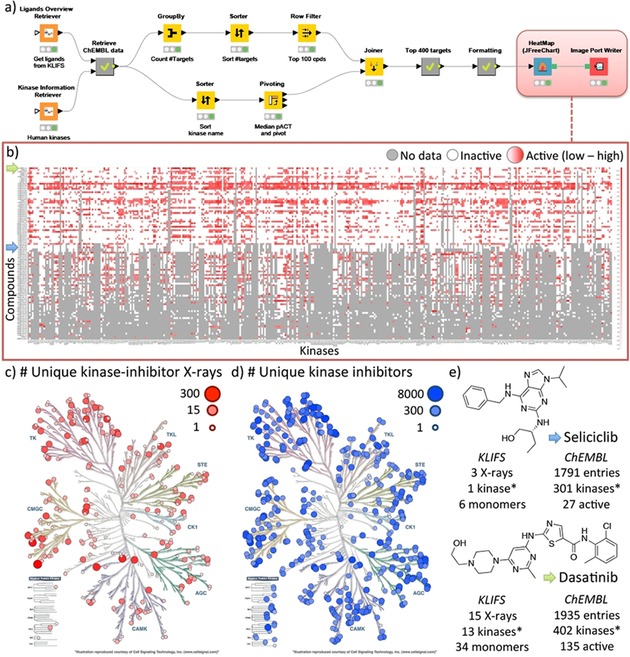
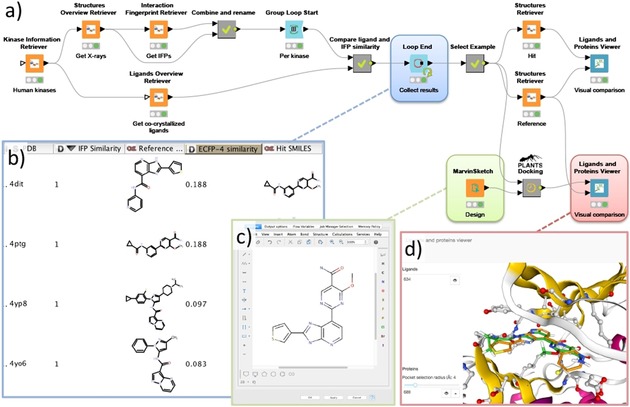
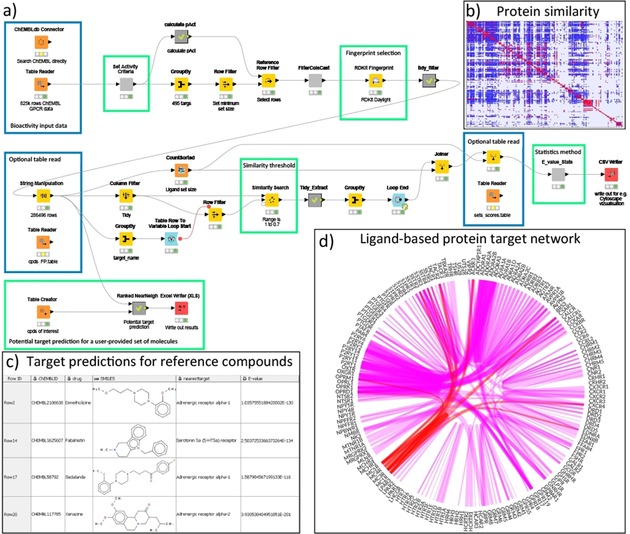
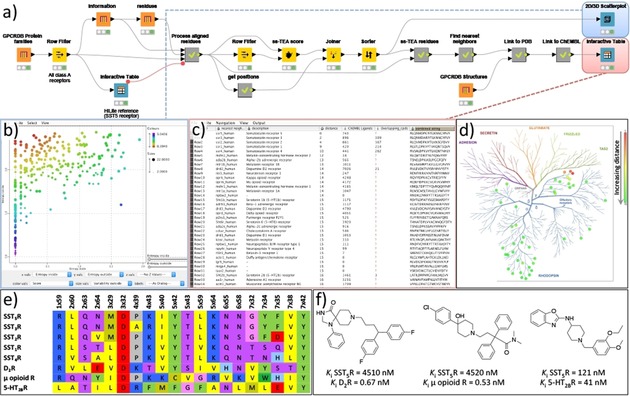
eScience technologies are needed to process the information available in many heterogeneous types of protein-ligand interaction data and to capture these data into models that enable the design of efficacious and safe medicines. Here we present scientific KNIME tools and workflows that enable the integration of chemical, pharmacological, and structural information for: i) structure-based bioactivity data mapping, ii) structure-based identification of scaffold replacement strategies for ligand design, iii) ligand-based target prediction, iv) protein sequence-based binding site identification and ligand repurposing, and v) structure-based pharmacophore comparison for ligand repurposing across protein families. The modular setup of the workflows and the use of well-established standards allows the re-use of these protocols and facilitates the design of customized computer-aided drug discovery workflows.
需要 eScience 技术来处理许多不同类型的蛋白质-配体相互作用数据中的信息,并将这些数据捕获到能够设计有效和安全药物的模型中。在这里,我们展示了科学的 KNIME 工具和工作流程,这些工具和工作流程能够整合化学、药理学和结构信息,用于:i)基于结构的生物活性数据映射,ii)基于结构的配体设计支架替换策略的识别,iii)基于配体的靶标预测,iv)基于蛋白质序列的结合位点识别和配体再利用,以及 v)基于结构的药效团比较用于跨蛋白质家族的配体再利用。工作流程的模块化设置和广泛使用的标准允许这些协议的重复使用,并促进了定制计算机辅助药物发现工作流程的设计。