Division of Medicinal Chemistry, Amsterdam Institute for Molecules, Medicines and Systems (AIMMS), Vrije Universiteit Amsterdam, De Boelelaan 1108, 1081 HZ Amsterdam, The Netherlands.
Department of Neurosurgery, Amsterdam University Medical Centers, Cancer Center Amsterdam, Brain Tumor Center Amsterdam, De Boelelaan 1117, 1081 HV Amsterdam, The Netherlands.
Nucleic Acids Res. 2021 Jan 8;49(D1):D562-D569. doi: 10.1093/nar/gkaa895.
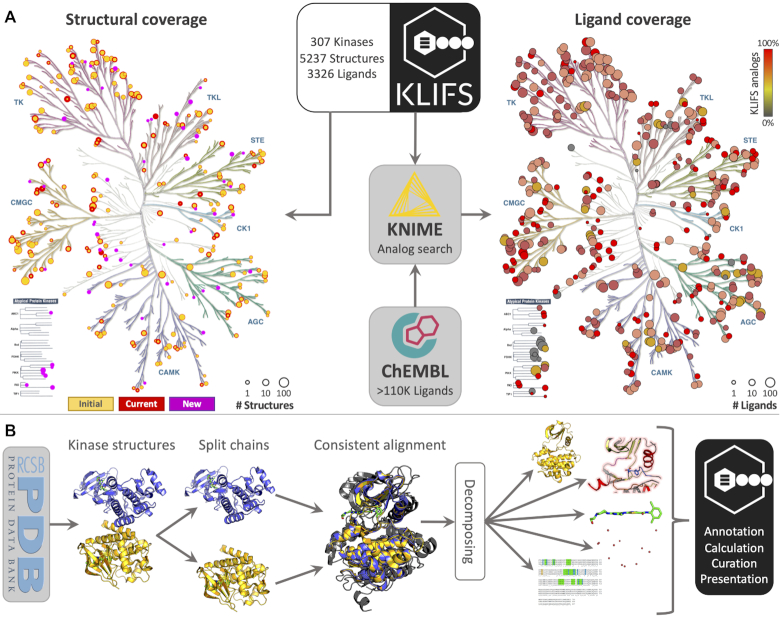
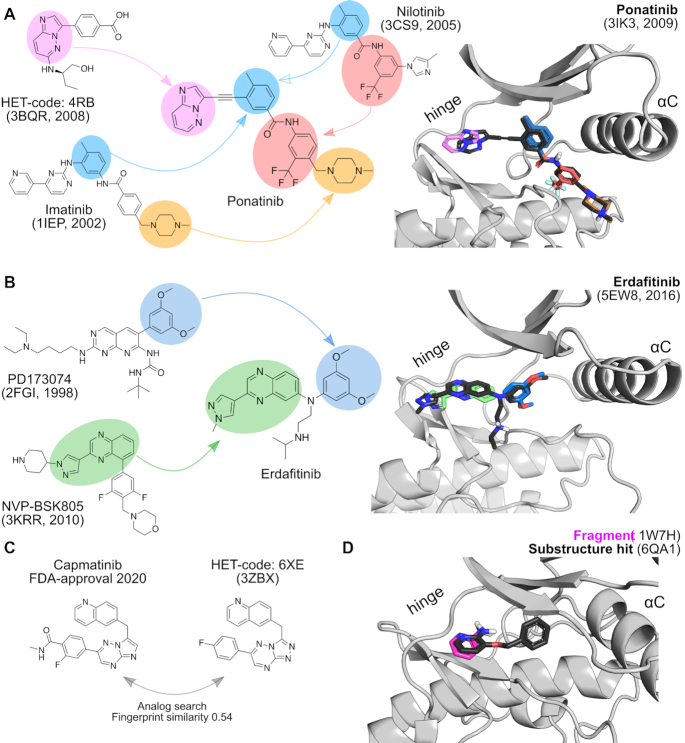
Kinases are a prime target of drug development efforts with >60 drug approvals in the past two decades. Due to the research into this protein family, a wealth of data has been accumulated that keeps on growing. KLIFS-Kinase-Ligand Interaction Fingerprints and Structures-is a structural database focusing on how kinase inhibitors interact with their targets. The aim of KLIFS is to support (structure-based) kinase research through the systematic collection, annotation, and processing of kinase structures. Now, 5 years after releasing the initial KLIFS website, the database has undergone a complete overhaul with a new website, new logo, and new functionalities. In this article, we start by looking back at how KLIFS has been used by the research community, followed by a description of the renewed KLIFS, and conclude with showcasing the functionalities of KLIFS. Major changes include the integration of approved drugs and inhibitors in clinical trials, extension of the coverage to atypical kinases, and a RESTful API for programmatic access. KLIFS is available at the new domain https://klifs.net.
激酶是药物开发的主要目标,在过去的二十年中,已有超过 60 种药物获得批准。由于对这个蛋白质家族的研究,积累了大量不断增长的数据。KLIFS-Kinase-Ligand Interaction Fingerprints and Structures-是一个专注于激酶抑制剂如何与其靶点相互作用的结构数据库。KLIFS 的目标是通过系统地收集、注释和处理激酶结构,来支持(基于结构的)激酶研究。现在,在发布初始 KLIFS 网站 5 年后,该数据库已经进行了全面检修,包括一个新网站、新标志和新功能。在本文中,我们首先回顾了研究社区如何使用 KLIFS,然后描述了更新后的 KLIFS,并展示了 KLIFS 的功能。主要变化包括整合了已批准的药物和临床试验中的抑制剂、将覆盖范围扩展到非典型激酶,以及用于编程访问的 RESTful API。KLIFS 可在新域 https://klifs.net 上使用。