Marczinski Cecile A, Stamates Amy L, Maloney Sarah F
Department of Psychological Science.
Exp Clin Psychopharmacol. 2018 Apr;26(2):147-155. doi: 10.1037/pha0000173. Epub 2018 Jan 15.
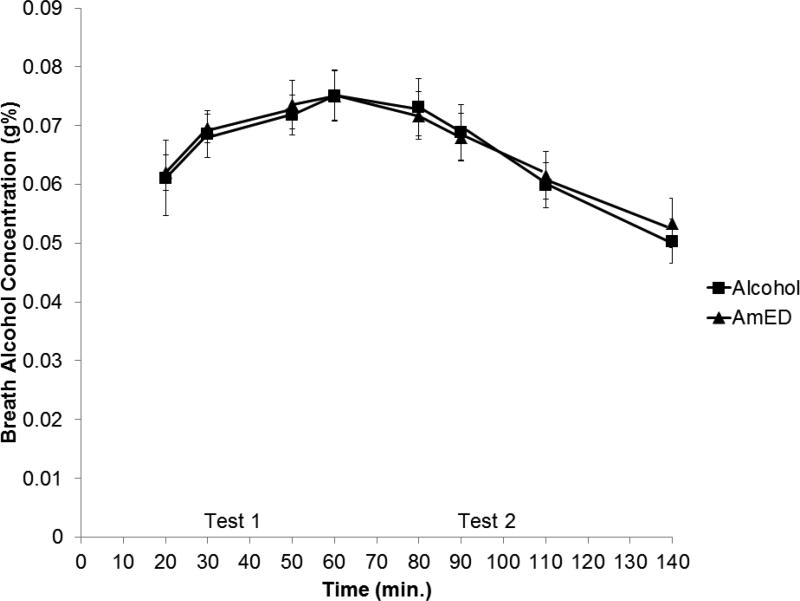
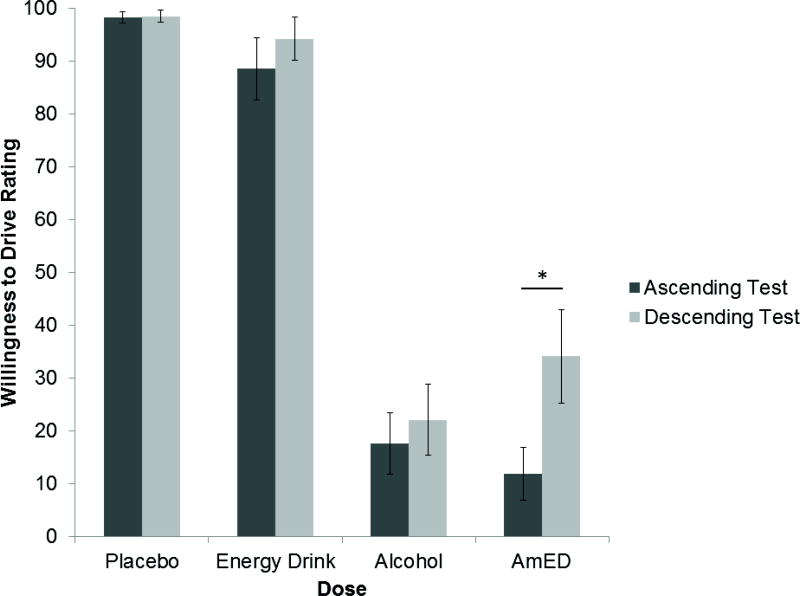
Consumers of alcohol mixed with energy drinks (AmED) are more likely to drive while impaired when compared to alcohol alone consumers. In addition, acute tolerance to the internal cues of feelings of intoxication is known to contribute to maladaptive decisions to drive while impaired. Therefore, the purpose of this study was to determine whether there is differential development of acute tolerance for AmED versus alcohol alone for ratings of willingness to drive after alcohol consumption. Social drinkers (n = 12) attended 4 separate sessions where they received alcohol and energy drinks, alone and in combination. The development of acute tolerance to alcohol was assessed for several objective (a computerized cued go/no-go reaction time task) and subjective measures at matched breath alcohol concentrations (BrACs) for the ascending and descending limbs of the BrAC curve. The results indicated that alcohol administration decreased willingness to drive ratings. Acute tolerance was observed in the AmED dose condition for only the willingness to drive ratings that were significantly higher on the descending versus ascending test. Alcohol-induced impairments of the computer task performance did not exhibit any acute tolerance. Therefore, the differential development of acute tolerance may explain why many studies observe higher rates of impaired driving for AmED consumers compared to alcohol alone consumers. Because drunk driving is a major public health concern, alcohol consumers should be warned that the use of energy drink mixers with alcohol could lead to a false sense of security in one's ability to drive after drinking. (PsycINFO Database Record
与只饮酒的消费者相比,饮用酒精与能量饮料混合饮品(AmED)的消费者在醉酒状态下更有可能驾车。此外,已知对醉酒感觉的内部线索产生急性耐受性会导致在醉酒状态下做出不良的驾车决定。因此,本研究的目的是确定对于饮酒后驾车意愿的评分,饮用AmED与只饮酒相比,急性耐受性的发展是否存在差异。社交饮酒者(n = 12)参加了4次单独的实验环节,在这些环节中他们分别单独或同时饮用了酒精和能量饮料。在匹配的呼气酒精浓度(BrAC)下,针对BrAC曲线的上升和下降阶段,通过几个客观指标(一个电脑提示的“去/不去”反应时间任务)和主观测量方法来评估对酒精急性耐受性的发展情况。结果表明,饮酒会降低驾车意愿评分。仅在AmED剂量条件下,对于下降测试与上升测试相比显著更高的驾车意愿评分观察到了急性耐受性。酒精引起的电脑任务表现损伤未表现出任何急性耐受性。因此,急性耐受性的差异发展可能解释了为什么许多研究观察到饮用AmED的消费者与只饮酒的消费者相比,有更高的醉酒驾车发生率。由于酒后驾车是一个主要的公共卫生问题,应该警告饮酒者,将能量饮料与酒精混合饮用可能会导致在饮酒后对自己的驾车能力产生错误的安全感。(PsycINFO数据库记录)