Department of Neuroscience, Istituto Superiore di Sanità, Viale Regina Elena 299, 00161, Rome, Italy.
Centre for Behavioural Sciences and Mental Health, Istituto Superiore di Sanità, Viale Regina Elena 299, 00161, Rome, Italy.
J Neuroinflammation. 2018 Jan 16;15(1):18. doi: 10.1186/s12974-017-1049-5.
It is debated whether multiple sclerosis (MS) might result from an immunopathological response toward an active Epstein-Barr virus (EBV) infection brought into the central nervous system (CNS) by immigrating B cells. Based on this model, a relationship should exist between the local immune milieu and EBV infection status in the MS brain. To test this hypothesis, we analyzed expression of viral and cellular genes in brain-infiltrating immune cells.
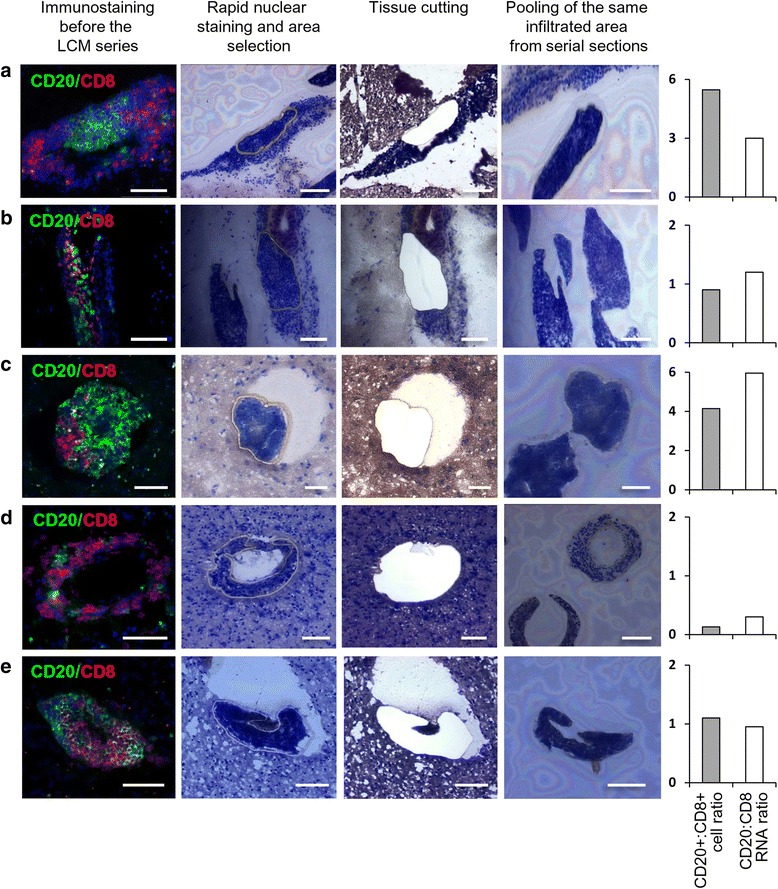
Twenty-three postmortem snap-frozen brain tissue blocks from 11 patients with progressive MS were selected based on good RNA quality and prominent immune cell infiltration. White matter perivascular and intrameningeal immune infiltrates, including B cell follicle-like structures, were isolated from brain sections using laser capture microdissection. Enhanced PCR-based methods were used to investigate expression of 75 immune-related genes and 6 EBV genes associated with latent and lytic infection. Data were analyzed using univariate and multivariate statistical methods.
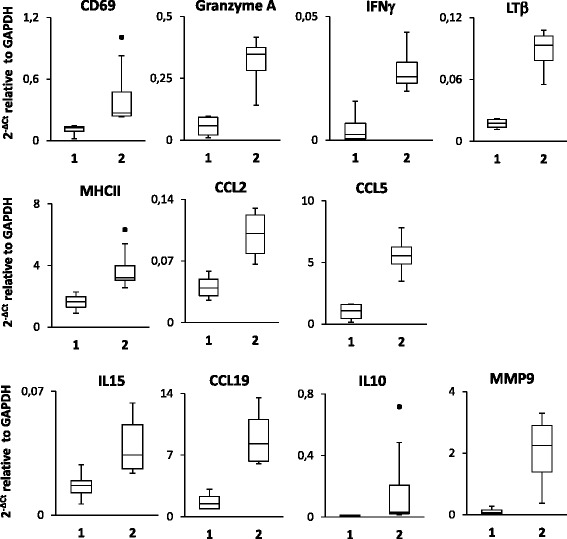
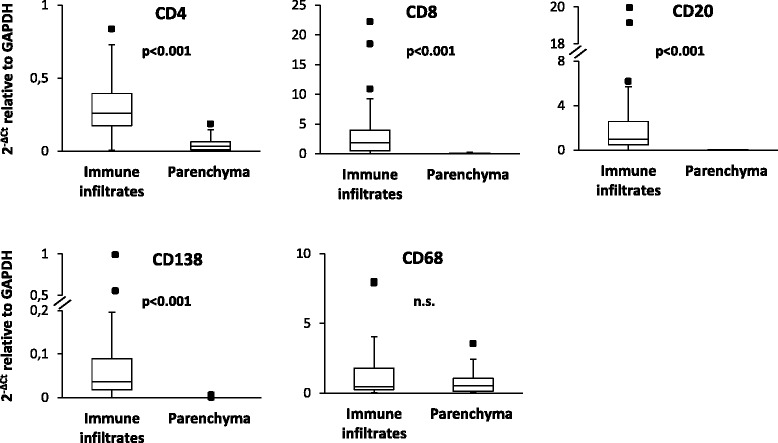
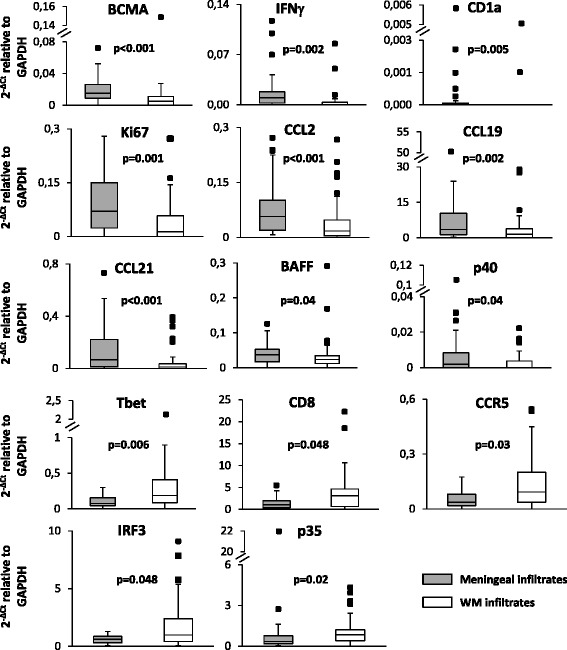
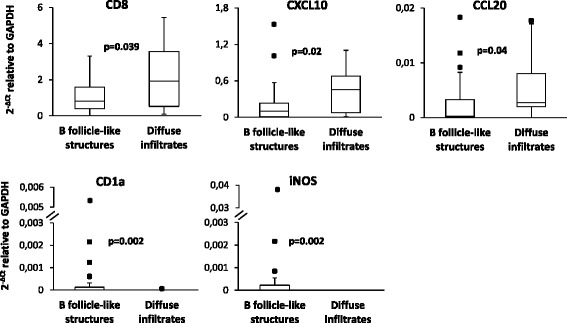
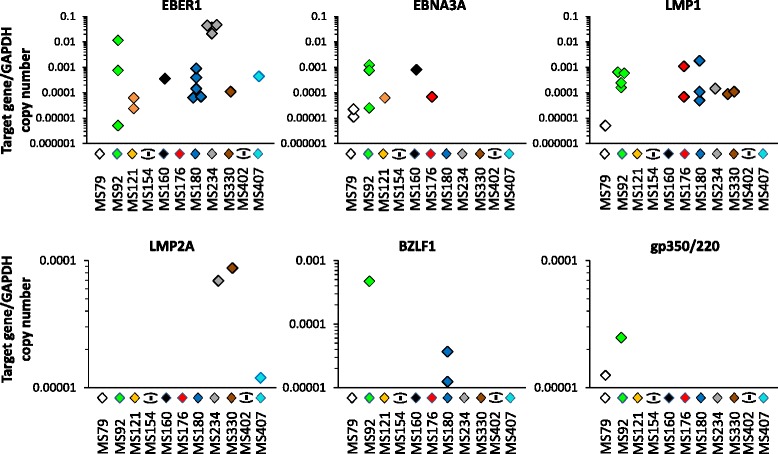
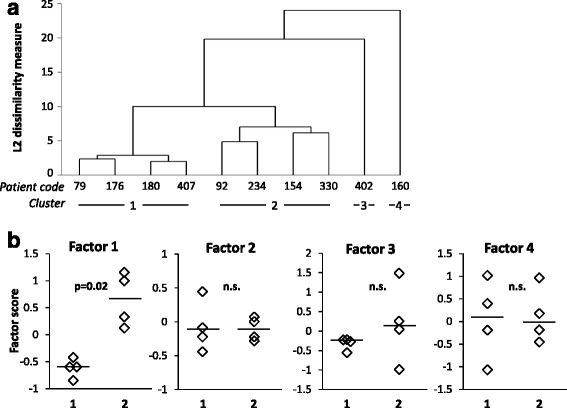
Genes related to T cell activation, cytotoxic cell-mediated (or type 1) immunity, B cell growth and differentiation, pathogen recognition, myeloid cell function, type I interferon pathway activation, and leukocyte recruitment were found expressed at different levels in most or all MS brain immune infiltrates. EBV genes were detected in brain samples from 9 of 11 MS patients with expression patterns suggestive of in situ activation of latent infection and, less frequently, entry into the lytic cycle. Comparison of data obtained in meningeal and white matter infiltrates revealed higher expression of genes related to interferonγ production, B cell differentiation, cell proliferation, lipid antigen presentation, and T cell and myeloid cell recruitment, as well as more widespread EBV infection in the meningeal samples. Multivariate analysis grouped genes expressed in meningeal and white matter immune infiltrates into artificial factors that were characterized primarily by genes involved in type 1 immunity effector mechanisms and type I interferon pathway activation.
These results confirm profound in situ EBV deregulation and suggest orchestration of local antiviral function in the MS brain, lending support to a model of MS pathogenesis that involves EBV as possible antigenic stimulus of the persistent immune response in the central nervous system.
多发性硬化症(MS)是否可能是由于 B 细胞带入中枢神经系统(CNS)的活跃 Epstein-Barr 病毒(EBV)感染引起的免疫病理反应所致,这一点存在争议。基于这一模型,MS 大脑中的局部免疫环境与 EBV 感染状态之间应该存在关系。为了检验这一假说,我们分析了脑浸润免疫细胞中的病毒和细胞基因的表达。
根据 RNA 质量好和明显的免疫细胞浸润,选择了 11 名进行性 MS 患者的 23 个冷冻脑组织块进行分析。使用激光捕获显微切割从脑切片中分离出血管周围和脑膜内免疫浸润物,包括 B 细胞滤泡样结构。使用增强的基于 PCR 的方法研究了 75 个与潜伏和裂解感染相关的免疫相关基因和 6 个 EBV 基因的表达。使用单变量和多变量统计方法分析数据。
在大多数或所有 MS 脑免疫浸润物中,发现与 T 细胞激活、细胞毒性细胞介导(或 1 型)免疫、B 细胞生长和分化、病原体识别、髓样细胞功能、I 型干扰素途径激活和白细胞募集相关的基因以不同水平表达。在 11 名 MS 患者的脑样本中检测到 EBV 基因,其表达模式提示潜伏感染的原位激活,以及较少见的进入裂解周期。脑膜和白质浸润物数据的比较显示,与干扰素γ产生、B 细胞分化、细胞增殖、脂质抗原呈递以及 T 细胞和髓样细胞募集相关的基因表达更高,脑膜样本中 EBV 感染更为广泛。多变量分析将脑膜和白质免疫浸润物中表达的基因分为人工因素,这些因素主要由 1 型免疫效应机制和 I 型干扰素途径激活相关的基因组成。
这些结果证实了 EBV 的深刻原位失调,并提示 MS 大脑中存在局部抗病毒功能的协调,支持了一种 MS 发病机制模型,该模型涉及 EBV 作为中枢神经系统持续免疫反应的可能抗原刺激物。