College of Biological and Environmental Sciences, Zhejiang Wanli University, Ningbo, 315100, People's Republic of China.
Sci Rep. 2018 Jan 16;8(1):806. doi: 10.1038/s41598-018-19363-5.
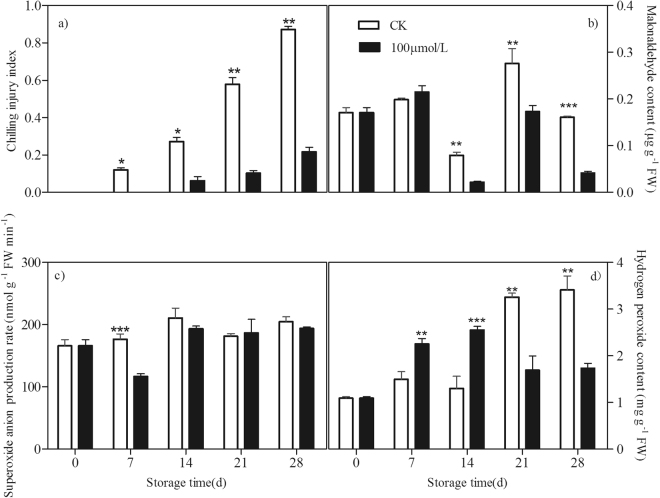
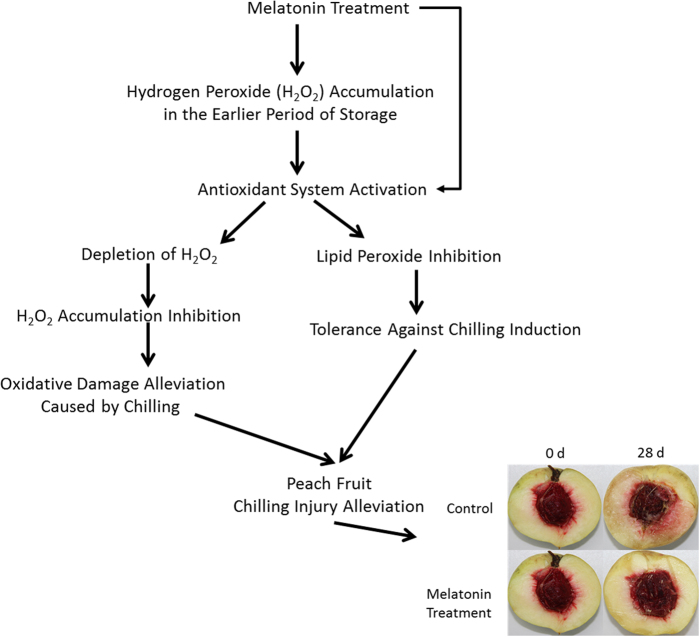
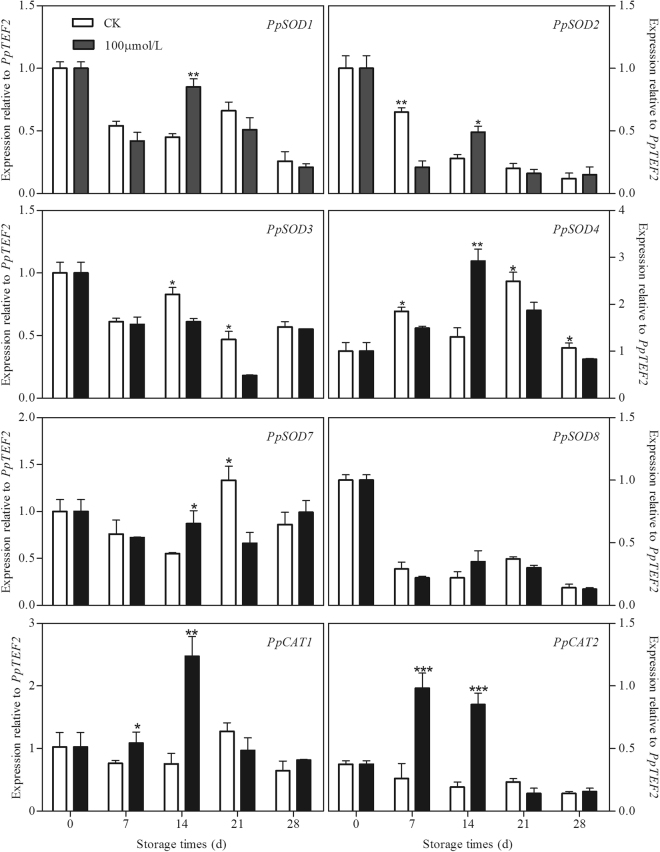
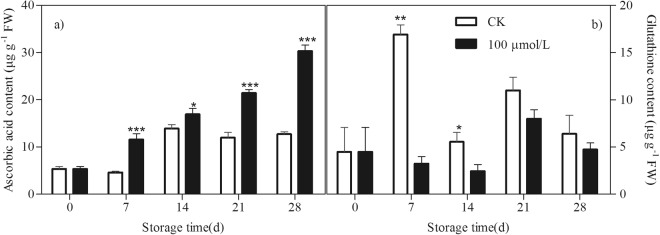
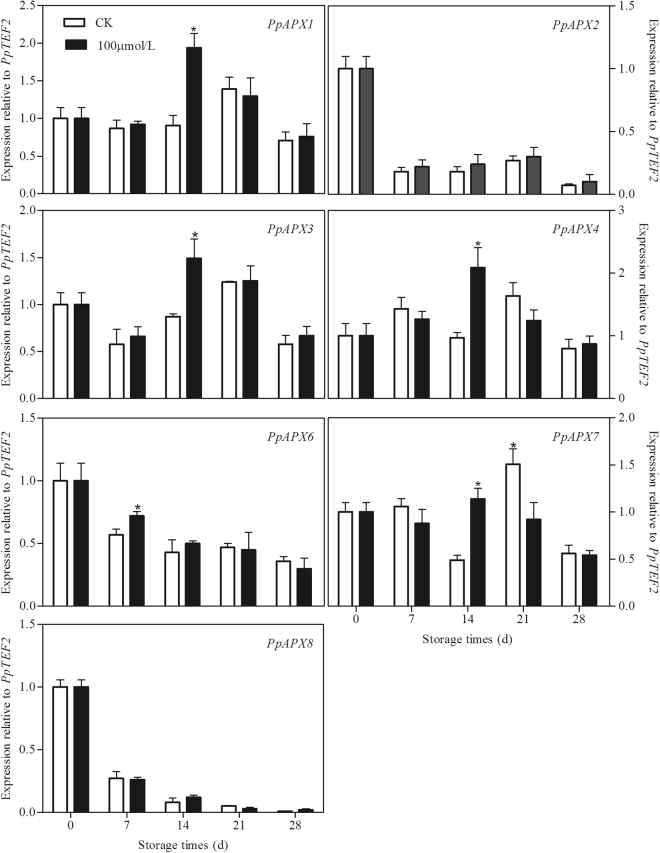
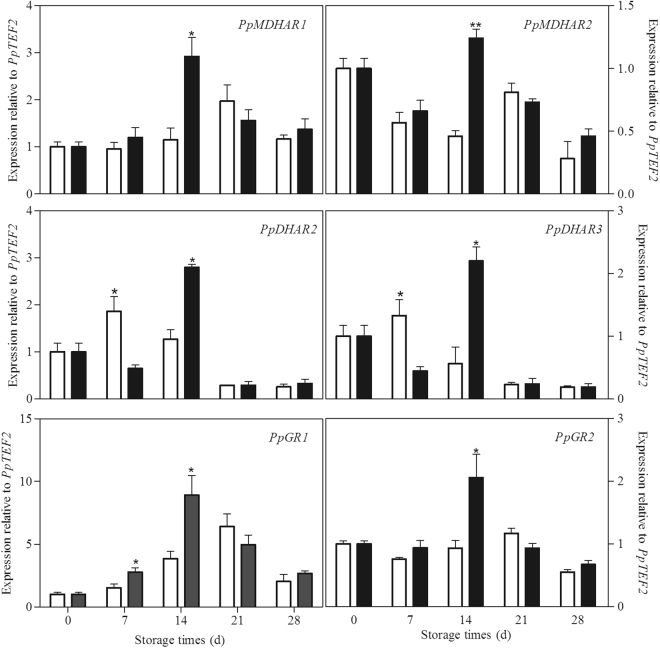
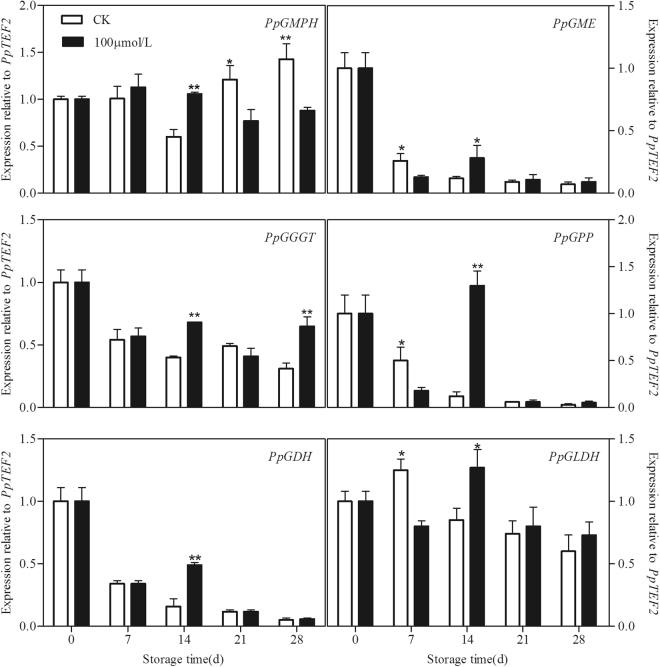
Melatonin has been reported to alleviate chilling symptoms in postharvest peach fruit during cold storage, however, the mechanism involved is largely unknown. To better understand its role in chilling tolerance, here we investigated the effects of melatonin on oxidative damage in peach fruit subjected to chilling after harvest. Chilling injury of peaches was dramatically reduced by melatonin treatment. Melatonin induced hydrogen peroxide (HO) content at the early stage of storage but inhibited its accumulation thereafter. Meanwhile, melatonin also up-regulated the expression of genes involved in antioxidant responses in peaches. In addition, compared to the control fruit, peaches treated with melatonin displayed higher transcript abundance of ascorbic acid (AsA) biosynthetic genes and consequently increased the AsA content. Our results suggested that in response to melatonin during chilling, the high HO level in the treated peaches at the initial time of storage, may work as a signaling molecule to induce protective mechanisms via up-regulating the expression of antioxidative genes and increasing AsA content. On the other hand, after the transient increase in the treated peaches, HO was efficiently removed because of the activated antioxidant systems, which was associated with the higher chilling tolerance induced by melatonin.
褪黑素已被报道可减轻冷藏过程中采后桃果实的冷害症状,但其中涉及的机制在很大程度上尚不清楚。为了更好地理解褪黑素在耐冷性中的作用,我们研究了褪黑素对采后冷藏桃果实中氧化损伤的影响。褪黑素处理显著降低了桃果实的冷害。褪黑素诱导了贮藏早期的过氧化氢(H2O2)含量,但此后抑制了其积累。同时,褪黑素还上调了桃果实抗氧化反应相关基因的表达。此外,与对照果实相比,用褪黑素处理的桃果实表现出更高的抗坏血酸(AsA)生物合成基因的转录丰度,从而增加了 AsA 含量。我们的结果表明,在冷藏过程中对褪黑素的反应中,处理过的桃果实中在储存初期的高 H2O2 水平可能作为信号分子通过上调抗氧化基因的表达和增加 AsA 含量来诱导保护机制。另一方面,在处理过的桃果实中短暂增加后,由于激活了抗氧化系统,H2O2 被有效去除,这与褪黑素诱导的更高耐冷性有关。