Xie Da, Zheng Gui-Zhou, Xie Peng, Zhang Qi-Hao, Lin Fei-Xiang, Chang Bo, Hu Qin-Xiao, Du Shi-Xin, Li Xue-Dong
Department of Orthopedics, The Third Affiliated Hospital (The Affiliated Luohu Hospital) of Shenzhen University, Shenzhen 518000, Guangdong, P. R. China.
Oncotarget. 2017 Nov 30;8(67):111419-111432. doi: 10.18632/oncotarget.22810. eCollection 2017 Dec 19.
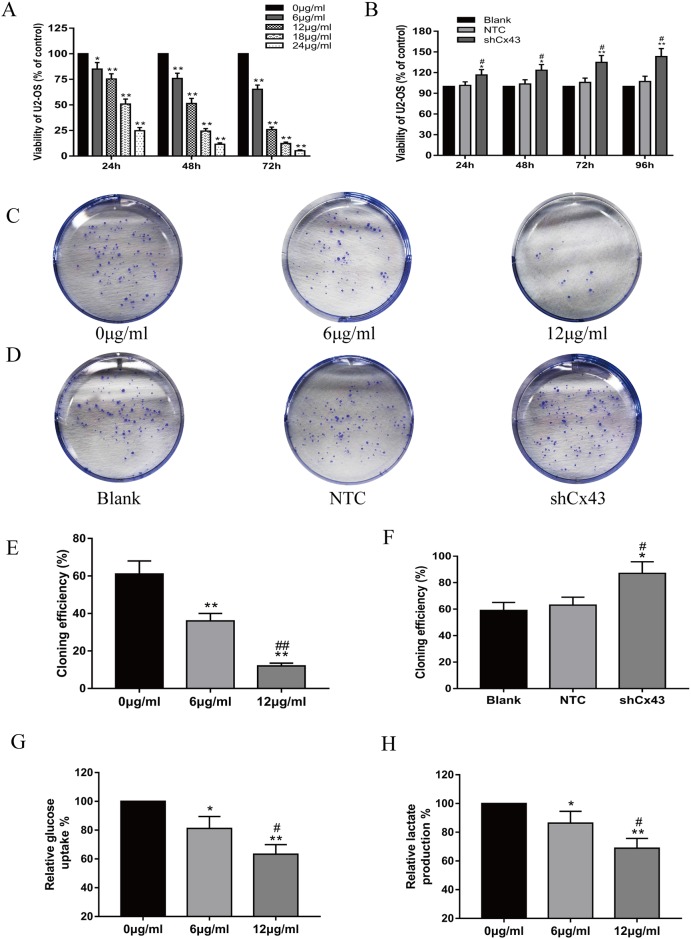
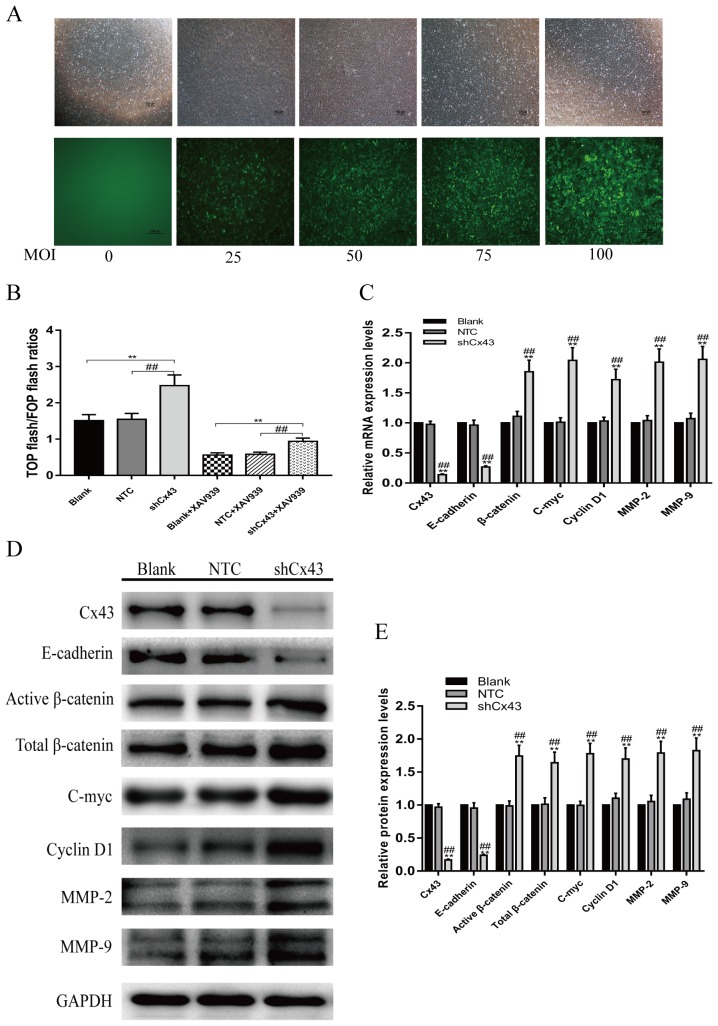
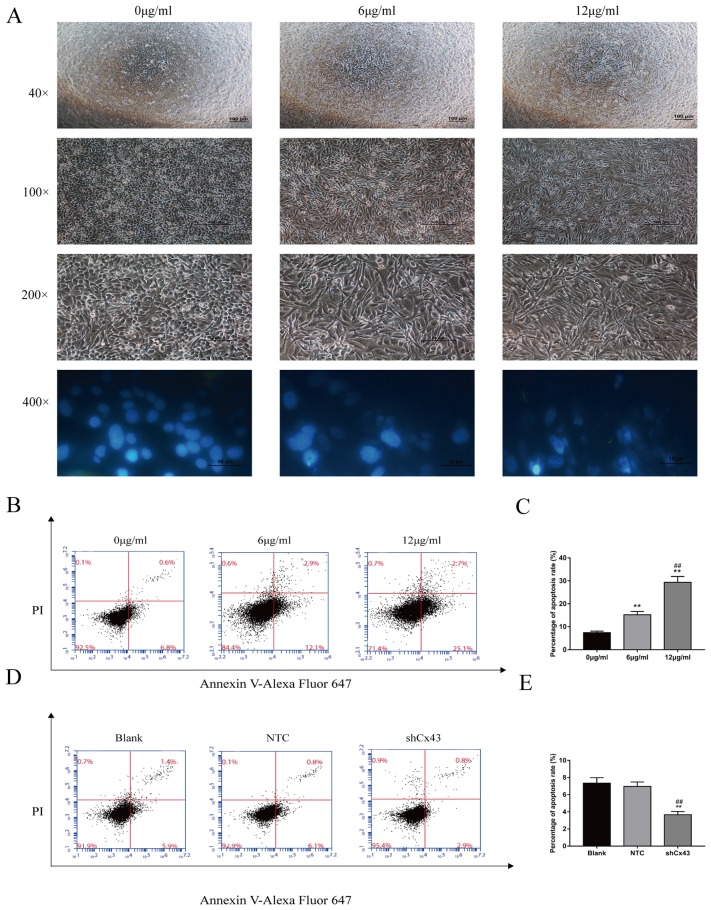
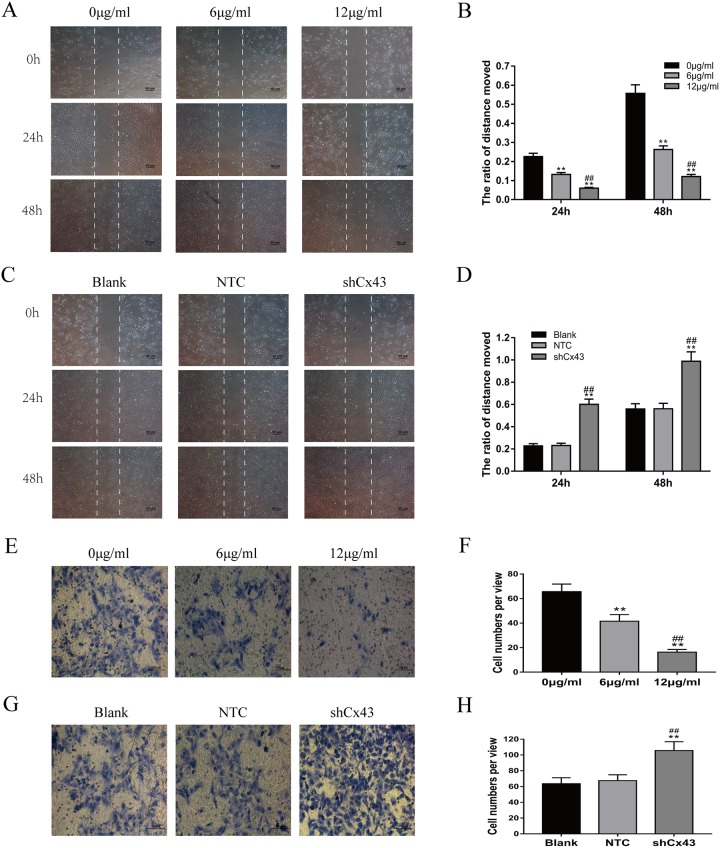
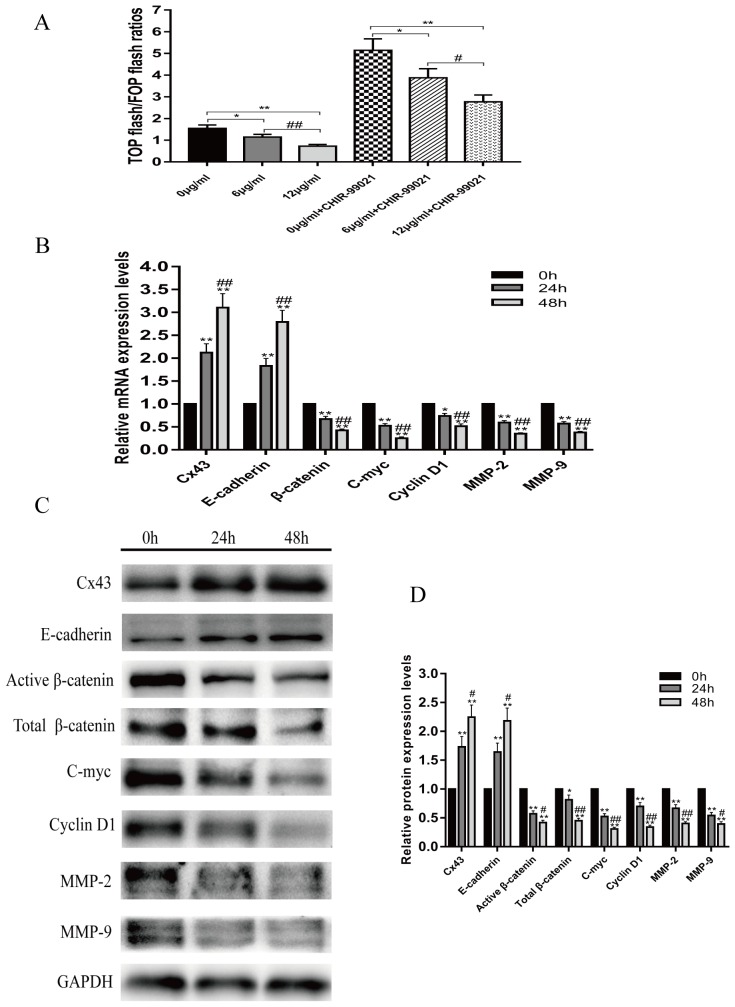
Osteosarcoma is a high-grade bone sarcoma with strong invasive ability. However, treatment with traditional chemotherapeutic drugs is limited by low tolerability and side effects. Resveratrol has been reported previously to have selective antitumor effect on various tumor cells while little is known about its effects and underlying mechanism in osteosarcoma biology. In this study, we found that resveratrol inhibits proliferation and glycolysis, induces apoptosis and reduces the invasiveness of U2-OS cells . After treatment with resveratrol, the expression of related Wnt/β-catenin signaling pathway target genes, such as β-catenin, c-myc, cyclin D1, MMP-2 and MMP-9, was downregulated and an increased E-cadherin level was observed as well. Additionally, the dual luciferase assay results also indicated that resveratrol suppressed the activity of Wnt/β-catenin signaling pathway. Interestingly, we noticed that the expression of connexin 43 (Cx43) increased with the prolongation of resveratrol treatment time. To further investigate the relationship between Cx43 and the Wnt/β-catenin signaling pathway in osteosarcoma, we used lentiviral-mediated shRNA to knockdown the expression of Cx43. Knockdown of Cx43 activated the Wnt/β-catenin signaling pathway, promoted proliferation and invasion, and inhibited apoptosis of U2-OS cells. Taken together, our results demonstrate that the antitumor activity of resveratrol against U2-OS cells occurs through up-regulating Cx43 and E-cadherin, and suppressing the Wnt/β-catenin signaling pathway. Moreover, Cx43 expression is negatively related to the activity of the Wnt/β-catenin pathway in U2-OS cells.
骨肉瘤是一种具有强侵袭能力的高级别骨肉瘤。然而,传统化疗药物的治疗受到低耐受性和副作用的限制。先前有报道称白藜芦醇对各种肿瘤细胞具有选择性抗肿瘤作用,但关于其在骨肉瘤生物学中的作用及潜在机制知之甚少。在本研究中,我们发现白藜芦醇抑制U2-OS细胞的增殖和糖酵解,诱导细胞凋亡并降低其侵袭性。用白藜芦醇处理后,β-连环蛋白、c-myc、细胞周期蛋白D1、基质金属蛋白酶-2和基质金属蛋白酶-9等相关Wnt/β-连环蛋白信号通路靶基因的表达下调,同时观察到E-钙黏蛋白水平升高。此外,双荧光素酶测定结果还表明白藜芦醇抑制了Wnt/β-连环蛋白信号通路的活性。有趣的是,我们注意到随着白藜芦醇处理时间的延长,连接蛋白43(Cx43)的表达增加。为了进一步研究骨肉瘤中Cx43与Wnt/β-连环蛋白信号通路之间的关系,我们使用慢病毒介导的短发夹RNA来敲低Cx43的表达。敲低Cx43激活了Wnt/β-连环蛋白信号通路,促进了U2-OS细胞的增殖和侵袭,并抑制了其凋亡。综上所述,我们的结果表明白藜芦醇对U2-OS细胞的抗肿瘤活性是通过上调Cx43和E-钙黏蛋白,并抑制Wnt/β-连环蛋白信号通路实现的。此外,U2-OS细胞中Cx43的表达与Wnt/β-连环蛋白通路的活性呈负相关。