Canamary Aristófanes Mendonça, Takahashi Walter Yukihiko, Sallum Juliana Maria Ferraz
Federal University of São Paulo, Rua Botucatu 821, Vila Clementino, São Paulo, SP CEP: 04023-062 Brazil.
Medical School of University of São Paulo, Avenida São Gualter 99, Alto Pinheiros, São Paulo, SP CEP:05455-000 Brazil.
Int J Retina Vitreous. 2018 Jan 3;4:1. doi: 10.1186/s40942-017-0104-9. eCollection 2018.
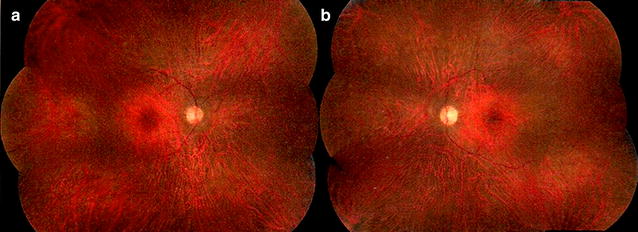
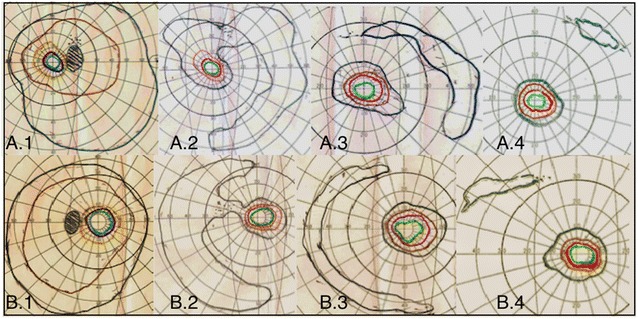
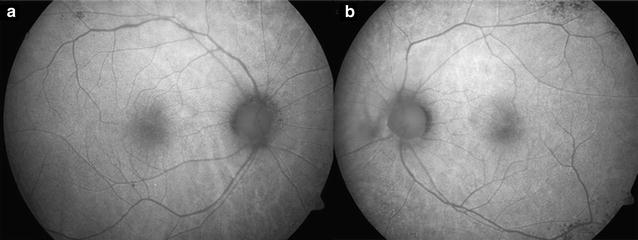
Autoimmune retinopathy (AIR) is a rare and still poorly understood immune-mediated disease that may cause inflammation from circulating autoantibodies against the retina. It may be related to history of autoimmune disease in the patient or in a family member or the presence of neoplastic disease in the individual. The disease may be subdivided into paraneoplastic and non-paraneoplastic AIR. When related to melanoma, it is referred to as MAR, and when related to other cancers, it is called CAR. The exact prevalence of AIR is unknown. It mainly affects older adults. Patients present with bilateral and asymmetric scotomas, photopsias, visual field defects, with rapidly progressive visual loss in late onset. In the initial stage, fundus examination is unremarkable, and in late stages, there is limited retinal epitheliopathy and vascular attenuation, with or without optic disc pallor, associated or not with intraocular inflammation and with no evidence of degenerative retinal disease. A clinical investigation with detailed anamnesis and laboratory tests should be performed to search for an associated neoplasm. Ophthalmologic and complementary examinations such as full-field electroretinogram, optical coherence tomography, visual field and fundus autofluorescence, help the diagnosis. Blood tests to search for autoantibodies should be requested. Management consists of prolonged immunosuppression, which may be combined with antioxidant vitamins. In general, the prognosis is uncertain, so the disease still needs to be better understood. More studies should be performed to improve diagnostic measures and define specific management that could preserve or even restore vision.
自身免疫性视网膜病变(AIR)是一种罕见且仍未被充分了解的免疫介导性疾病,可能由针对视网膜的循环自身抗体引发炎症。它可能与患者本人或家庭成员的自身免疫性疾病史有关,或者与个体存在肿瘤性疾病有关。该疾病可细分为副肿瘤性和非副肿瘤性AIR。与黑色素瘤相关时,称为MAR;与其他癌症相关时,称为CAR。AIR的确切患病率尚不清楚。它主要影响老年人。患者表现为双侧不对称性暗点、闪光感、视野缺损,起病较晚时视力迅速下降。在疾病初期,眼底检查无明显异常;在晚期,存在局限性视网膜上皮病变和血管变细,伴有或不伴有视盘苍白,可伴有或不伴有眼内炎症,且无视网膜退行性疾病的证据。应进行详细病史询问和实验室检查的临床调查,以寻找相关肿瘤。眼科及辅助检查,如全视野视网膜电图、光学相干断层扫描、视野检查和眼底自发荧光检查,有助于诊断。应进行血液检查以寻找自身抗体。治疗包括长期免疫抑制,可联合抗氧化维生素。总体而言,预后不确定,因此该疾病仍需进一步深入了解。应开展更多研究以改进诊断方法,并确定能够保护甚至恢复视力的具体治疗方案。