Otegbeye Folashade, Ojo Evelyn, Moreton Stephen, Mackowski Nathan, Lee Dean A, de Lima Marcos, Wald David N
Department of Medicine, Division of Hematology and Oncology, University Hospitals Cleveland Medical Center, Cleveland, Ohio, United States of America.
Case Western Reserve University, Cleveland, Ohio, United States of America.
PLoS One. 2018 Jan 17;13(1):e0191358. doi: 10.1371/journal.pone.0191358. eCollection 2018.
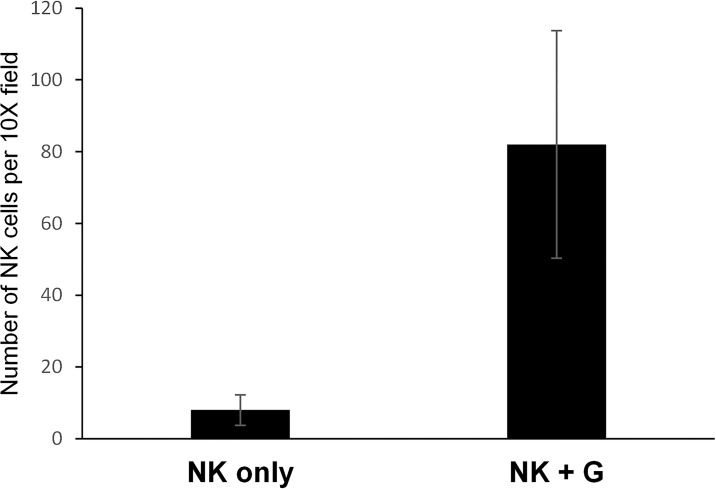
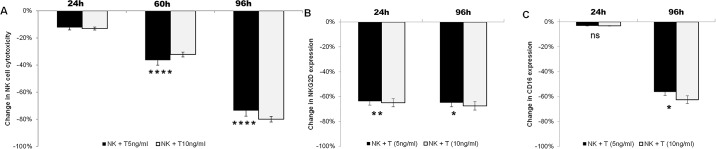
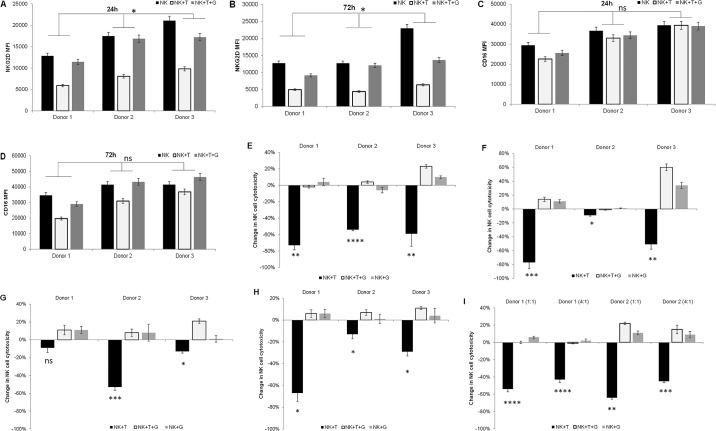
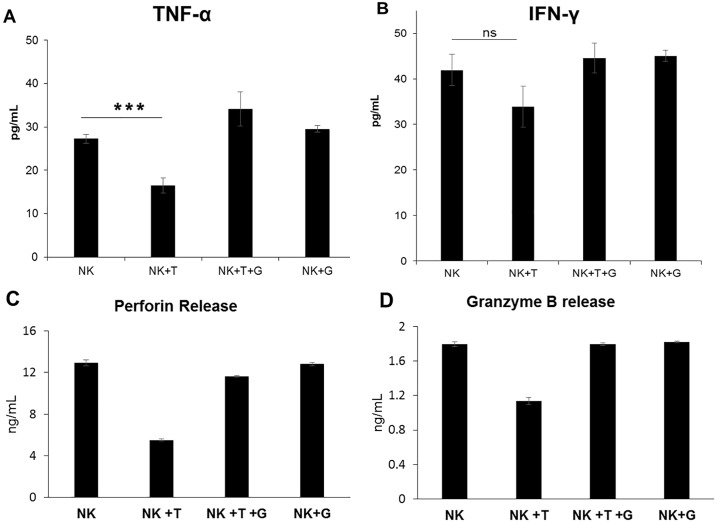
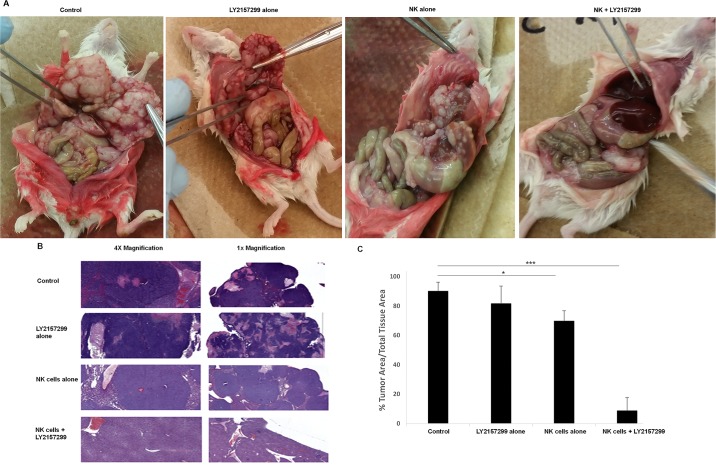
Natural killer cells harnessed from healthy individuals can be expanded ex vivo using various platforms to produce large doses for adoptive transfer into cancer patients. During such expansion, NK cells are increasingly activated and more efficient at killing cancer cells. Adoptive transfer however introduces these activated cells into a highly immunosuppressive tumor microenvironment mediated in part by excessive transforming growth factor beta (TGF-beta) from both cancer cells and their surrounding stroma. This microenvironment ultimately limits the clinical efficacy of NK cell therapy. In this study, we examined the use of a TGF-beta receptor kinase inhibitor, LY2157299, in preserving the cytotoxic function of ex vivo expanded, highly activated NK cells following sustained exposure to pathologic levels of TGF-beta in vitro and in a liver metastases model of colon cancer. Using myeloid leukemia and colon cancer cell lines, we show that the TGF-beta driven impairment of NK cell cytotoxicity is mitigated by LY2157299. We demonstrate this effect using quantitative cytotoxicity assays as well as by showing a preserved activated phenotype with high NKG2D/CD16 expression and enhanced cytokine production. In a mouse liver metastases model of colon cancer, we observed significantly improved eradication of liver metastases in mice treated with adoptive NK cells combined with LY2157299 compared with mice receiving NK cells or TGF beta inhibition alone. We propose that the therapeutic efficacy of adoptive NK cell therapy clinically will be markedly enhanced by complementary approaches targeting TGF-beta signaling in vivo.
从健康个体中获取的自然杀伤细胞可通过各种平台在体外进行扩增,以产生大剂量细胞用于过继转移给癌症患者。在这种扩增过程中,自然杀伤细胞被越来越多地激活,杀伤癌细胞的效率也更高。然而,过继转移会将这些激活的细胞引入高度免疫抑制的肿瘤微环境,部分是由癌细胞及其周围基质中过量的转化生长因子β(TGF-β)介导的。这种微环境最终限制了自然杀伤细胞疗法的临床疗效。在本研究中,我们研究了使用TGF-β受体激酶抑制剂LY2157299,以在体外和结肠癌肝转移模型中持续暴露于病理性水平的TGF-β后,保留体外扩增的、高度激活的自然杀伤细胞的细胞毒性功能。使用髓系白血病和结肠癌细胞系,我们发现LY2157299可减轻TGF-β驱动的自然杀伤细胞细胞毒性损伤。我们通过定量细胞毒性测定以及显示具有高NKG2D/CD16表达的保留激活表型和增强的细胞因子产生来证明这种效果。在结肠癌小鼠肝转移模型中,我们观察到与单独接受自然杀伤细胞或TGF-β抑制的小鼠相比,接受过继自然杀伤细胞联合LY2157299治疗的小鼠肝转移的清除率显著提高。我们提出,通过体内靶向TGF-β信号传导的互补方法,临床上过继自然杀伤细胞疗法的治疗效果将得到显著增强。