Chuang Shih-Yi, Lin Chih-Hung, Huang Tse-Hung, Fang Jia-You
Research Center for Food and Cosmetic Safety and Research Center for Chinese Herbal Medicine, Chang Gung University of Science and Technology, Kweishan, Taoyuan 333, Taiwan.
Center for General Education, Chang Gung University of Science and Technology, Kweishan, Taoyuan 333, Taiwan.
Nanomaterials (Basel). 2018 Jan 15;8(1):42. doi: 10.3390/nano8010042.
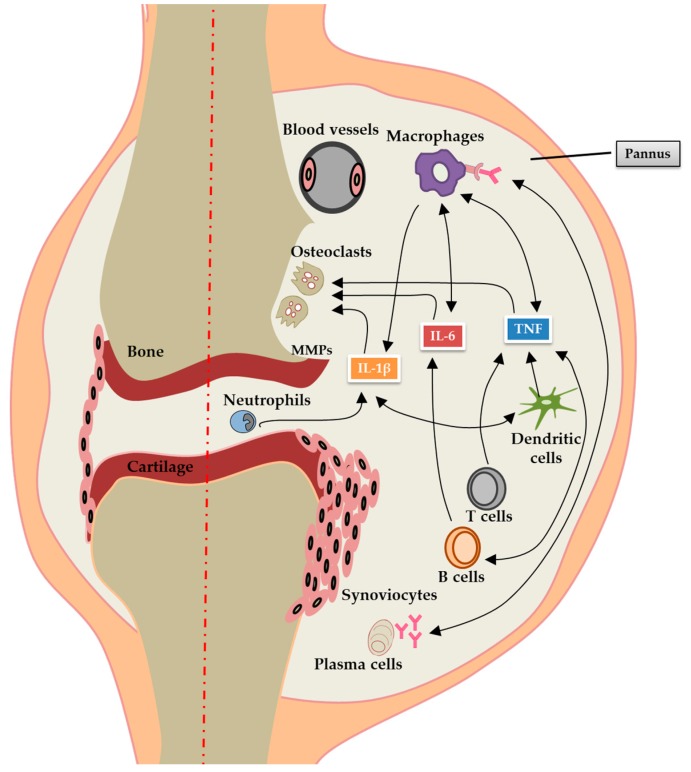
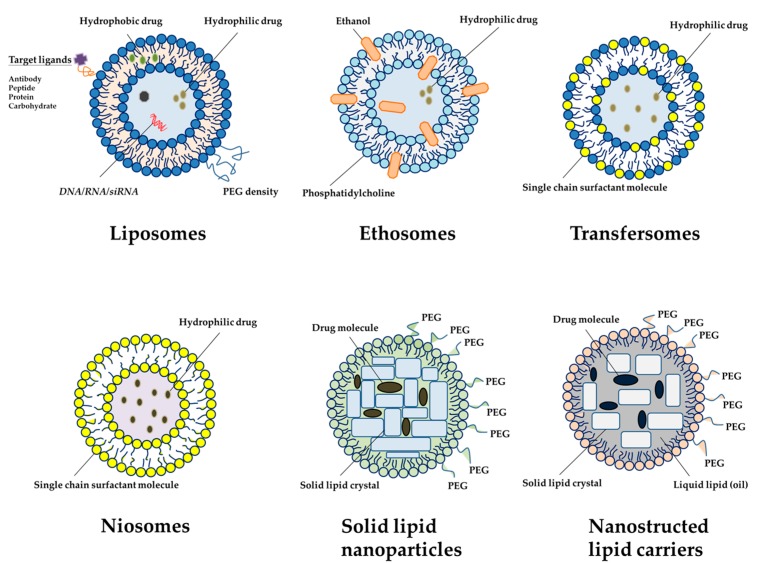
Rheumatoid arthritis (RA), a chronic and joint-related autoimmune disease, results in immune dysfunction and destruction of joints and cartilages. Small molecules and biological therapies have been applied in a wide variety of inflammatory disorders, but their utility as a therapeutic agent is limited by poor absorption, rapid metabolism, and serious side effects. To improve these limitations, nanoparticles, which are capable of encapsulating and protecting drugs from degradation before they reach the target site in vivo, may serve as drug delivery systems. The present research proposes a platform for different lipid nanoparticle approaches for RA therapy, taking advantage of the newly emerging field of lipid nanoparticles to develop a targeted theranostic system for application in the treatment of RA. This review aims to present the recent major application of lipid nanoparticles that provide a biocompatible and biodegradable delivery system to effectively improve RA targeting over free drugs via the presentation of tissue-specific targeting of ligand-controlled drug release by modulating nanoparticle composition.
类风湿性关节炎(RA)是一种慢性关节相关自身免疫性疾病,会导致免疫功能紊乱以及关节和软骨破坏。小分子药物和生物疗法已应用于多种炎症性疾病,但其作为治疗药物的效用受到吸收差、代谢快和严重副作用的限制。为改善这些局限性,纳米颗粒能够在体内将药物包裹并保护其在到达靶位点之前不被降解,可作为药物递送系统。本研究利用脂质纳米颗粒这一新兴领域,提出了一个用于类风湿性关节炎治疗的不同脂质纳米颗粒方法的平台,以开发一种靶向诊疗系统用于类风湿性关节炎的治疗。本综述旨在介绍脂质纳米颗粒的近期主要应用,脂质纳米颗粒通过调节纳米颗粒组成呈现配体控制的药物释放的组织特异性靶向,提供一种生物相容性和可生物降解的递送系统,从而比游离药物更有效地改善类风湿性关节炎的靶向性。