Fang Wen-Feng, Chen Yu-Mu, Lin Chiung-Yu, Huang Hui-Lin, Yeh Hua, Chang Ya-Ting, Huang Kuo-Tung, Lin Meng-Chih
1Division of Pulmonary and Critical Care Medicine, Department of Internal Medicine, Kaohsiung Chang Gung Memorial Hospital, Chang Gung University College of Medicine, Kaohsiung, 833 Taiwan.
2Department of Respiratory Therapy, Kaohsiung Chang Gung Memorial Hospital, Chang Gung University College of Medicine, 123 Ta-Pei Rd, Niao-Sung Dist, Kaohsiung, 833 Taiwan.
J Inflamm (Lond). 2018 Jan 10;15:3. doi: 10.1186/s12950-018-0179-6. eCollection 2018.
Sepsis is a life-threatening organ dysfunction caused by dysregulated host response to infection, and is primarily characterized by an uncontrolled systemic inflammatory response. In the present study, we developed an effective adjunct therapy mediated by a novel mechanism, to attenuate overt inflammation. LPS-treated macrophages were adopted as an in vitro model of endotoxin-induced inflammation during sepsis. Experiments were carried out using primary mouse peritoneal macrophages and the murine macrophage cell line RAW264.7, to elucidate the mechanisms by which HDAC2 modulates endotoxin-induced inflammation.
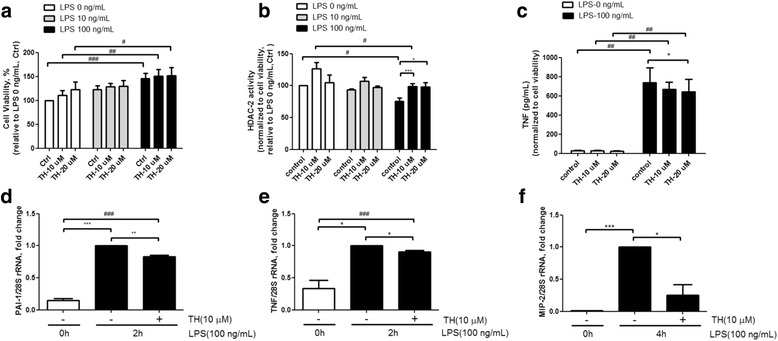
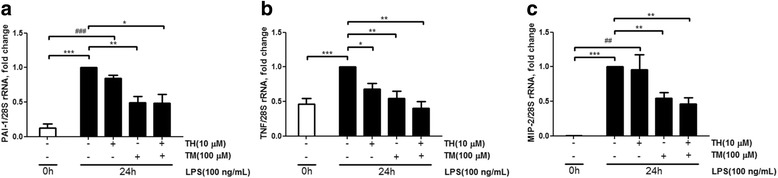
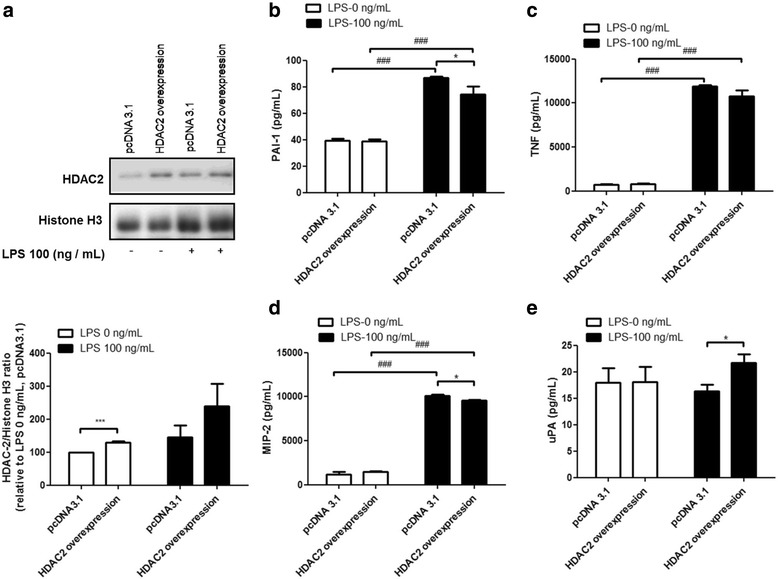
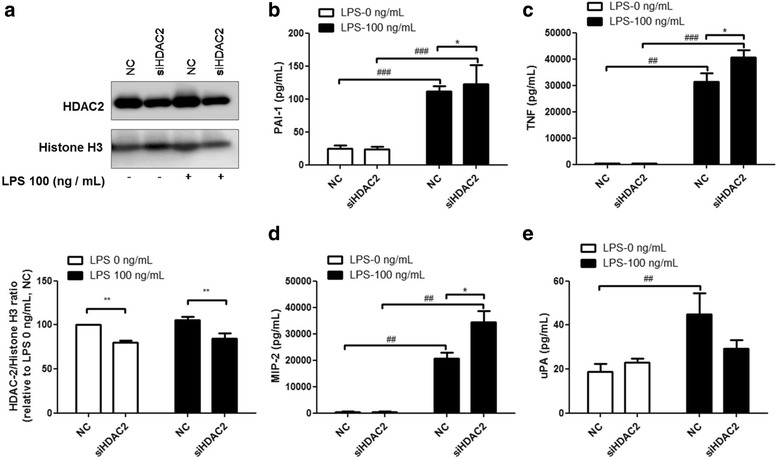
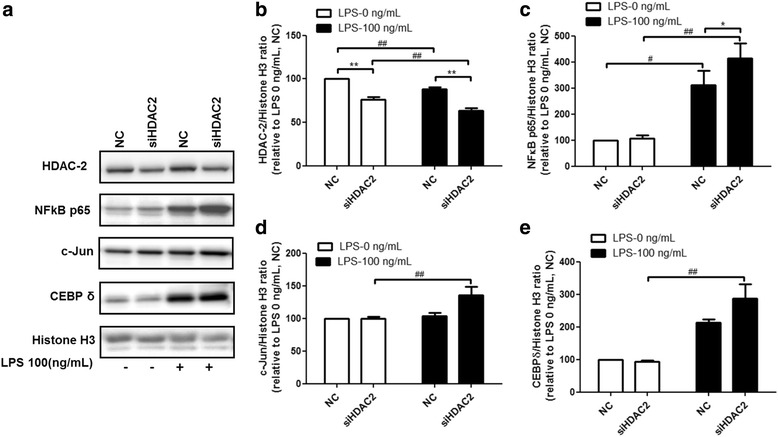
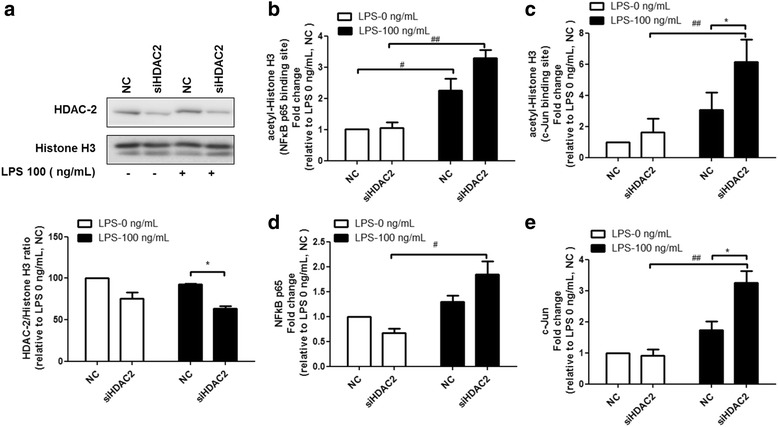
Results revealed that PAI-1, TNF, and MIP-2 expression were inhibited by theophylline, an HDAC2 enhancer, in a RAW macrophage cell line, following LPS-induced inflammation. Thus, HDAC2 plays an important role in immune defense by regulating the expression of inflammatory genes via the c-Jun/PAI-1 pathway. During LPS-induced inflammation, overexpression of HDAC2 was found to inhibit PAI-1, TNF, and MIP-2 expression. Following LPS stimulation, HDAC2 knockdown increased nuclear translocation and DNA binding of c-Jun to the PAI-1 gene promoter, thereby activating PAI-1 gene transcription. Furthermore, inhibition of PAI-1 by TM5275 alone or in combination with theophylline notably suppressed TNF and MIP-2 expression.
HDAC2 can attenuate lipopolysaccharide-induced inflammation by regulating c-Jun and PAI-1 expression in macrophages.
脓毒症是由宿主对感染的反应失调引起的危及生命的器官功能障碍,其主要特征是不受控制的全身炎症反应。在本研究中,我们开发了一种通过新机制介导的有效辅助治疗方法,以减轻明显的炎症。采用脂多糖(LPS)处理的巨噬细胞作为脓毒症期间内毒素诱导炎症的体外模型。使用原代小鼠腹腔巨噬细胞和小鼠巨噬细胞系RAW264.7进行实验,以阐明组蛋白去乙酰化酶2(HDAC2)调节内毒素诱导炎症的机制。
结果显示,在RAW巨噬细胞系中,HDAC2增强剂茶碱在LPS诱导炎症后抑制纤溶酶原激活物抑制剂1(PAI-1)、肿瘤坏死因子(TNF)和巨噬细胞炎性蛋白2(MIP-2)的表达。因此,HDAC2通过c-Jun/PAI-1途径调节炎症基因的表达,在免疫防御中发挥重要作用。在LPS诱导的炎症过程中,发现HDAC2的过表达抑制PAI-1、TNF和MIP-2的表达。LPS刺激后,HDAC2基因敲低增加了c-Jun向PAI-1基因启动子的核转位和DNA结合,从而激活PAI-1基因转录。此外,单独使用TM5275或与茶碱联合抑制PAI-1可显著抑制TNF和MIP-2的表达。
HDAC2可通过调节巨噬细胞中c-Jun和PAI-1的表达减轻脂多糖诱导的炎症。