Hoosen Nikhat, Davids Eugene Lee, de Vries Petrus J, Shung-King Maylene
1Adolescent Health Research Unit, Division of Child & Adolescent Psychiatry, University of Cape Town, 46 Sawkins Road, Rondebosch, Cape Town, 7700 South Africa.
2Health Policy and Systems Division, University of Cape Town, Cape Town, South Africa.
Child Adolesc Psychiatry Ment Health. 2018 Jan 11;12:6. doi: 10.1186/s13034-017-0212-1. eCollection 2018.
Child and adolescent mental health in Africa remains largely neglected. Quick and cost-effective ways for early detection may aid early intervention. The Strengths and Difficulties Questionnaire (SDQ) is globally used to screen for mental health problems, but little is known about its use in Africa. We set out to perform a scoping review to examine existing studies that have used the SDQ in Africa.
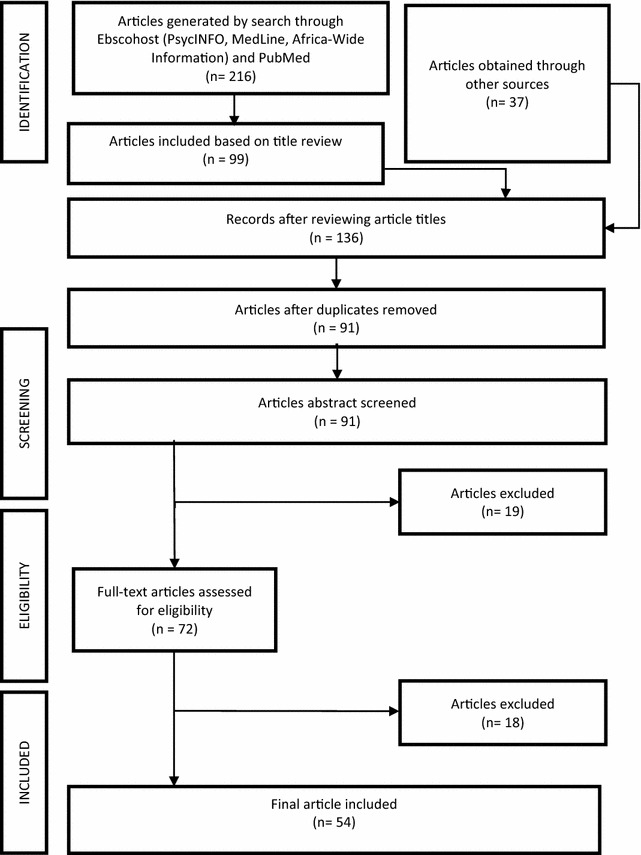
A comprehensive scoping review methodology was used to identify all peer-reviewed studies ever published that have used the SDQ in Africa. Data were extracted and analysed to assess the countries, languages and SDQ versions used, the purpose of the SDQ studies, psychometric properties of the SDQ, and to consider knowledge gaps for future in-country and cross-country studies.
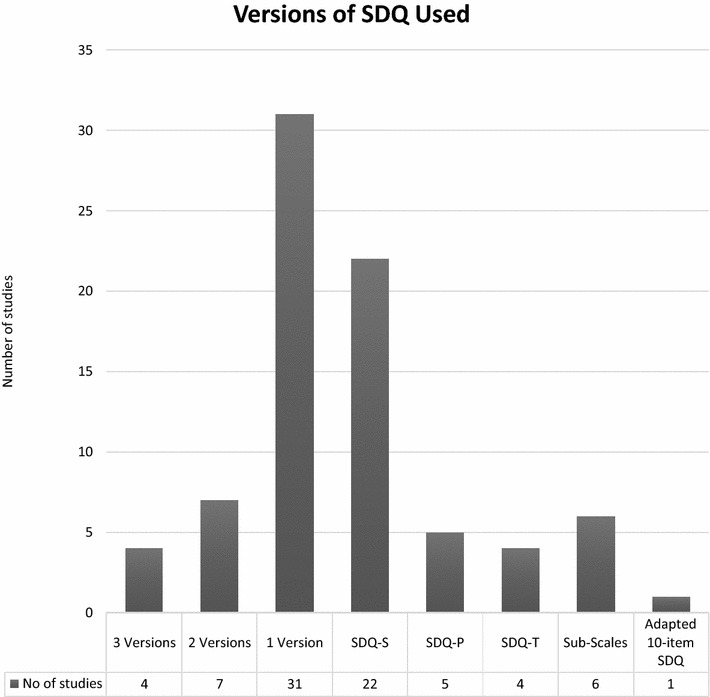
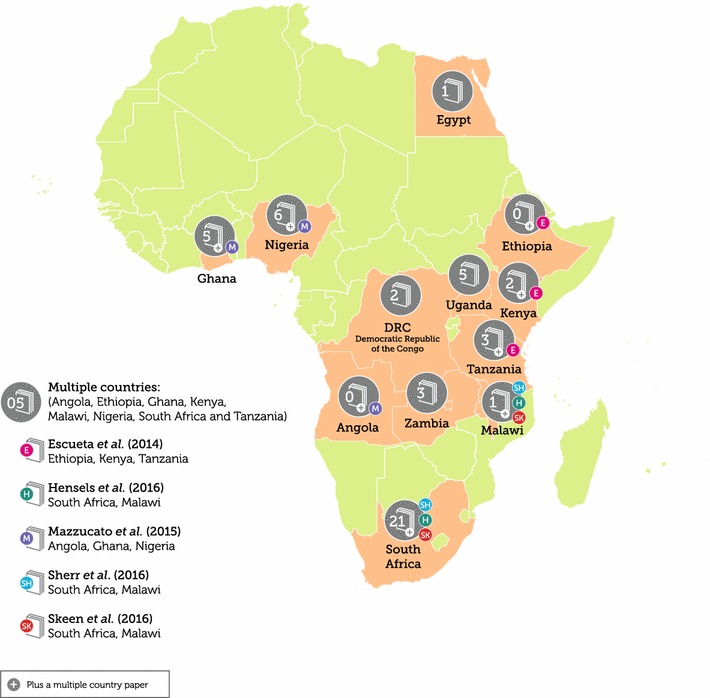
Fifty-four studies from 12 African countries were identified, most from South Africa. Many different languages were used, but authorized SDQs in those languages were not always available on the SDQinfo website. Authors frequently commented on challenges in the translation and backtranslation of mental health terminology in African languages. The SDQ was typically used to investigate internalisation/externalization disorders in different clinical populations, and was most frequently used in the evaluation of children and adolescents affected by HIV/AIDS. Sixteen studies (29.6%) administered the SDQ to participants outside the intended age range, only 4 (7.4%) used triangulation of all versions to generate assessments, and eight studies (14.8%) used only subscales of the SDQ. Only one study conducted thorough psychometric validation of the SDQ, including examination of internal consistency and factor analysis. Where 'caseness' was defined in studies, UK cut-off scores were used in all but one of the studies.
The SDQ may be a very useful tool in an African setting, but the scoping review suggested that, where it was used in Africa researchers did not always follow instrument guidelines, and highlighted that very little is known about the psychometric properties of the SDQ in Africa. We recommend comprehensive evaluation of the psychometric properties of the SDQ in various African languages, including internal consistency, factor structure, need for local cut-off values and ensuring cultural equivalence of the instrument.
非洲儿童和青少年的心理健康在很大程度上仍被忽视。快速且经济高效的早期检测方法可能有助于早期干预。长处与困难问卷(SDQ)在全球范围内用于筛查心理健康问题,但对于其在非洲的使用情况却知之甚少。我们开展了一项范围综述,以审视在非洲使用SDQ的现有研究。
采用全面的范围综述方法来识别所有已发表的、在非洲使用SDQ的同行评审研究。提取并分析数据,以评估所使用的国家、语言和SDQ版本,SDQ研究的目的,SDQ的心理测量特性,并考虑未来国内和跨国研究的知识空白。
共识别出来自12个非洲国家的54项研究,其中大部分来自南非。使用了多种不同语言,但SDQinfo网站上并非总能获取这些语言的授权SDQ。作者们经常提到在将心理健康术语翻译成非洲语言以及回译过程中所面临的挑战。SDQ通常用于调查不同临床人群中的内化/外化障碍,最常用于评估受艾滋病毒/艾滋病影响的儿童和青少年。16项研究(29.6%)对超出预期年龄范围的参与者进行了SDQ测试,只有4项研究(7.4%)使用所有版本进行三角互证以生成评估结果,8项研究(14.8%)仅使用了SDQ的子量表。只有一项研究对SDQ进行了全面的心理测量验证,包括内部一致性检验和因子分析。在研究中定义“病例状态”的地方,除一项研究外,所有研究均使用了英国的临界值。
在非洲背景下,SDQ可能是一个非常有用的工具,但范围综述表明,在非洲使用该问卷时,研究人员并非总是遵循工具指南,并强调对于SDQ在非洲的心理测量特性知之甚少。我们建议对SDQ在各种非洲语言中的心理测量特性进行全面评估,包括内部一致性、因子结构、是否需要本地临界值以及确保该工具的文化等效性。