Kamai Takao, Tokura Yuumi, Uematsu Toshitaka, Sakamoto Kazumasa, Suzuki Issei, Takei Kohei, Narimatsu Takahiro, Kambara Tsunehito, Yuki Hideo, Betsunoh Hironori, Abe Hideyuki, Fukabori Yoshitatsu, Yashi Masahiro, Yoshida Ken-Ichiro
Department of Urology, Dokkyo Medical University, Mibu, Tochigi, Japan.
Open Heart. 2018 Jan 3;5(1):e000666. doi: 10.1136/openhrt-2017-000666. eCollection 2018.
Renal cell carcinoma (RCC) is a hypervascular tumour due to high constitutive production of vascular endothelial growth factor (VEGF), which is activated by hypoxia-inducible factor (HIF). Elevated levels of cardiovascular peptides, including brain natriuretic peptide (BNP), have been reported in patients with cancer, regardless of whether they have overt cardiovascular disease. Furthermore, it has been demonstrated that hypoxia stimulates BNP production by an HIF-dependent manner. However, the clinical implications of such cardiovascular peptides in patients with RCC have not been assessed.
In patients with clear cell RCC who underwent nephrectomy, we investigated the relationship between the serum level of BNP or N-terminal pro-BNP (NT-proBNP) and various clinicopathological characteristics, including serum VEGF and expression of BNP and HIF-2 alpha in the primary tumour.
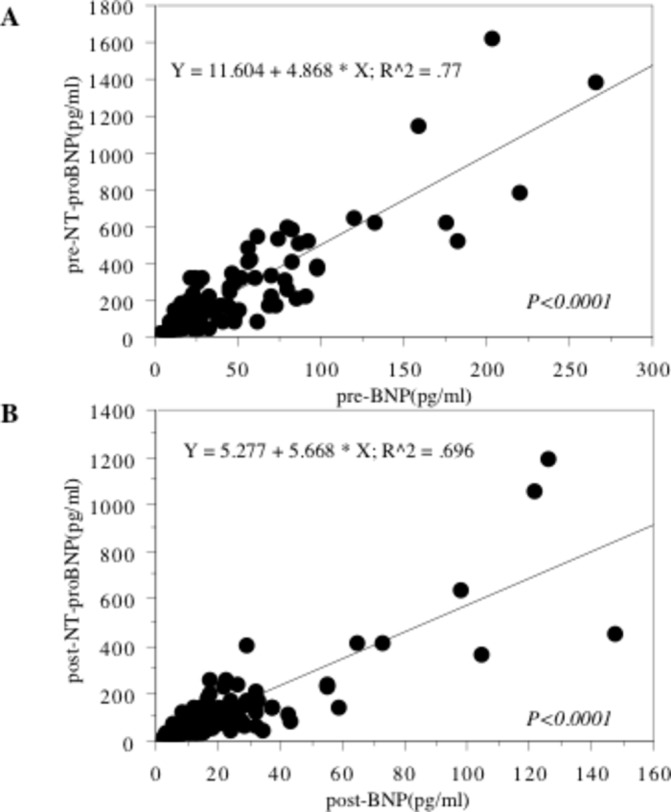
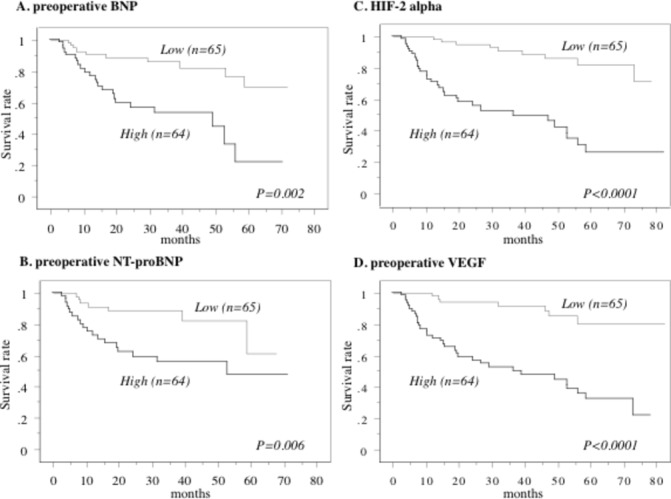
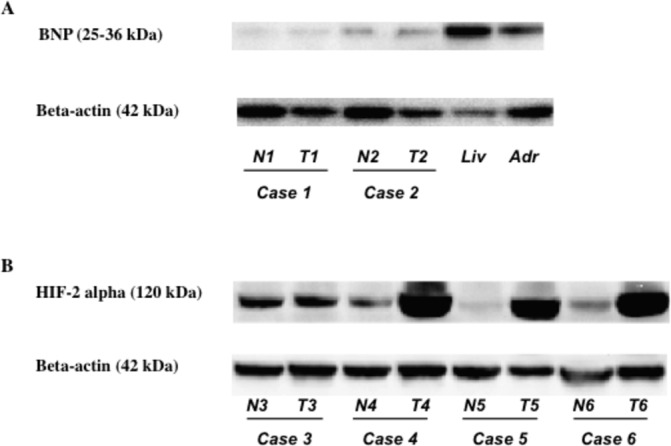
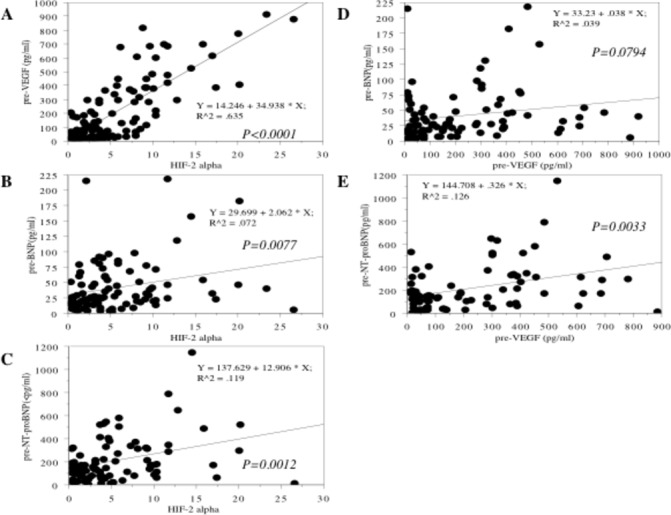
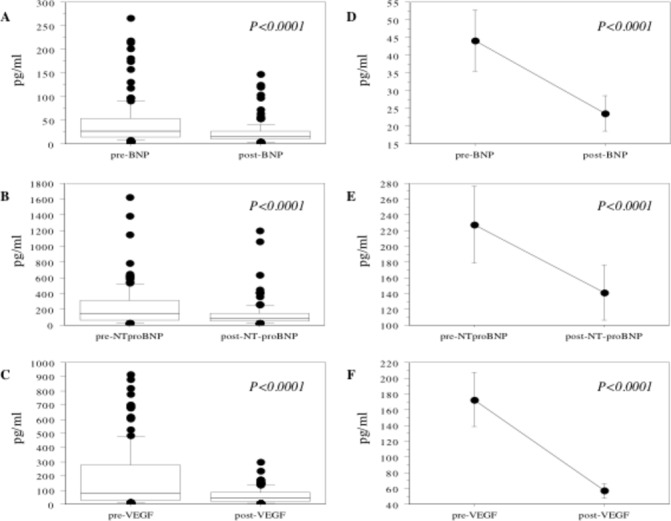
Elevated preoperative serum levels of BNP, NT-proBNP and VEGF, as well as increased tumour expression of HIF-2 alpha, were associated with a worse performance status, local invasion, distant metastasis and shorter overall survival. HIF-2 alpha expression showed a positive correlation with the preoperative serum VEGF level, while there was no relation between the serum levels of BNP/NT-proBNP and VEGF or tumour expression of HIF-2 alpha. BNP expression was very low in both tumour tissues and normal kidney tissues. Serum levels of BNP, NT-proBNP and VEGF all decreased significantly after nephrectomy.
Our findings suggested that the preoperative serum levels of BNP and NT-proBNP are markers of tumour progression, as well as indicators of subclinical functional and structural myocardial damage in patients with advanced RCC.
肾细胞癌(RCC)是一种血管丰富的肿瘤,因其组成性高表达血管内皮生长因子(VEGF),而该因子由缺氧诱导因子(HIF)激活。已有报道称,癌症患者体内包括脑钠肽(BNP)在内的心血管肽水平升高,无论其是否患有明显的心血管疾病。此外,研究表明缺氧以HIF依赖的方式刺激BNP的产生。然而,此类心血管肽在RCC患者中的临床意义尚未得到评估。
在接受肾切除术的透明细胞RCC患者中,我们研究了血清BNP或N末端前脑钠肽(NT-proBNP)水平与各种临床病理特征之间的关系,包括血清VEGF以及原发性肿瘤中BNP和HIF-2α的表达。
术前血清BNP、NT-proBNP和VEGF水平升高,以及肿瘤中HIF-2α表达增加,均与较差的体能状态、局部侵犯、远处转移和较短的总生存期相关。HIF-2α表达与术前血清VEGF水平呈正相关,而BNP/NT-proBNP血清水平与VEGF或肿瘤中HIF-2α表达之间无关联。肿瘤组织和正常肾组织中的BNP表达均非常低。肾切除术后,血清BNP和NT-proBNP以及VEGF水平均显著下降。
我们的研究结果表明,术前血清BNP和NT-proBNP水平是肿瘤进展的标志物,也是晚期RCC患者亚临床功能和结构心肌损伤的指标。