van Puijvelde Gijs H M, Foks Amanda C, van Bochove Rosemarie E, Bot Ilze, Habets Kim L L, de Jager Saskia C, Ter Borg Mariëtte N D, van Osch Puck, Boon Louis, Vos Mariska, de Waard Vivian, Kuiper Johan
Division of Biopharmaceutics, Leiden Academic Centre for Drug Research, Leiden University, Leiden, The Netherlands.
Bioceros BV, Utrecht, The Netherlands.
PLoS One. 2018 Jan 18;13(1):e0190962. doi: 10.1371/journal.pone.0190962. eCollection 2018.
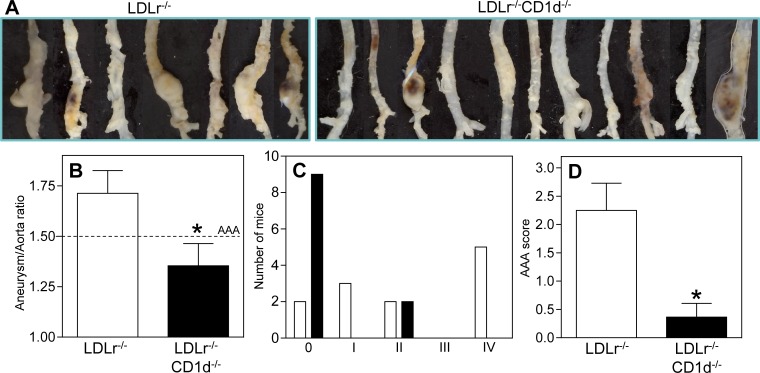
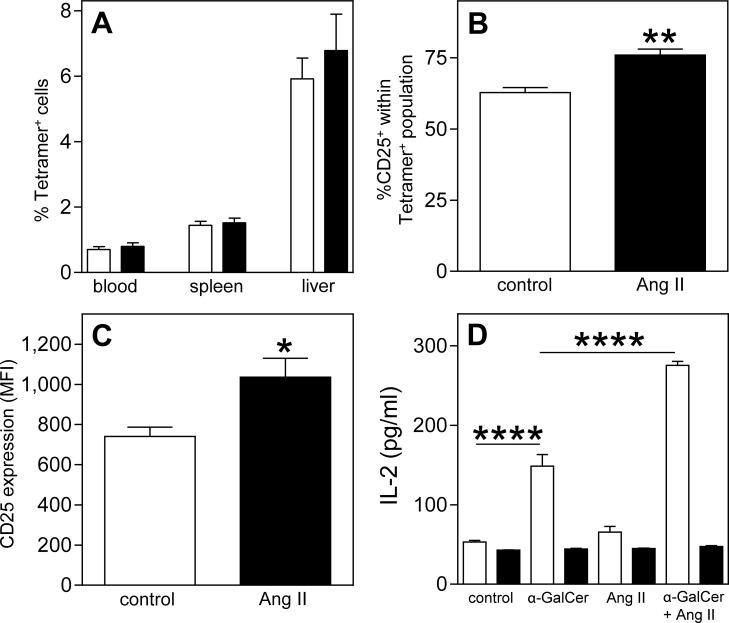
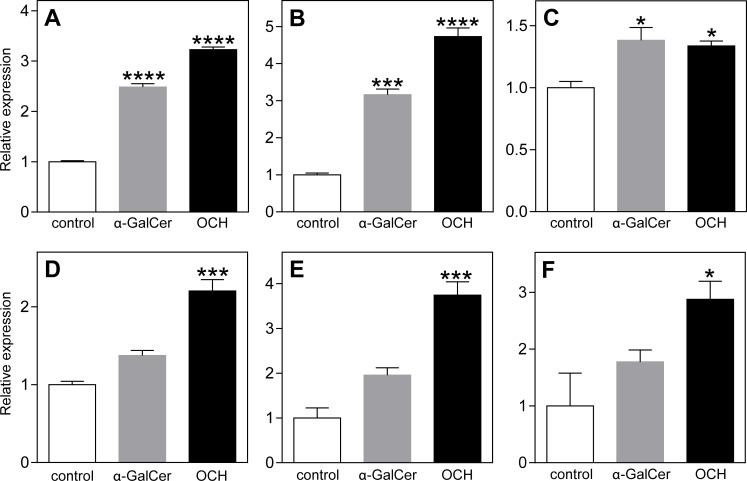
An abdominal aortic aneurysm (AAA) is a dilatation of the abdominal aorta leading to serious complications and mostly to death. AAA development is associated with an accumulation of inflammatory cells in the aorta including NKT cells. An important factor in promoting the recruitment of these inflammatory cells into tissues and thereby contributing to the development of AAA is angiotensin II (Ang II). We demonstrate that a deficiency in CD1d dependent NKT cells under hyperlipidemic conditions (LDLr-/-CD1d-/- mice) results in a strong decline in the severity of angiotensin II induced aneurysm formation when compared with LDLr-/- mice. In addition, we show that Ang II amplifies the activation of NKT cells both in vivo and in vitro. We also provide evidence that type I NKT cells contribute to AAA development by inducing the expression of matrix degrading enzymes in vSMCs and macrophages, and by cytokine dependently decreasing vSMC viability. Altogether, these data prove that CD1d-dependent NKT cells contribute to AAA development in the Ang II-mediated aneurysm model by enhancing aortic degradation, establishing that therapeutic applications which target NKT cells can be a successful way to prevent AAA development.
腹主动脉瘤(AAA)是腹主动脉的扩张,可导致严重并发症,且大多会导致死亡。AAA的发展与主动脉中包括NKT细胞在内的炎症细胞积累有关。促进这些炎症细胞募集到组织中并因此导致AAA发展的一个重要因素是血管紧张素II(Ang II)。我们证明,与LDLr-/-小鼠相比,高脂血症条件下(LDLr-/-CD1d-/-小鼠)CD1d依赖性NKT细胞的缺乏导致血管紧张素II诱导的动脉瘤形成严重程度大幅下降。此外,我们表明Ang II在体内和体外均能增强NKT细胞的激活。我们还提供证据表明,I型NKT细胞通过诱导血管平滑肌细胞(vSMC)和巨噬细胞中基质降解酶的表达,以及通过细胞因子依赖性降低vSMC活力,从而促进AAA的发展。总之,这些数据证明,CD1d依赖性NKT细胞通过增强主动脉降解,在Ang II介导的动脉瘤模型中促进AAA的发展,这表明靶向NKT细胞的治疗应用可能是预防AAA发展的一种成功方法。