Department of Cardiology, The Second Affiliated Hospital, Zhejiang University School of Medicine, Hangzhou, China.
Department of Urology, Children's Hospital, Zhejiang University School of Medicine, Hangzhou, China.
Front Immunol. 2021 Feb 3;11:609161. doi: 10.3389/fimmu.2020.609161. eCollection 2020.
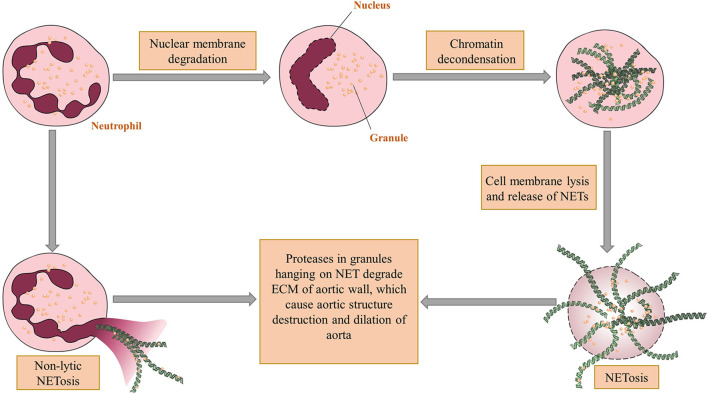
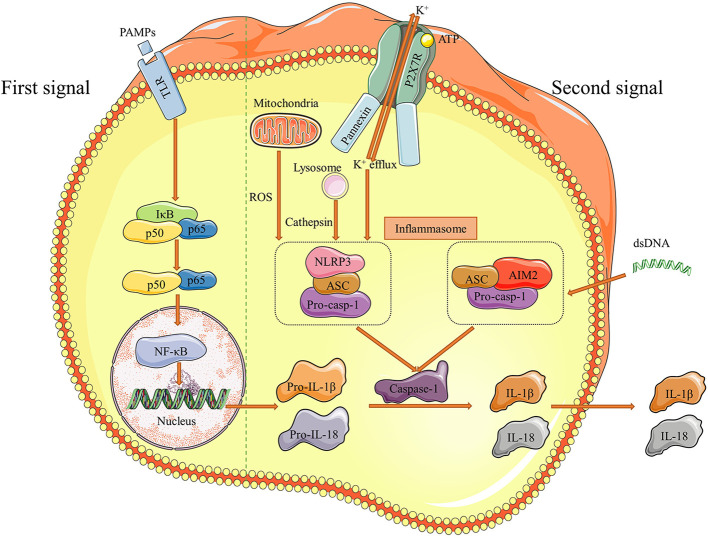
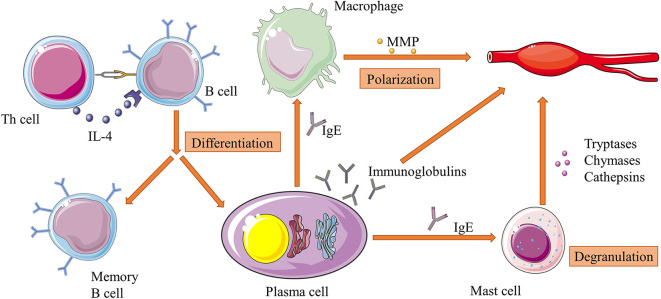
Abdominal aortic aneurysms (AAAs) are local dilations of infrarenal segment of aortas. Molecular mechanisms underlying the pathogenesis of AAA remain not fully clear. However, inflammation has been considered as a central player in the development of AAA. In the past few decades, studies demonstrated a host of inflammatory cells, including T cells, macrophages, dendritic cells, neutrophils, B cells, and mast cells, etc. infiltrating into aortic walls, which implicated their crucial roles. In addition to direct cell contacts and cytokine or protease secretions, special structures like inflammasomes and neutrophil extracellular traps have been investigated to explore their functions in aneurysm formation. The above-mentioned inflammatory cells and associated structures may initiate and promote AAA expansion. Understanding their impacts and interaction networks formation is meaningful to develop new strategies of screening and pharmacological interventions for AAA. In this review, we aim to discuss the roles and mechanisms of these inflammatory cells in AAA pathogenesis.
腹主动脉瘤(AAA)是肾下主动脉节段的局部扩张。AAA 发病机制的分子机制尚不完全清楚。然而,炎症已被认为是 AAA 发展的核心因素。在过去的几十年中,研究表明大量炎症细胞,包括 T 细胞、巨噬细胞、树突状细胞、中性粒细胞、B 细胞和肥大细胞等,浸润到主动脉壁中,这表明它们具有重要作用。除了直接的细胞接触和细胞因子或蛋白酶的分泌外,还研究了特殊结构,如炎性体和中性粒细胞细胞外陷阱,以探索它们在动脉瘤形成中的作用。上述炎症细胞和相关结构可能引发并促进 AAA 的扩张。了解它们的影响和相互作用网络的形成对于开发 AAA 的新筛查策略和药物干预措施具有重要意义。在这篇综述中,我们旨在讨论这些炎症细胞在 AAA 发病机制中的作用和机制。