Department of Biochemistry, School of Life Sciences, Central University of Rajasthan, Bandarsindri, Kishangarh, Ajmer, 305817, Rajasthan, India.
Department of Biotechnology, School of Life Sciences, Central University of Rajasthan, Bandarsindri, Kishangarh, Ajmer, 305817, Rajasthan, India.
Sci Rep. 2018 Jan 18;8(1):1125. doi: 10.1038/s41598-018-19456-1.
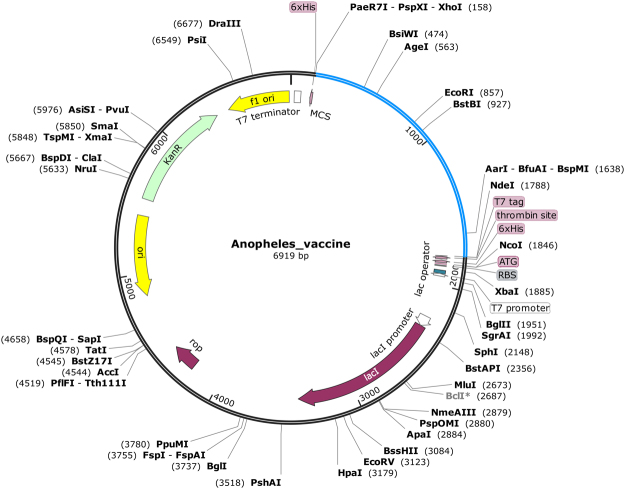
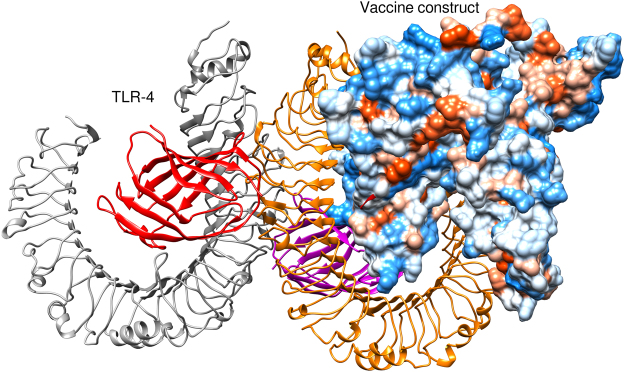
Malaria fever has been pervasive for quite a while in tropical developing regions causing high morbidity and mortality. The causal organism is a protozoan parasite of genus Plasmodium which spreads to the human host by the bite of hitherto infected female Anopheles mosquito. In the course of biting, a salivary protein of Anopheles helps in blood feeding behavior and having the ability to elicit the host immune response. This study represents a series of immunoinformatics approaches to design multi-epitope subunit vaccine using Anopheles mosquito salivary proteins. Designed subunit vaccine was evaluated for its immunogenicity, allergenicity and physiochemical parameters. To enhance the stability of vaccine protein, disulfide engineering was performed in a region of high mobility. Codon adaptation and in silico cloning was also performed to ensure the higher expression of designed subunit vaccine in E. coli K12 expression system. Finally, molecular docking and simulation study was performed for the vaccine protein and TLR-4 receptor, to determine the binding free energy and complex stability. Moreover, the designed subunit vaccine was found to induce anti-salivary immunity which may have the ability to prevent the entry of Plasmodium sporozoites into the human host.
疟疾在热带发展中地区已经存在了很长一段时间,导致高发病率和死亡率。病原体是一种疟原虫属的原生动物寄生虫,通过先前感染的雌性按蚊叮咬传播给人类宿主。在叮咬过程中,按蚊的唾液蛋白有助于吸血行为,并具有引发宿主免疫反应的能力。本研究代表了一系列免疫信息学方法,用于设计使用按蚊唾液蛋白的多表位亚单位疫苗。设计的亚单位疫苗的免疫原性、变应原性和理化参数进行了评估。为了提高疫苗蛋白的稳定性,在高迁移率区域进行了二硫键工程。还进行了密码子适应和计算机克隆,以确保设计的亚单位疫苗在大肠杆菌 K12 表达系统中的更高表达。最后,对疫苗蛋白和 TLR-4 受体进行了分子对接和模拟研究,以确定结合自由能和复合物稳定性。此外,设计的亚单位疫苗被发现可诱导抗唾液免疫,这可能有能力阻止疟原虫孢子进入人体宿主。