Department of Microbiology and Immunology, and Emory Antibiotic Resistance Center, Emory University School of Medicine, Atlanta, GA, USA.
Environ Microbiol. 2018 Apr;20(4):1419-1435. doi: 10.1111/1462-2920.14048. Epub 2018 Feb 9.
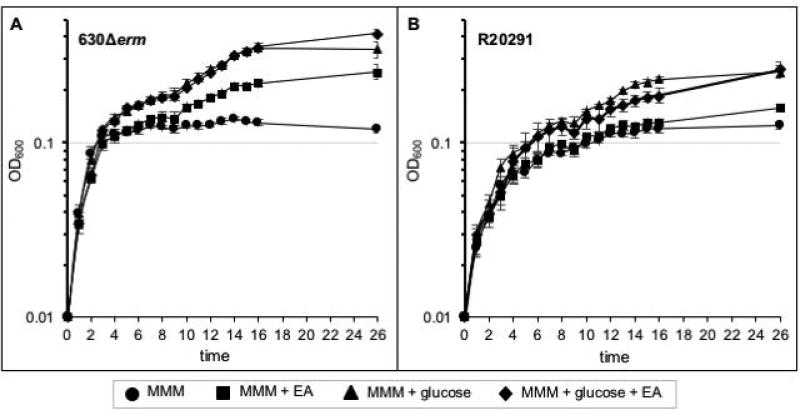
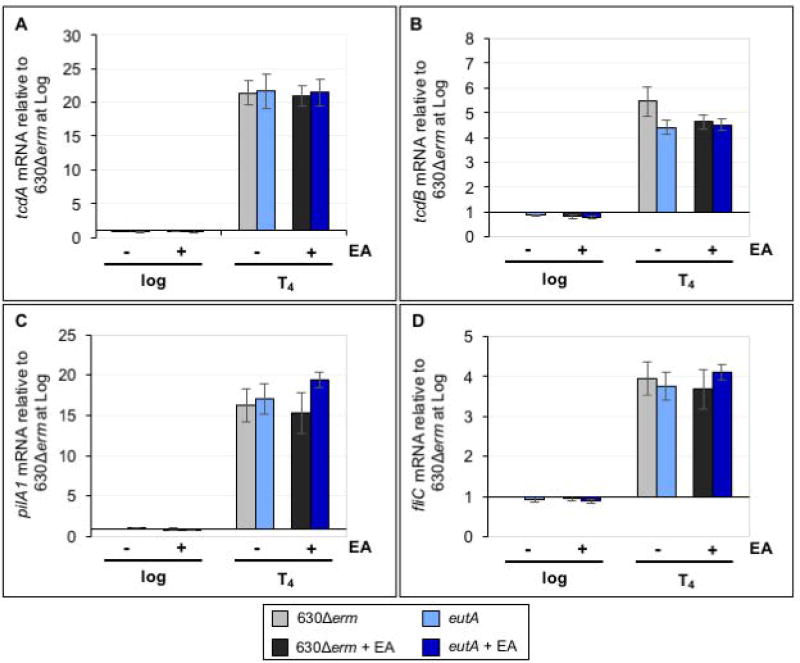
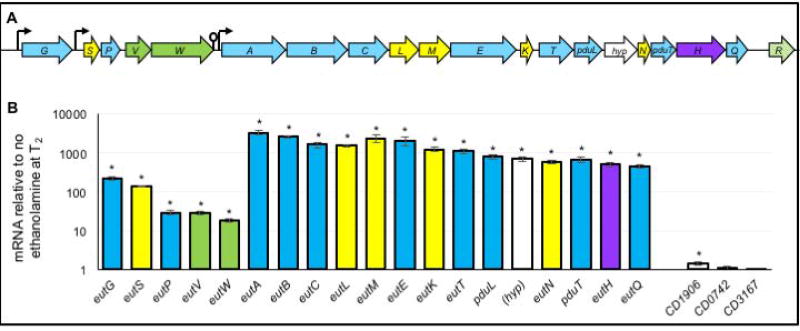
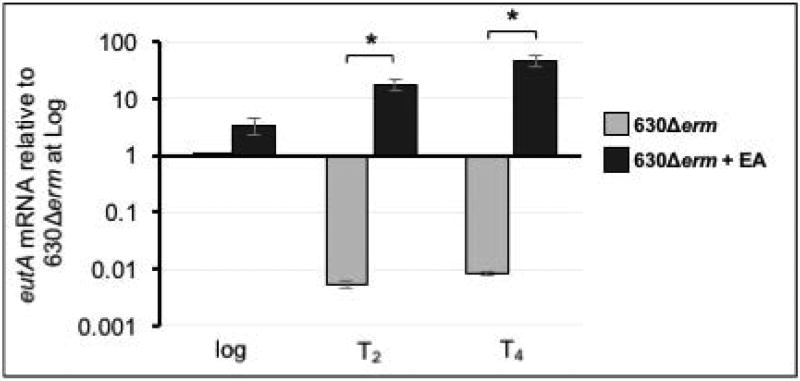
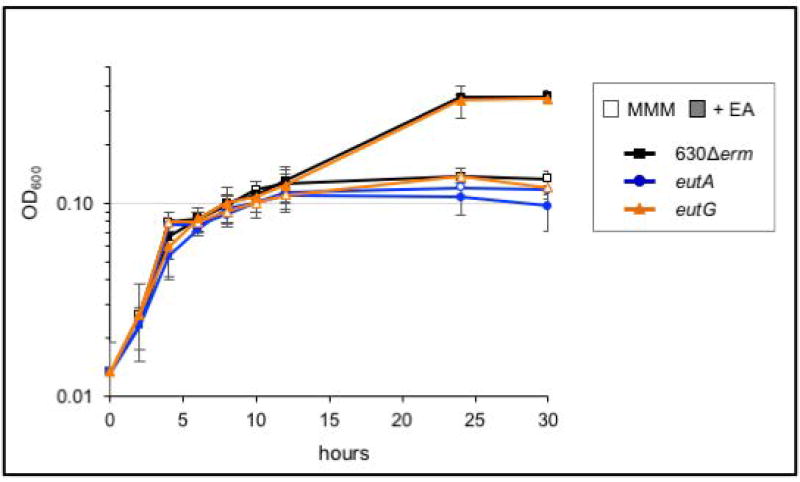
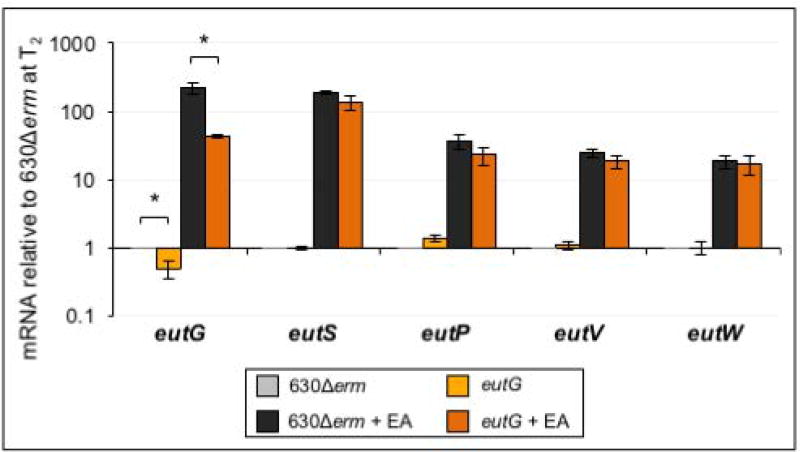
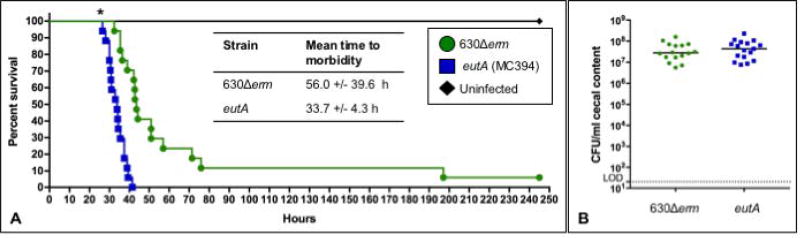
Clostridium (Clostridioides) difficile is a gastrointestinal pathogen that colonizes the intestinal tract of mammals and can cause severe diarrheal disease. Although C. difficile growth is confined to the intestinal tract, our understanding of the specific metabolites and host factors that are important for the growth of the bacterium is limited. In other enteric pathogens, the membrane-derived metabolite, ethanolamine (EA), is utilized as a nutrient source and can function as a signal to initiate the production of virulence factors. In this study, we investigated the effects of ethanolamine and the role of the predicted ethanolamine gene cluster (CD1907-CD1925) on C. difficile growth. Using targeted mutagenesis, we disrupted genes within the eut cluster and assessed their roles in ethanolamine utilization, and the impact of eut disruption on the outcome of infection in a hamster model of disease. Our results indicate that the eut gene cluster is required for the growth of C. difficile on ethanolamine as a primary nutrient source. Further, the inability to utilize ethanolamine resulted in greater virulence and a shorter time to morbidity in the animal model. Overall, these data suggest that ethanolamine is an important nutrient source within the host and that, in contrast to other intestinal pathogens, the metabolism of ethanolamine by C. difficile can delay the onset of disease.
艰难梭菌(梭状芽胞杆菌)是一种胃肠道病原体,定植于哺乳动物的肠道内,可引起严重的腹泻病。虽然艰难梭菌的生长仅限于肠道,但我们对促进其生长的特定代谢物和宿主因素的了解有限。在其他肠道病原体中,膜衍生的代谢物乙醇胺(EA)被用作营养源,并可作为信号启动毒力因子的产生。在这项研究中,我们研究了乙醇胺的作用以及预测的乙醇胺基因簇(CD1907-CD1925)在艰难梭菌生长中的作用。通过靶向诱变,我们破坏了 eut 簇内的基因,并评估了它们在乙醇胺利用中的作用,以及 eut 缺失对疾病仓鼠模型中感染结果的影响。我们的结果表明, eut 基因簇是艰难梭菌以乙醇胺作为主要营养源生长所必需的。此外,无法利用乙醇胺会导致动物模型中的毒力增加和发病时间缩短。总的来说,这些数据表明,乙醇胺是宿主内的一种重要营养源,与其他肠道病原体不同,艰难梭菌对乙醇胺的代谢可以延迟疾病的发作。