Synergetic Innovation Center for Quantum Effects and Applications, College of Physics and Information Science, Hunan Normal University, Changsha, 410081, China.
Hunan Provincial Key Laboratory of Intelligent Information Processing and Application, College of Physics and Electronic Engineering, Hengyang Normal University, Hengyang, 421002, China.
Sci Rep. 2018 Jan 19;8(1):1221. doi: 10.1038/s41598-018-19713-3.
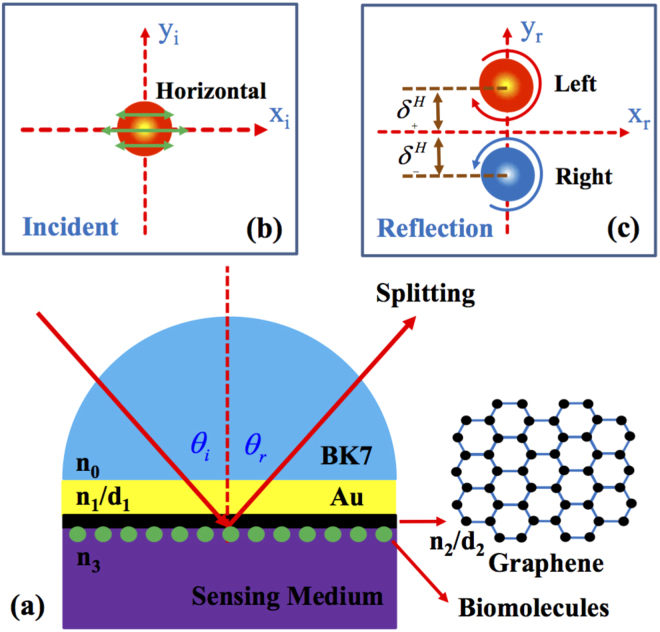
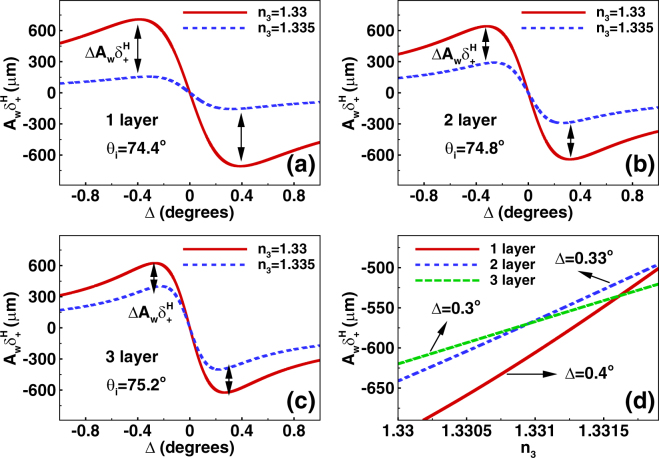
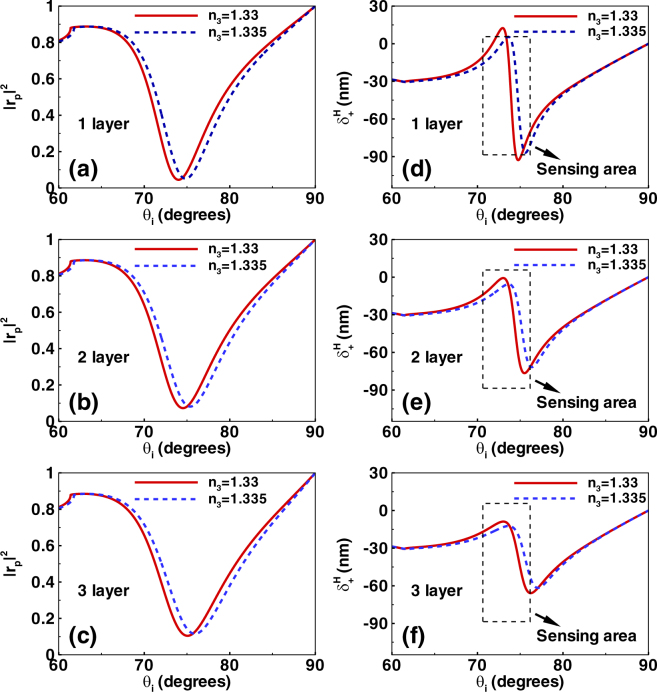
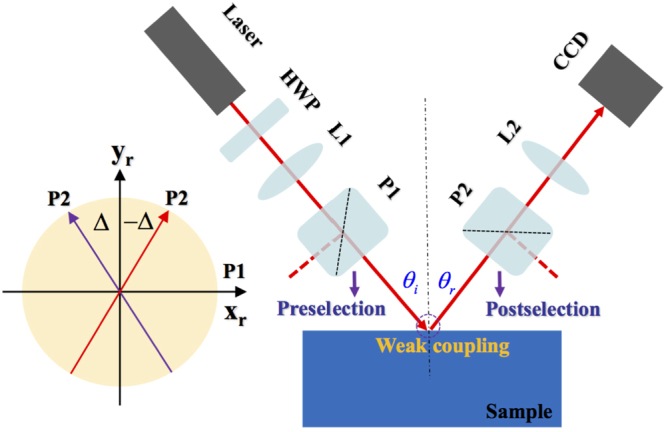
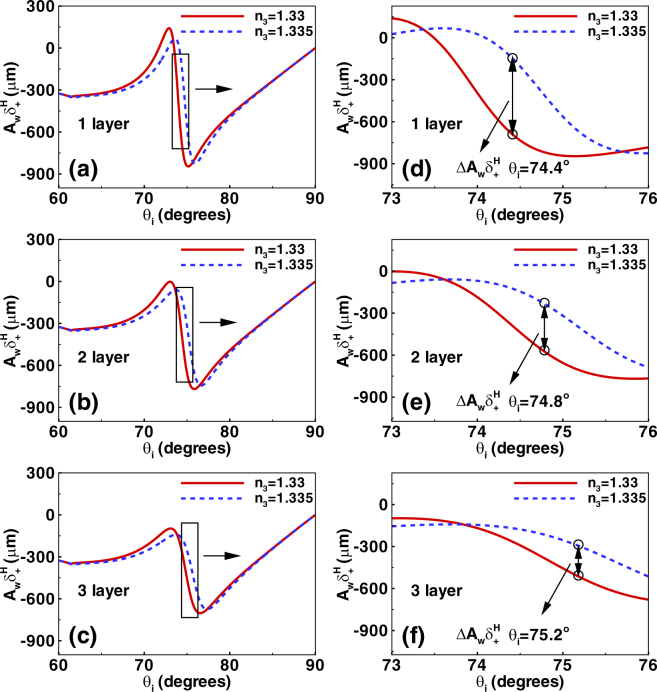
In this work, we theoretically propose an optical biosensor (consists of a BK7 glass, a metal film, and a graphene sheet) based on photonic spin Hall effect (SHE). We establish a quantitative relationship between the spin-dependent shift in photonic SHE and the refractive index of sensing medium. It is found that, by considering the surface plasmon resonance effect, the refractive index variations owing to the adsorption of biomolecules in sensing medium can effectively change the spin-dependent displacements. Remarkably, using the weak measurement method, this tiny spin-dependent shifts can be detected with a desirable accuracy so that the corresponding biomolecules concentration can be determined.
在这项工作中,我们从理论上提出了一种基于光子自旋霍尔效应(SHE)的光学生物传感器(由 BK7 玻璃、金属膜和石墨烯片组成)。我们建立了光 SHE 中与传感介质折射率有关的自旋相关位移的定量关系。研究发现,通过考虑表面等离激元共振效应,传感介质中生物分子的吸附引起的折射率变化可以有效地改变自旋相关位移。值得注意的是,通过弱测量方法,可以以理想的精度检测到这种微小的自旋相关位移,从而确定相应的生物分子浓度。