Buxton Andrew S, Groombridge Jim J, Griffiths Richard A
Durrell Institute for Conservation and Ecology, School of Anthropology and Conservation, University of Kent, Marlowe Building, Canterbury, Kent, United Kingdom.
PLoS One. 2018 Jan 19;13(1):e0191737. doi: 10.1371/journal.pone.0191737. eCollection 2018.
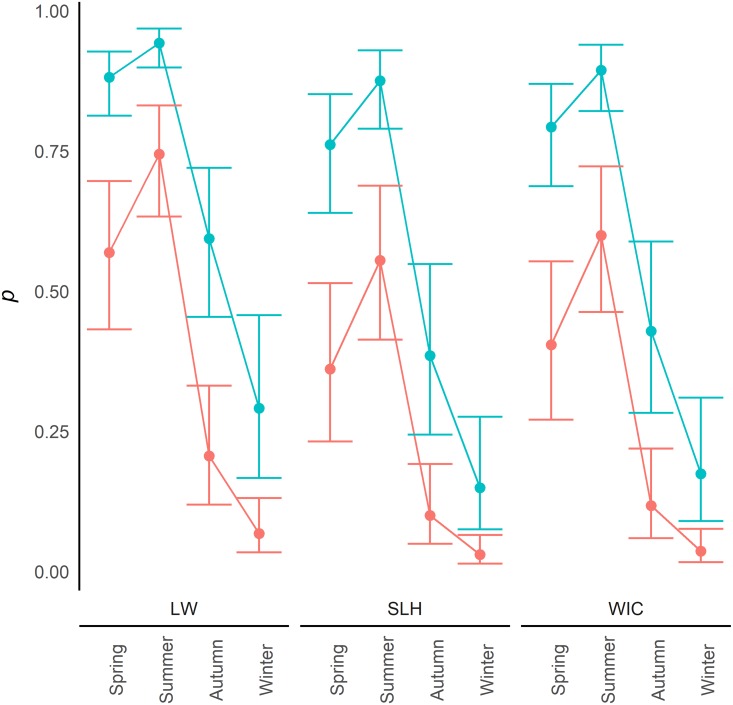
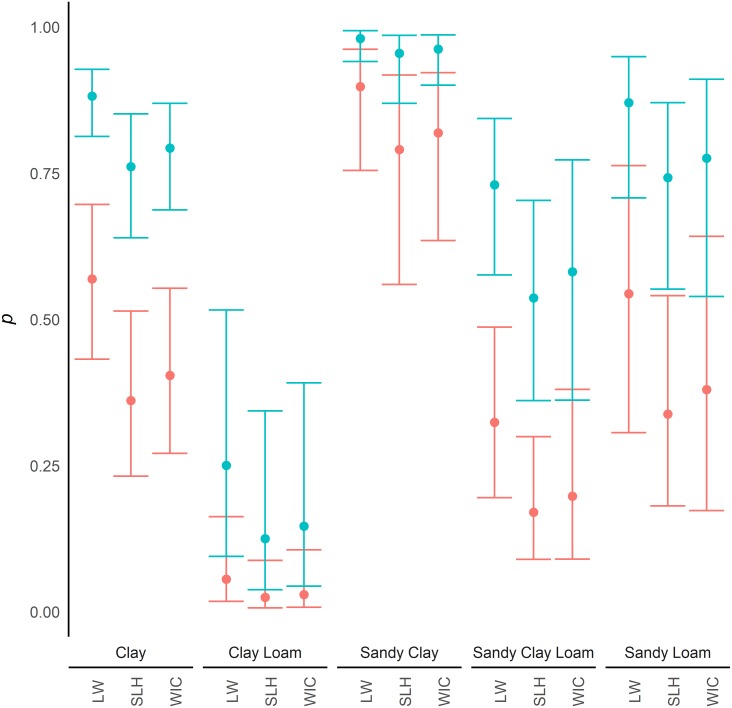
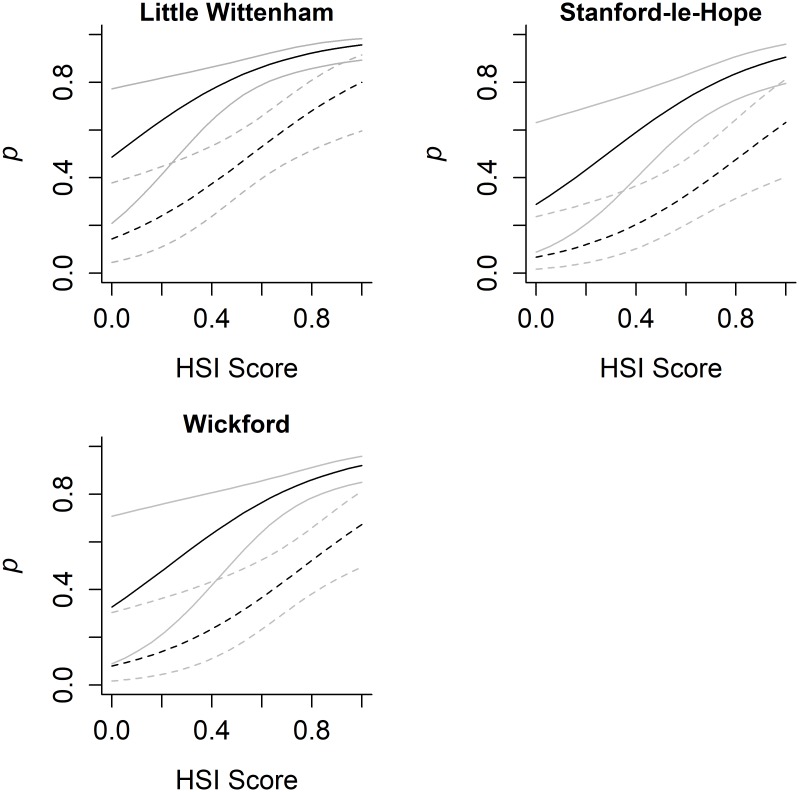
The use of aquatic environmental DNA (eDNA) to detect the presence of species depends on the seasonal activity of the species in the sampled habitat. eDNA may persist in sediments for longer than it does in water, and analysing sediment could potentially extend the seasonal window for species assessment. Using the great crested newt as a model, we compare how detection probability changes across the seasons in eDNA samples collected from both pond water and pond sediments. Detection of both aquatic and sedimentary eDNA varied through the year, peaking in the summer (July), with its lowest point in the winter (January): in all seasons, detection probability of eDNA from water exceeded that from sediment. Detection probability of eDNA also varied between study areas, and according to great crested newt habitat suitability and sediment type. As aquatic and sedimentary eDNA show the same seasonal fluctuations, the patterns observed in both sample types likely reflect current or recent presence of the target species. However, given the low detection probabilities found in the autumn and winter we would not recommend using either aquatic or sedimentary eDNA for year-round sampling without further refinement and testing of the methods.
利用水生环境DNA(eDNA)来检测物种的存在取决于所采样栖息地中该物种的季节性活动。eDNA在沉积物中的留存时间可能比在水中更长,分析沉积物有可能延长物种评估的季节性窗口。以大冠蝾螈为模型,我们比较了从池塘水和池塘沉积物中采集的eDNA样本在不同季节的检测概率变化情况。水生和沉积eDNA的检测在全年都有所不同,在夏季(7月)达到峰值,在冬季(1月)降至最低点:在所有季节中,水中eDNA的检测概率均超过沉积物中的检测概率。eDNA的检测概率在不同研究区域之间也存在差异,并取决于大冠蝾螈的栖息地适宜性和沉积物类型。由于水生和沉积eDNA呈现相同的季节性波动,在两种样本类型中观察到的模式可能反映了目标物种当前或近期的存在情况。然而,鉴于秋冬季节检测概率较低,在未对方法进行进一步优化和测试的情况下,我们不建议使用水生或沉积eDNA进行全年采样。