Aguilar Miguel Pic, Navarro-Adelantado Vicente, Jonsson Gudberg K
Consejeria Educacion Canarias, University of La Laguna, San Cristóbal de La Laguna, Spain.
Human Behavior Laboratory, University of Iceland, Reykjavik, Iceland.
Front Psychol. 2018 Jan 5;8:2259. doi: 10.3389/fpsyg.2017.02259. eCollection 2017.
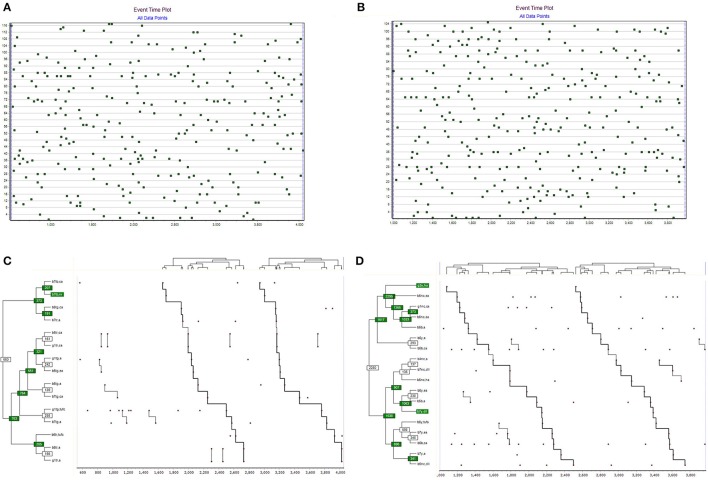
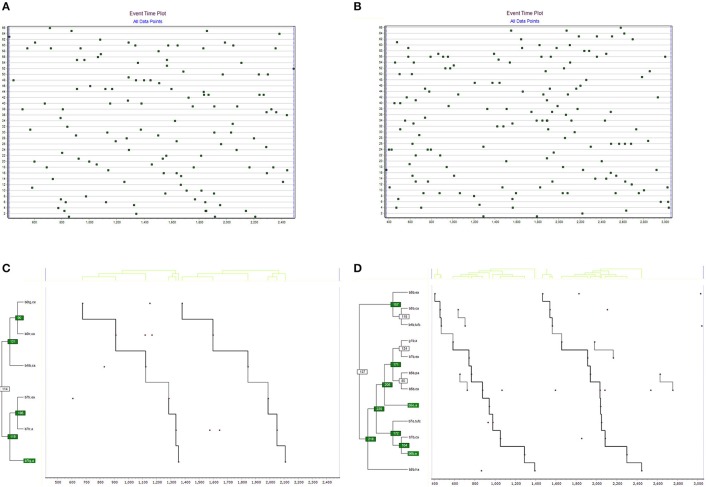
The triad is a particular structure in which an ambivalent social relationship takes place. This work is focused on the search of behavioral regularities in the practice of motor games in triad, which is a little known field. For the detection of behavioral patterns not visible to the naked eye, we use Theme. A chasing games model was followed, with rules, and in two different structures (A↔B↔C↔A and A → B → C → A) on four class groups (two for each structure), for a total of 84, 12, and 13 year old secondary school students, 37 girls (44%) and 47 boys (56%). The aim was to examine if the players' behavior, in relation to the triad structure, matches with any ludic behavior patterns. An observational methodology was applied, with a nomothetic, punctual and multidimensional design. The intra and inter-evaluative correlation coefficients and the generalizability theory ensured the quality of the data. A mixed behavioral role system was used (four criteria and 15 categories), and the pattern detection software Theme was applied to detect temporal regularities in the order of event occurrences. The results show that time location of motor responses in triad games was not random. In the "maze" game we detected more complex ludic patterns than the "three fields" game, which might be explained by means of structural determinants such as circulation. This research points out the decisional complexity in motor games, and it confirms the differences among triads from the point of view of motor communication.
三元组是一种存在矛盾社会关系的特殊结构。这项研究聚焦于探索三元组中体育游戏实践中的行为规律,这是一个鲜为人知的领域。为了检测肉眼不可见的行为模式,我们使用了主题分析法。我们采用了一个追逐游戏模型,设定了规则,并在两种不同结构(A↔B↔C↔A和A → B → C → A)下,对四个班级群体(每种结构两个班级)进行研究,研究对象为12岁、13岁和14岁的中学生,其中37名女生(44%)和47名男生(56%)。目的是检验玩家的行为与三元组结构的关系是否符合任何游戏行为模式。我们采用了一种观察性方法,具有实证性、即时性和多维性设计。评估内和评估间的相关系数以及概化理论确保了数据质量。我们使用了一个混合行为角色系统(四个标准和15个类别),并应用模式检测软件主题分析法来检测事件发生顺序中的时间规律。结果表明,三元组游戏中运动反应的时间定位并非随机。在“迷宫”游戏中,我们检测到比“三个场地”游戏更复杂的游戏模式,这可能可以通过诸如循环等结构决定因素来解释。这项研究指出了体育游戏中的决策复杂性,并从运动交流的角度证实了三元组之间的差异。