Parmar Vipul M, Parmar Tanu, Arai Eisuke, Perusek Lindsay, Maeda Akiko
Department of Ophthalmology and Visual Sciences, Case Western Reserve University, 10900 Euclid Ave., Cleveland, OH 44106, United States.
Department of Ophthalmology and Visual Sciences, Case Western Reserve University, 10900 Euclid Ave., Cleveland, OH 44106, United States; Department of Pharmacology, Case Western Reserve University, Cleveland, OH 44106, United States.
Stem Cell Res. 2018 Mar;27:95-104. doi: 10.1016/j.scr.2018.01.014. Epub 2018 Jan 12.
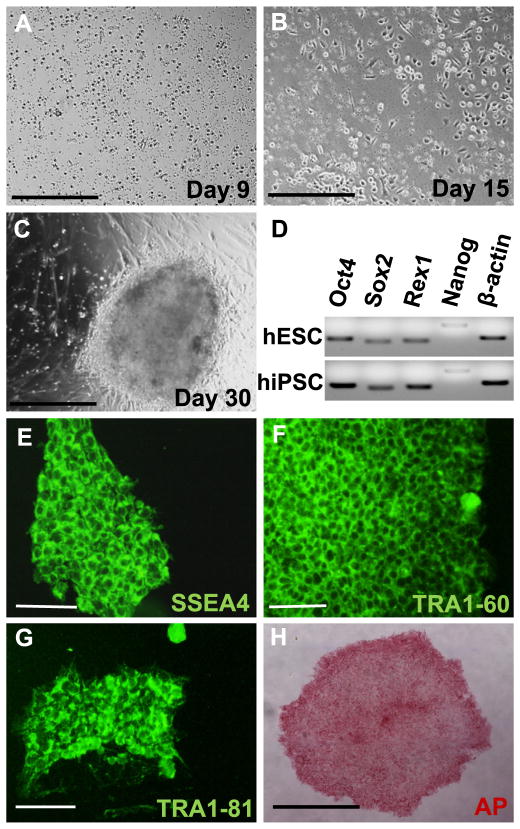
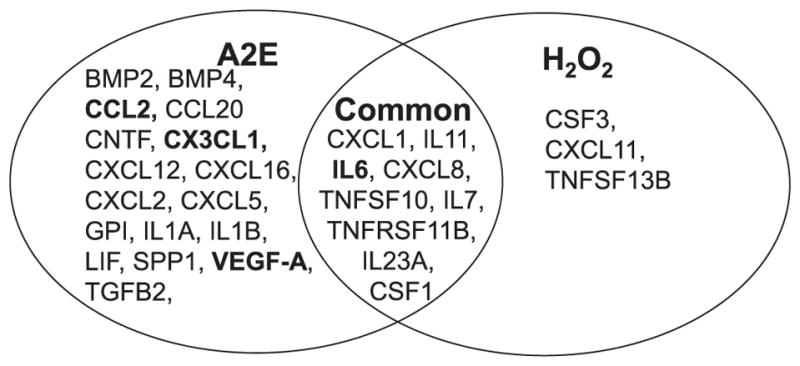
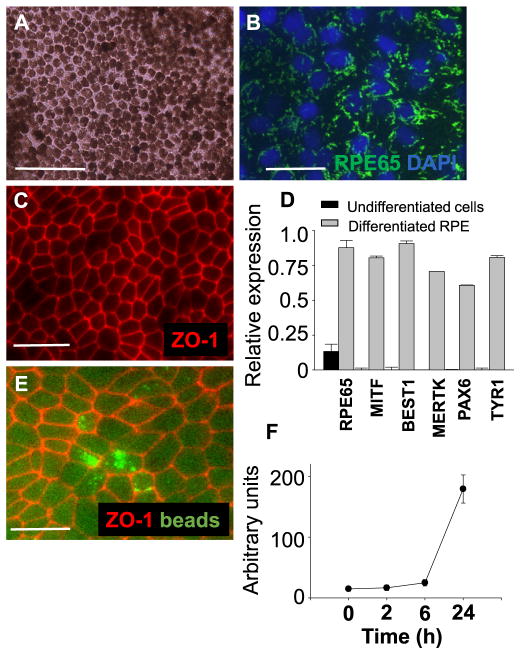
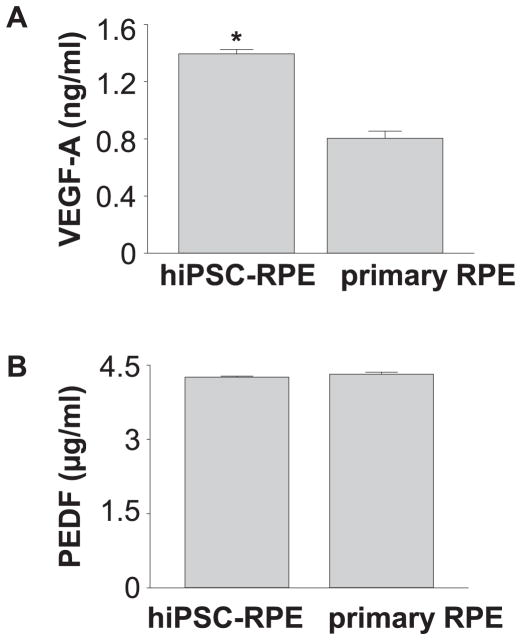
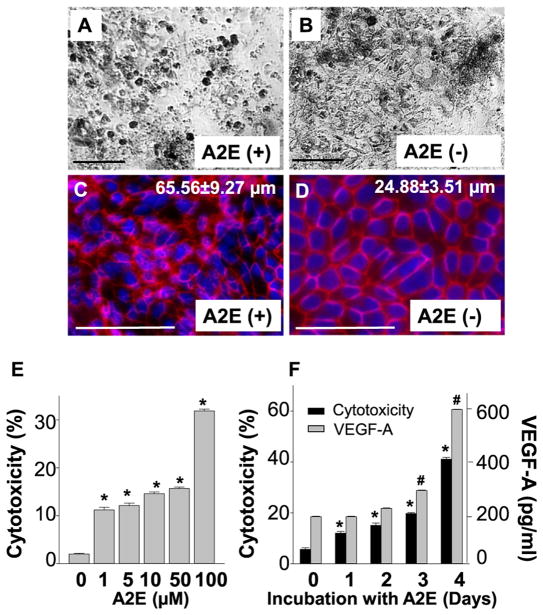
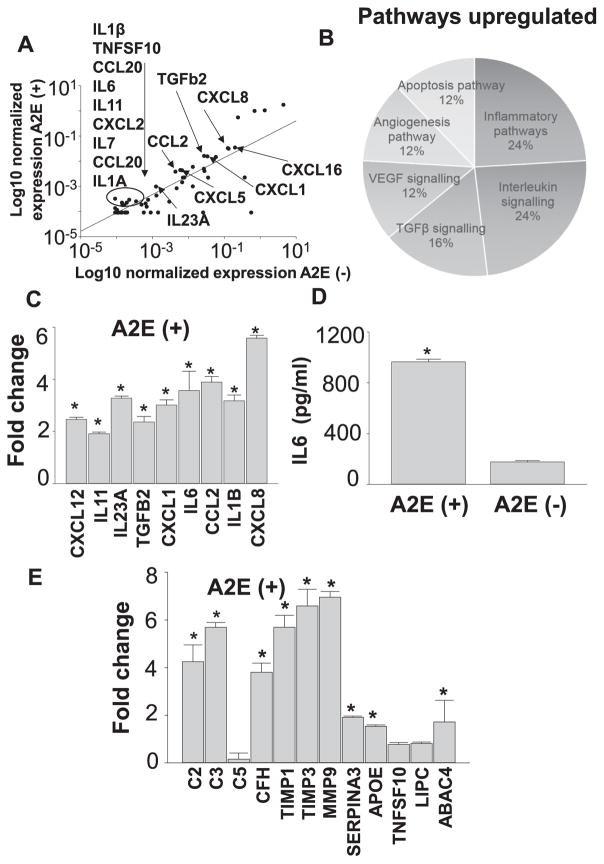
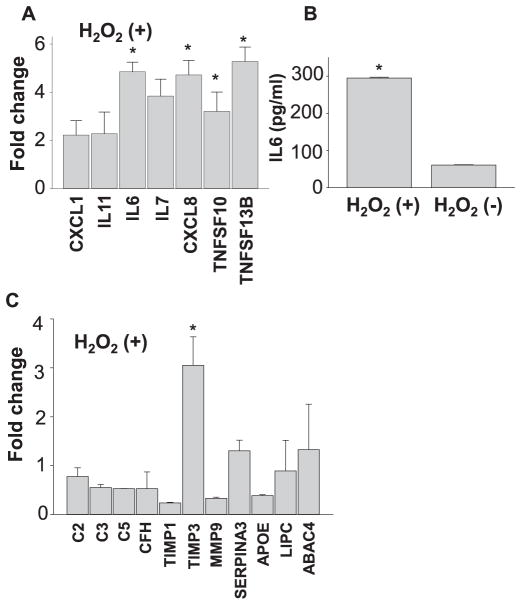
Accumulation of lipofuscin in the retinal pigmented epithelium (RPE) is observed in retinal degenerative diseases including Stargardt disease and age-related macular degeneration. Bis-retinoid N-retinyl-N-retinylidene ethanolamine (A2E) is a major component of lipofuscin. A2E has been implicated in RPE atrophy and retinal inflammation; however, mice with A2E accumulation display only a mild retinal phenotype. In the current study, human iPSC-RPE (hiPSC-RPE) cells were generated from healthy individuals to examine effects of A2E in human RPE cells. hiPSC-RPE cells displayed RPE-specific features, which include expression of RPE-specific genes, tight junction formation and ability to carry out phagocytosis. hiPSC-RPE cells demonstrated cell death and increased VEGF-A production in a time-dependent manner when they were cocultured with 10μM of A2E. PCR array analyses revealed upregulation of 26 and 12 pro-inflammatory cytokines upon A2E and HO exposure respectively, indicating that A2E and HO can cause inflammation in human retinas. Notably, identified gene profiles were different between A2E- and HO- treated hiPSC-RPE cells. A2E caused inflammatory changes observed in retinal degenerative diseases more closely as compared to HO. Collectively, these data obtained with hiPSC-RPE cells provide evidence that A2E plays an important role in pathogenesis of retinal degenerative diseases in humans.
在包括斯塔加特病和年龄相关性黄斑变性在内的视网膜退行性疾病中,可观察到视网膜色素上皮(RPE)中脂褐素的积累。双视黄醛N-视黄基-N-视黄叉乙醇胺(A2E)是脂褐素的主要成分。A2E与RPE萎缩和视网膜炎症有关;然而,积累A2E的小鼠仅表现出轻微的视网膜表型。在本研究中,从健康个体中生成了人诱导多能干细胞来源的RPE(hiPSC-RPE)细胞,以研究A2E在人RPE细胞中的作用。hiPSC-RPE细胞表现出RPE特异性特征,包括RPE特异性基因的表达、紧密连接的形成以及进行吞噬作用的能力。当hiPSC-RPE细胞与10μM的A2E共培养时,它们会以时间依赖性方式出现细胞死亡并增加VEGF-A的产生。PCR阵列分析显示,A2E和HO暴露后分别有26种和12种促炎细胞因子上调,表明A2E和HO可导致人视网膜炎症。值得注意的是,A2E处理组和HO处理组的hiPSC-RPE细胞的基因谱不同。与HO相比,A2E更接近地导致了在视网膜退行性疾病中观察到的炎症变化。总的来说,这些用hiPSC-RPE细胞获得的数据提供了证据,表明A2E在人类视网膜退行性疾病的发病机制中起重要作用。