From the Division of Translational and Regenerative Medicine, Department of Medicine (S.S., S.G.C., K.M.M., M.R., A. Babicheva, A. Balistrieri, R.J.A., J.W., A.M., J.X.-J.Y.) and Department of Physiology (A.M., J.X.-J.Y.), The University of Arizona College of Medicine, Tucson.
Hypertension. 2018 Mar;71(3):518-529. doi: 10.1161/HYPERTENSIONAHA.117.10503. Epub 2018 Jan 22.
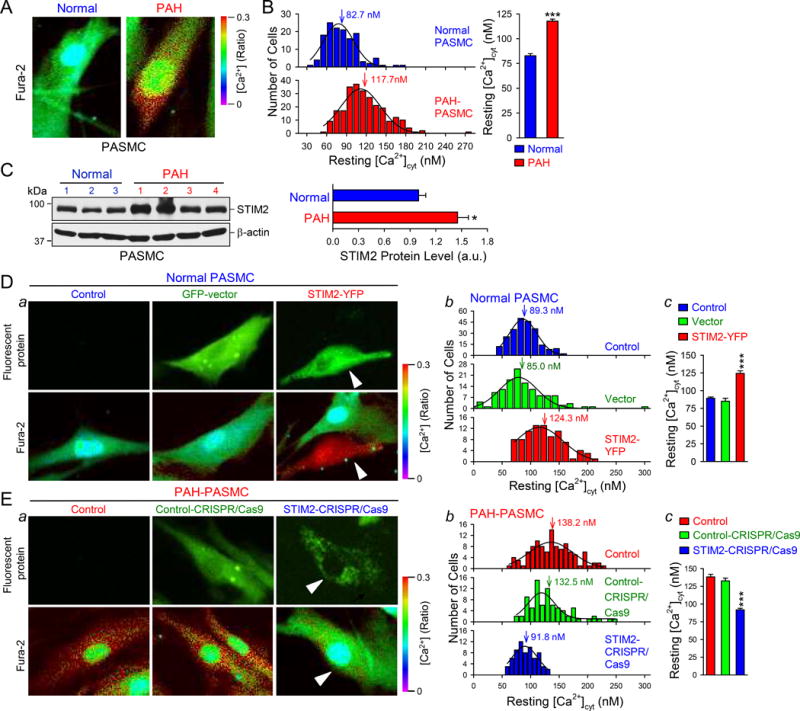
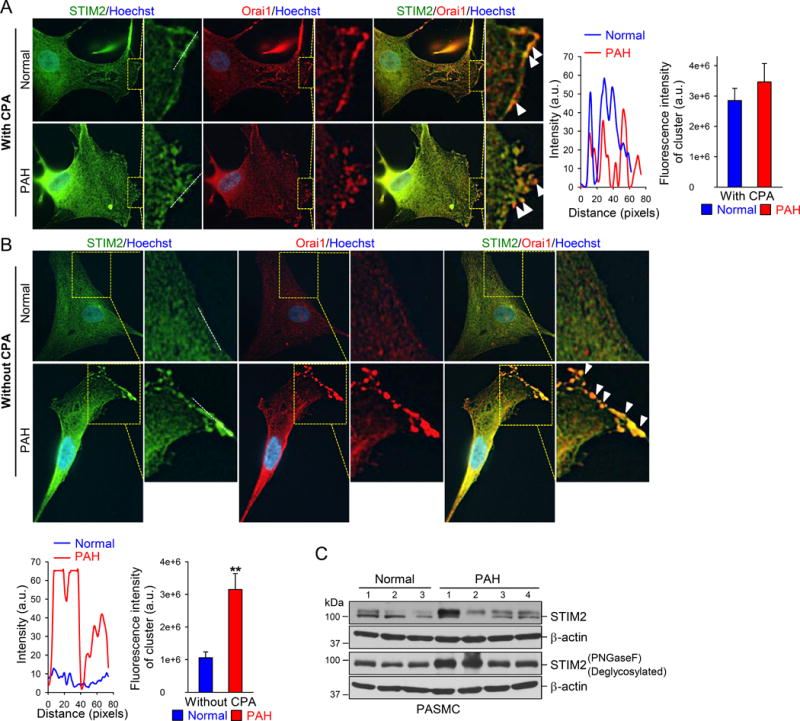
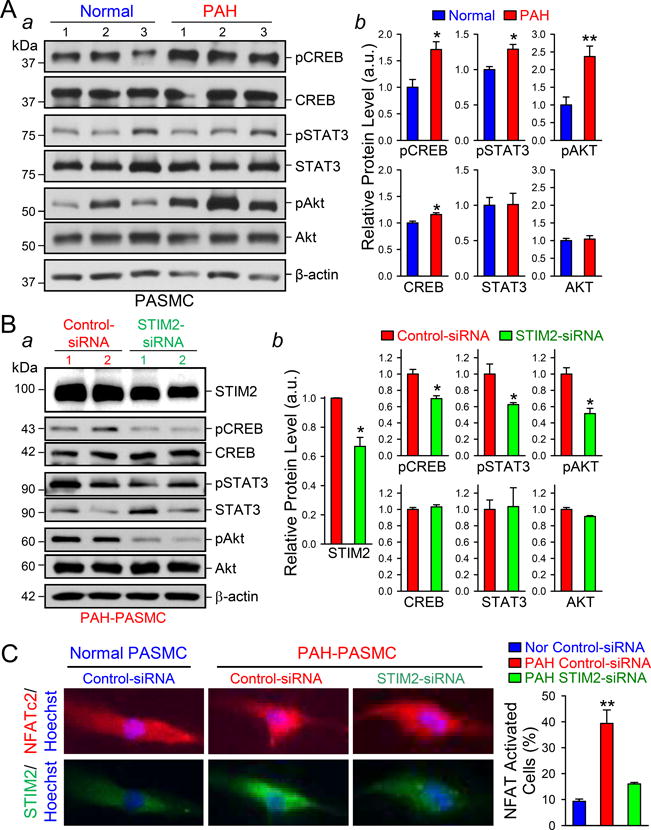
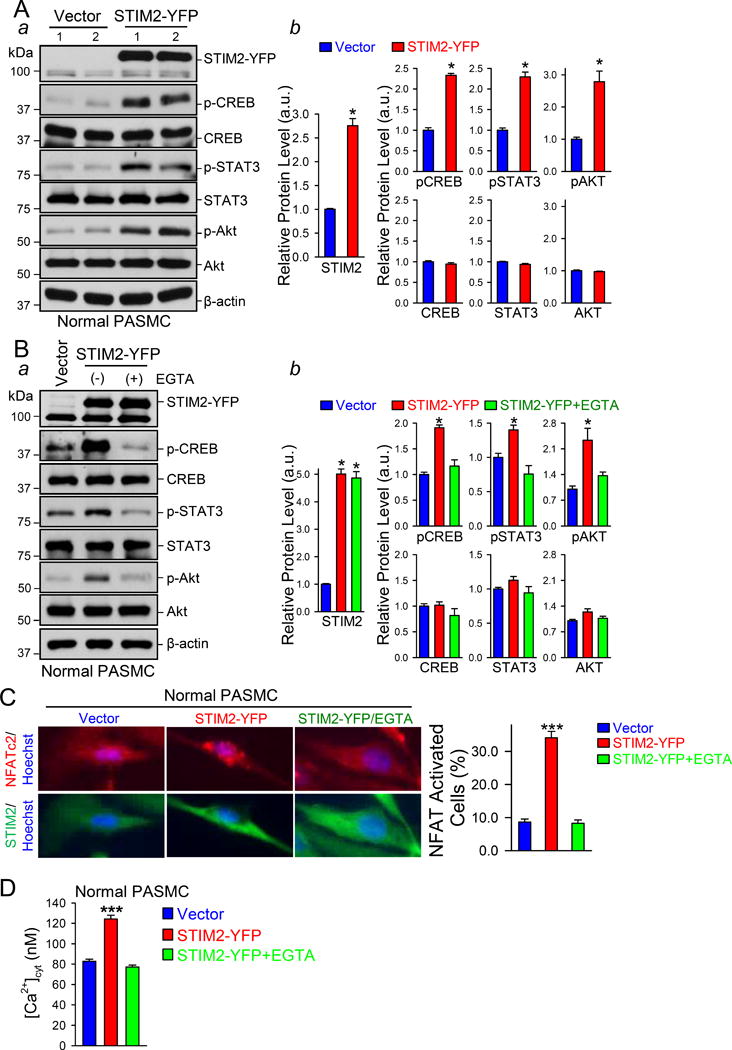
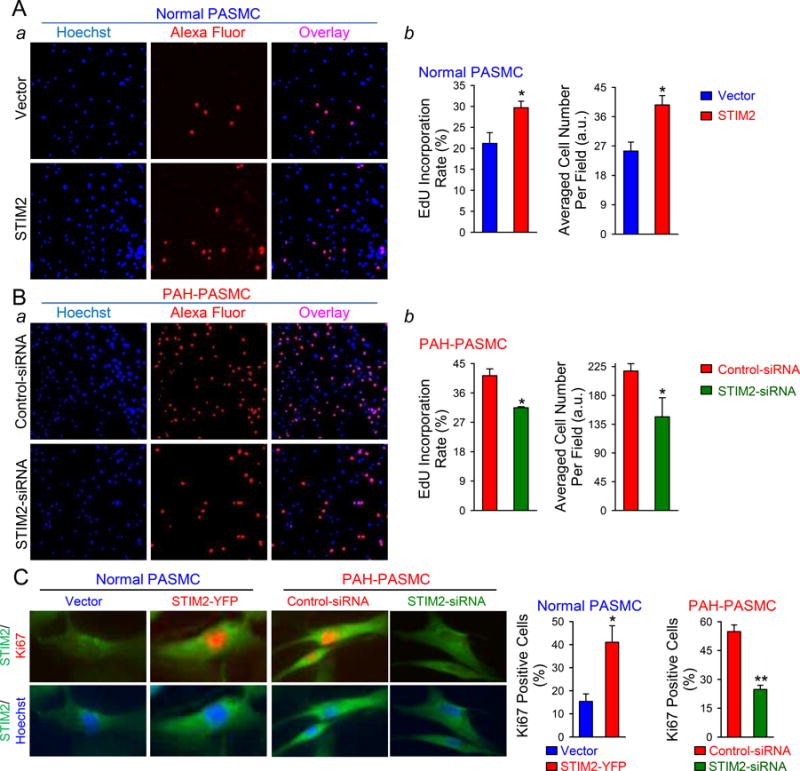
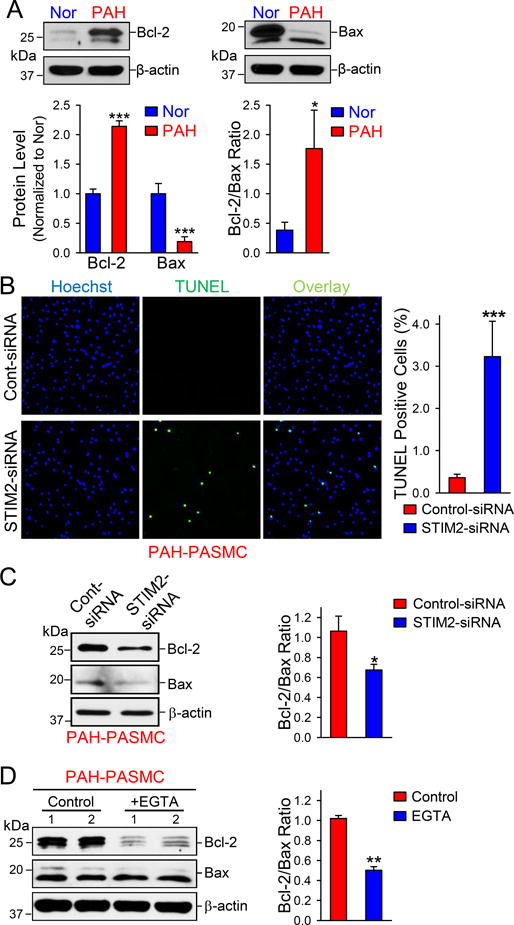
An increase in cytosolic free Ca concentration ([Ca]) in pulmonary artery smooth muscle cells (PASMCs) triggers pulmonary vasoconstriction and stimulates PASMC proliferation leading to vascular wall thickening. Here, we report that STIM2 (stromal interaction molecule 2), a Ca sensor in the sarcoplasmic reticulum membrane, is required for raising the resting [Ca] in PASMCs from patients with pulmonary arterial hypertension (PAH) and activating signaling cascades that stimulate PASMC proliferation and inhibit PASMC apoptosis. Downregulation of STIM2 in PAH-PASMCs reduces the resting [Ca], whereas overexpression of STIM2 in normal PASMCs increases the resting [Ca] The increased resting [Ca] in PAH-PASMCs is associated with enhanced phosphorylation (p) of CREB (cAMP response element-binding protein), STAT3 (signal transducer and activator of transcription 3), and AKT, increased NFAT (nuclear factor of activated T-cell) nuclear translocation, and elevated level of Ki67 (a marker of cell proliferation). Furthermore, the STIM2-associated increase in the resting [Ca] also upregulates the antiapoptotic protein Bcl-2 in PAH-PASMCs. Downregulation of STIM2 in PAH-PASMCs with siRNA (1) decreases the level of pCREB, pSTAT3, and pAKT and inhibits NFAT nuclear translocation, thereby attenuating proliferation, and (2) decreases Bcl-2, which leads to an increase of apoptosis. In summary, these data indicate that upregulated STIM2 in PAH-PASMCs, by raising the resting [Ca], contributes to enhancing PASMC proliferation by activating the CREB, STAT3, AKT, and NFAT signaling pathways and stimulating PASMC proliferation. The STIM2-associated increase in the resting [Ca] is also involved in upregulating Bcl-2 that makes PAH-PASMCs resistant to apoptosis, and thus plays an important role in sustained pulmonary vasoconstriction and excessive pulmonary vascular remodeling in patients with PAH.
细胞浆游离钙浓度 ([Ca]) 的增加会触发肺动脉平滑肌细胞 (PASMC) 的血管收缩,并刺激 PASMC 增殖,导致血管壁增厚。在这里,我们报告说,STIM2(基质相互作用分子 2),一种内质网膜中的钙传感器,是维持肺动脉高压 (PAH) 患者 PASMC 静息 [Ca] 并激活信号级联反应所必需的,这些级联反应刺激 PASMC 增殖并抑制 PASMC 凋亡。PAH-PASMC 中 STIM2 的下调会降低静息 [Ca],而在正常 PASMC 中过表达 STIM2 会增加静息 [Ca]。PAH-PASMC 中静息 [Ca] 的增加与 CREB(cAMP 反应元件结合蛋白)、STAT3(信号转导和转录激活因子 3)和 AKT 的磷酸化 (p) 增强、NFAT(激活 T 细胞的核因子)核易位增加以及 Ki67(细胞增殖标志物)水平升高有关。此外,STIM2 相关的静息 [Ca] 增加还上调了 PAH-PASMC 中的抗凋亡蛋白 Bcl-2。PAH-PASMC 中的 STIM2 用 siRNA 下调 (1) 降低了 pCREB、pSTAT3 和 pAKT 的水平,并抑制了 NFAT 核易位,从而抑制了增殖,和 (2) 降低了 Bcl-2,导致凋亡增加。总之,这些数据表明,PAH-PASMC 中上调的 STIM2 通过提高静息 [Ca],通过激活 CREB、STAT3、AKT 和 NFAT 信号通路并刺激 PASMC 增殖,从而促进 PASMC 增殖。STIM2 相关的静息 [Ca] 增加也参与上调 Bcl-2,使 PAH-PASMC 对凋亡产生抗性,因此在 PAH 患者中持续的肺血管收缩和过度的肺血管重塑中发挥重要作用。