Institute of Theoretical and Experimental Biophysics, Russian Academy of Sciences, Puschino, Russia, 142290.
Faculty of Fundamental Medicine, MV Lomonosov Moscow State University, Moscow, Russia, 119991.
Cell Death Dis. 2018 Jan 22;9(2):73. doi: 10.1038/s41419-017-0109-1.
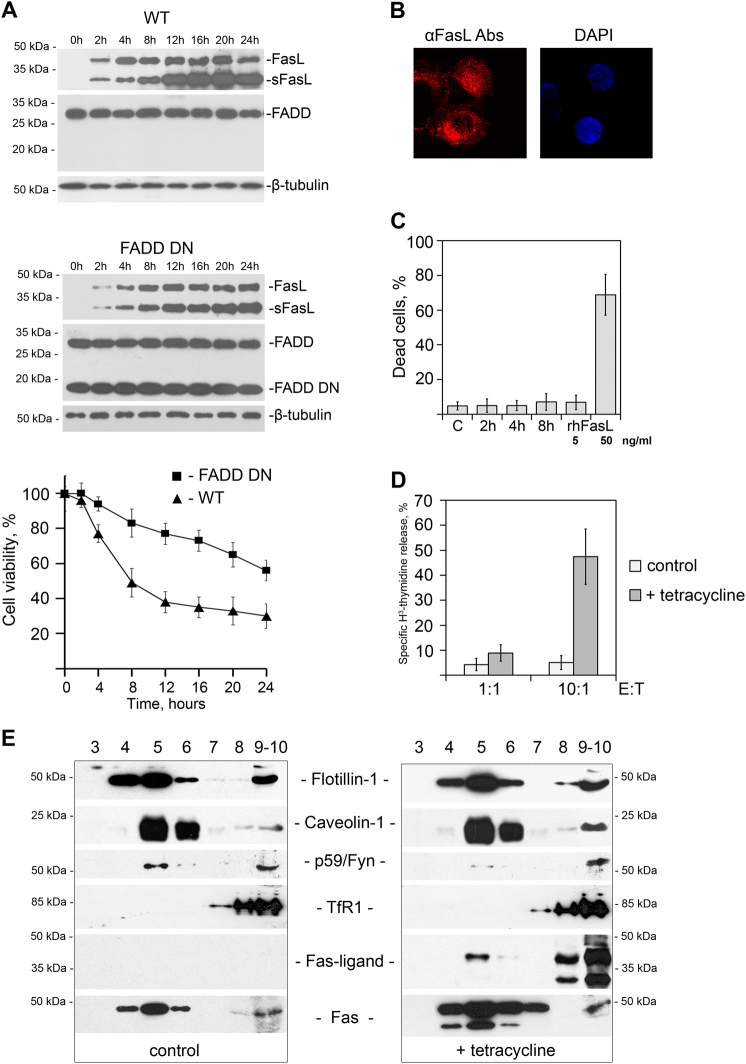
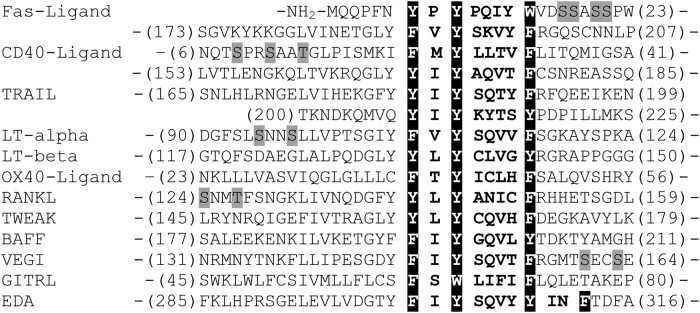
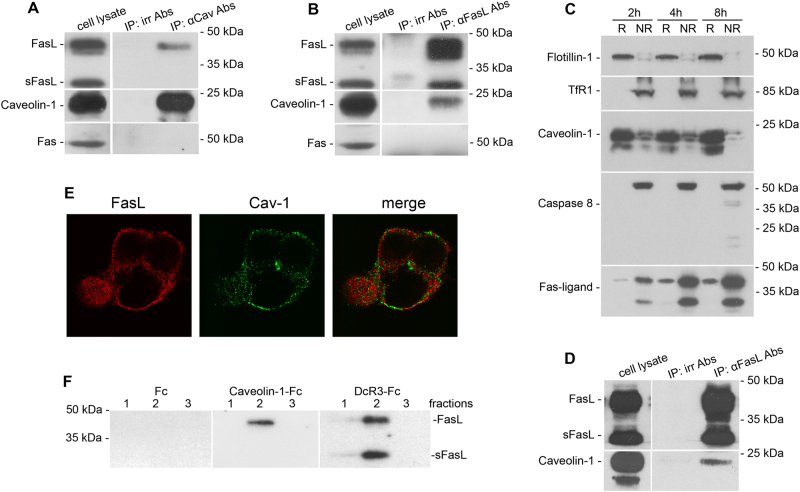
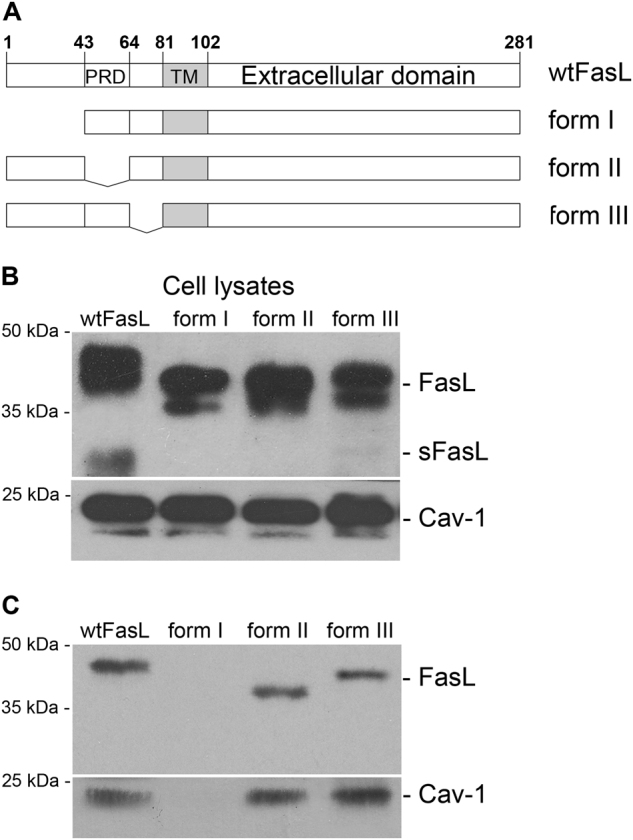
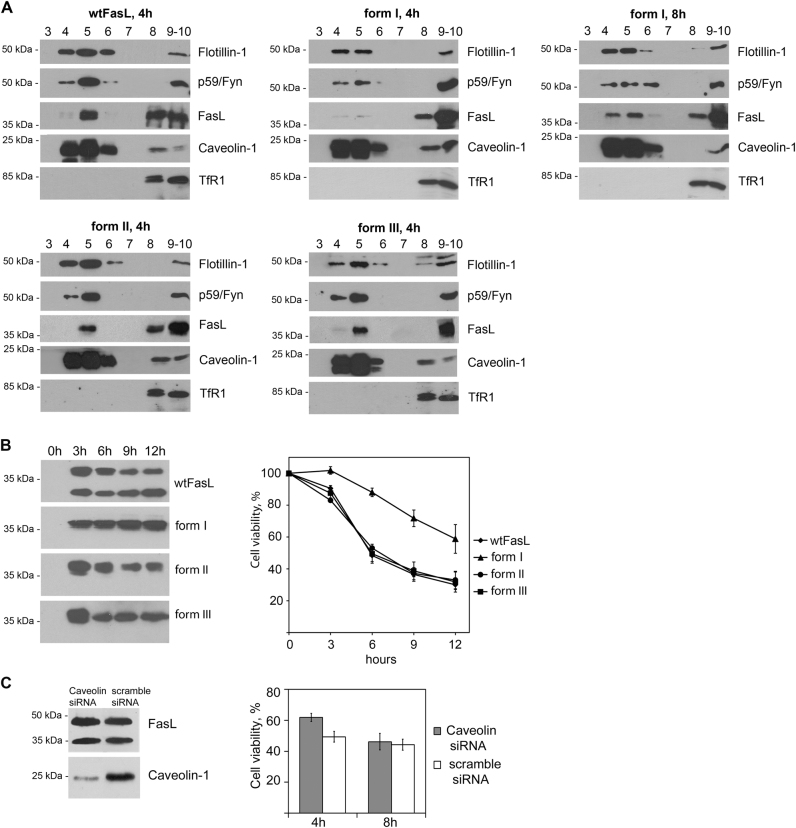
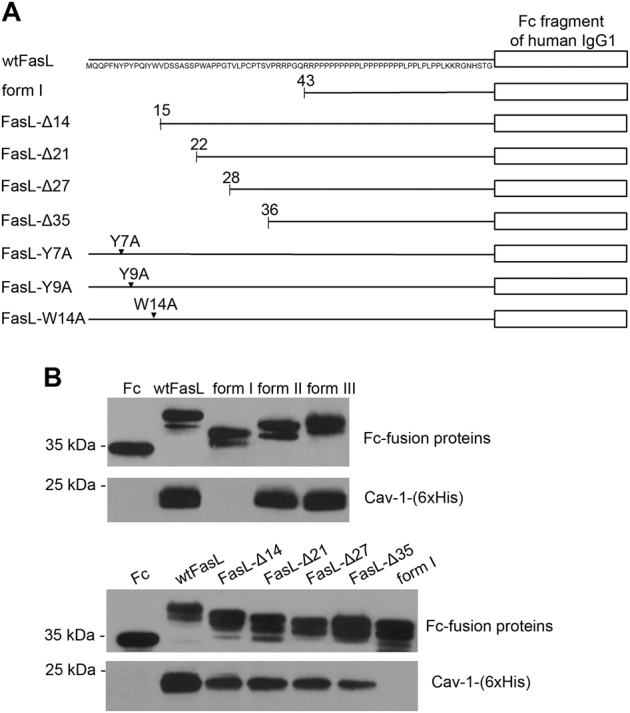
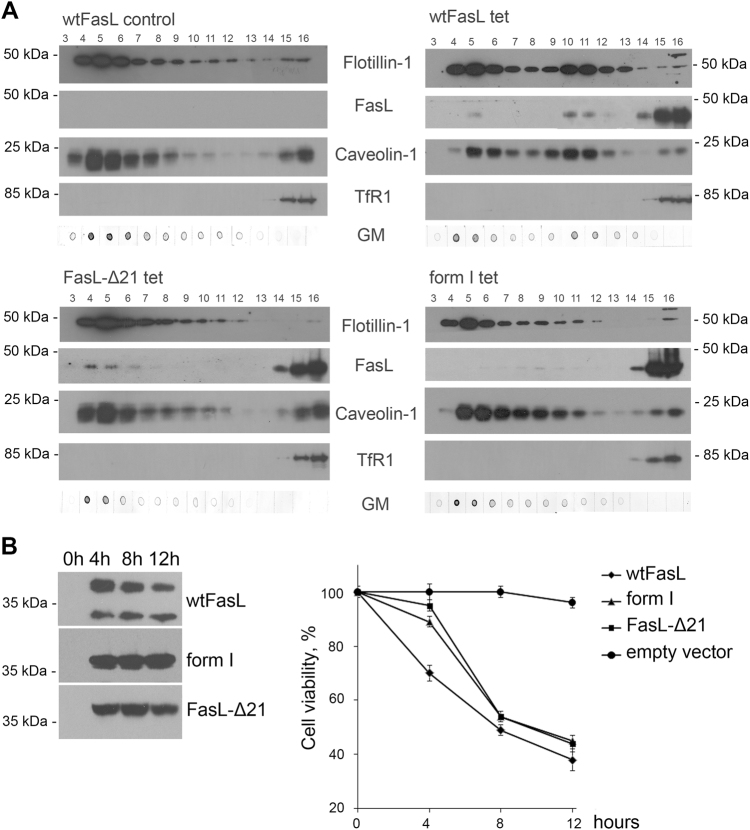
Fas-ligand/CD178 belongs to the TNF family proteins and can induce apoptosis through death receptor Fas/CD95. The important requirement for Fas-ligand-dependent cell death induction is its localization to rafts, cholesterol- and sphingolipid-enriched micro-domains of membrane, involved in regulation of different signaling complexes. Here, we demonstrate that Fas-ligand physically associates with caveolin-1, the main protein component of rafts. Experiments with cells overexpressing Fas-ligand revealed a FasL N-terminal pre-prolin-rich region, which is essential for the association with caveolin-1. We found that the N-terminal domain of Fas-ligand bears two caveolin-binding sites. The first caveolin-binding site binds the N-terminal domain of caveolin-1, whereas the second one appears to interact with the C-terminal domain of caveolin-1. The deletion of both caveolin-binding sites in Fas-ligand impairs its distribution between cellular membranes, and attenuates a Fas-ligand-induced cytotoxicity. These results demonstrate that the interaction of Fas-ligand and caveolin-1 represents a molecular basis for Fas-ligand translocation to rafts, and the subsequent induction of Fas-ligand-dependent cell death. A possibility of a similar association between other TNF family members and caveolin-1 is discussed.
Fas 配体/CD178 属于 TNF 家族蛋白,可通过死亡受体 Fas/CD95 诱导细胞凋亡。Fas 配体依赖性细胞死亡诱导的重要要求是其定位到筏,胆固醇和鞘脂丰富的膜微区,参与不同信号复合物的调节。在这里,我们证明 Fas 配体与筏的主要蛋白成分 caveolin-1 物理相关。用过表达 Fas 配体的细胞进行的实验表明,FasL N 端前脯氨酸富含区域对于与 caveolin-1 的关联是必需的。我们发现 Fas 配体的 N 端结构域具有两个 caveolin 结合位点。第一个 caveolin 结合位点结合 caveolin-1 的 N 端结构域,而第二个似乎与 caveolin-1 的 C 端结构域相互作用。Fas 配体中两个 caveolin 结合位点的缺失会损害其在细胞膜之间的分布,并减弱 Fas 配体诱导的细胞毒性。这些结果表明 Fas 配体和 caveolin-1 的相互作用代表了 Fas 配体向筏的易位的分子基础,以及随后 Fas 配体依赖性细胞死亡的诱导。讨论了其他 TNF 家族成员与 caveolin-1 之间类似关联的可能性。