Department of Investigative Radiology, National Cerebral and Cardiovascular Center Research Institute, 5-7-1 Fujishiro-dai, Suita, Osaka, 565-8565, Japan.
Department of Biofunctional Analysis, Osaka University of Pharmaceutical Sciences, 4-20-1 Nasahara, Takatsuki, Osaka, 569-1094, Japan.
Sci Rep. 2018 Jan 22;8(1):1347. doi: 10.1038/s41598-018-19890-1.
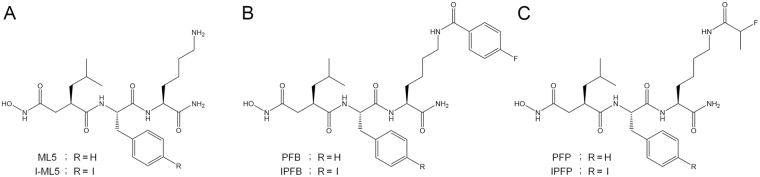
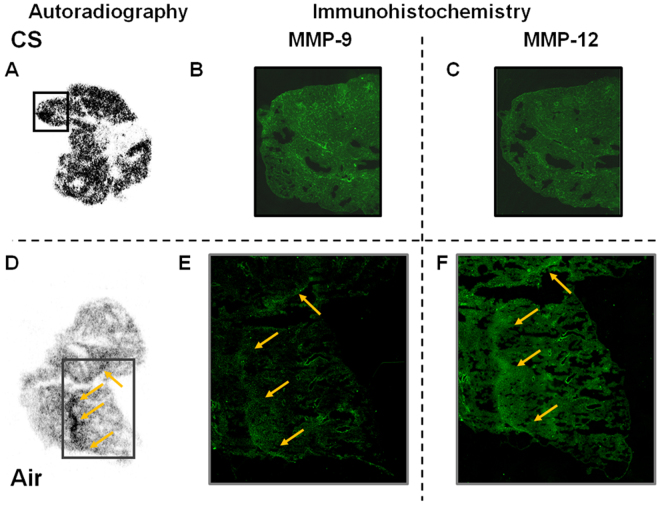
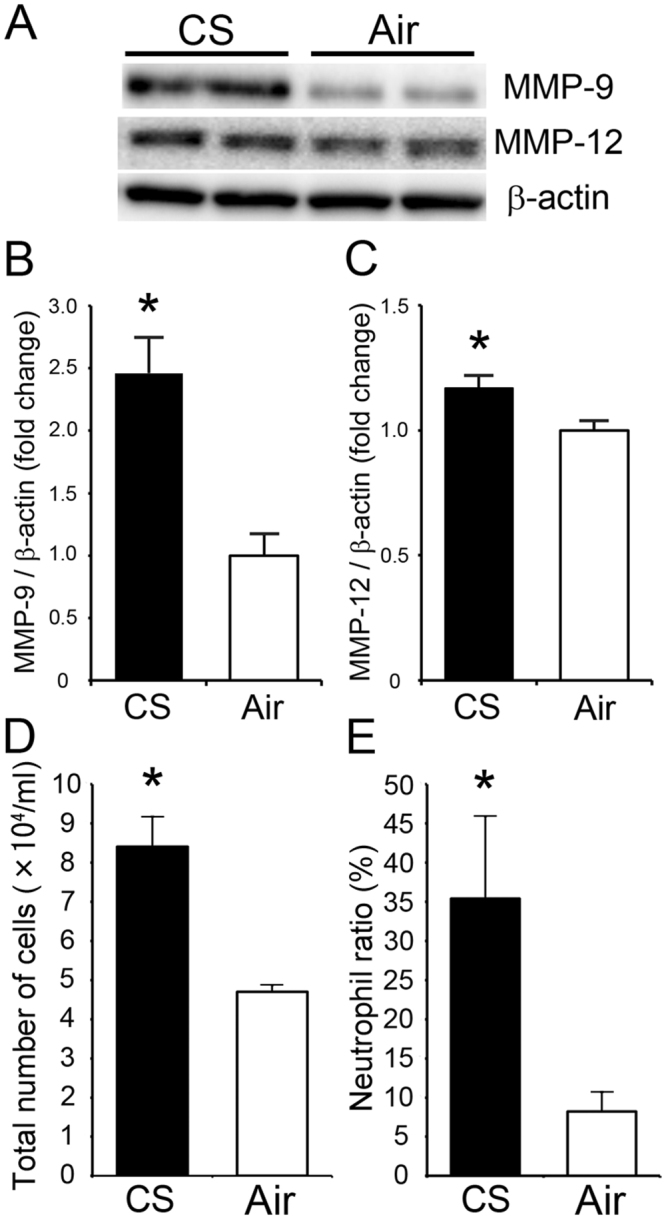
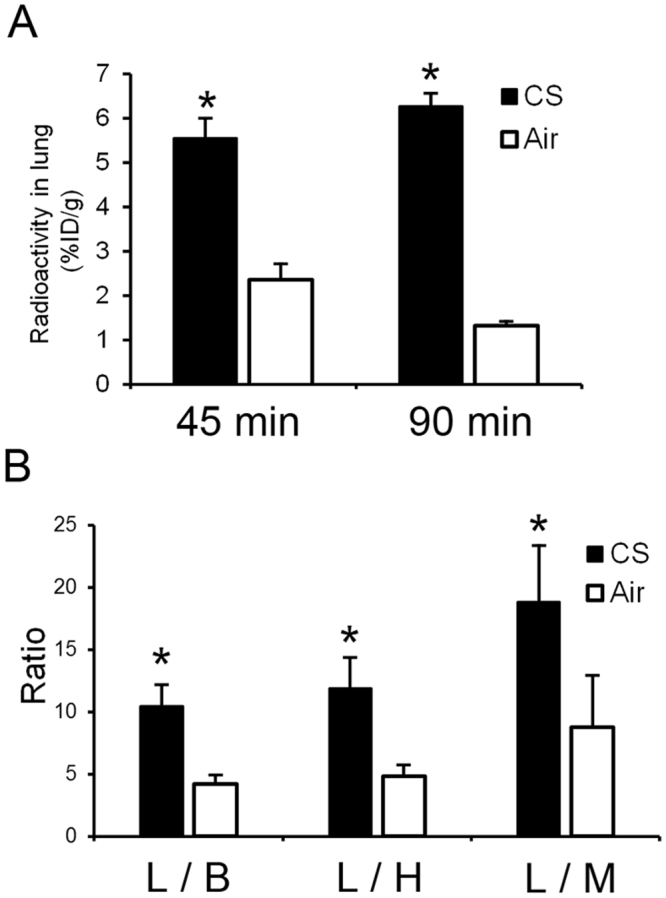
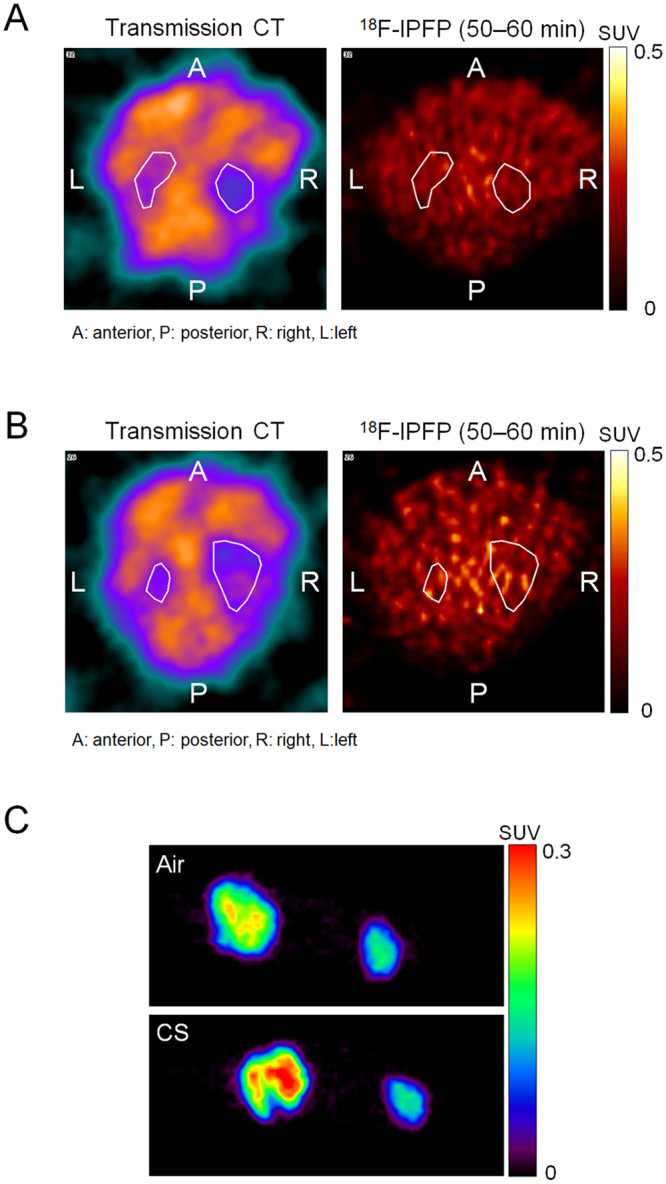
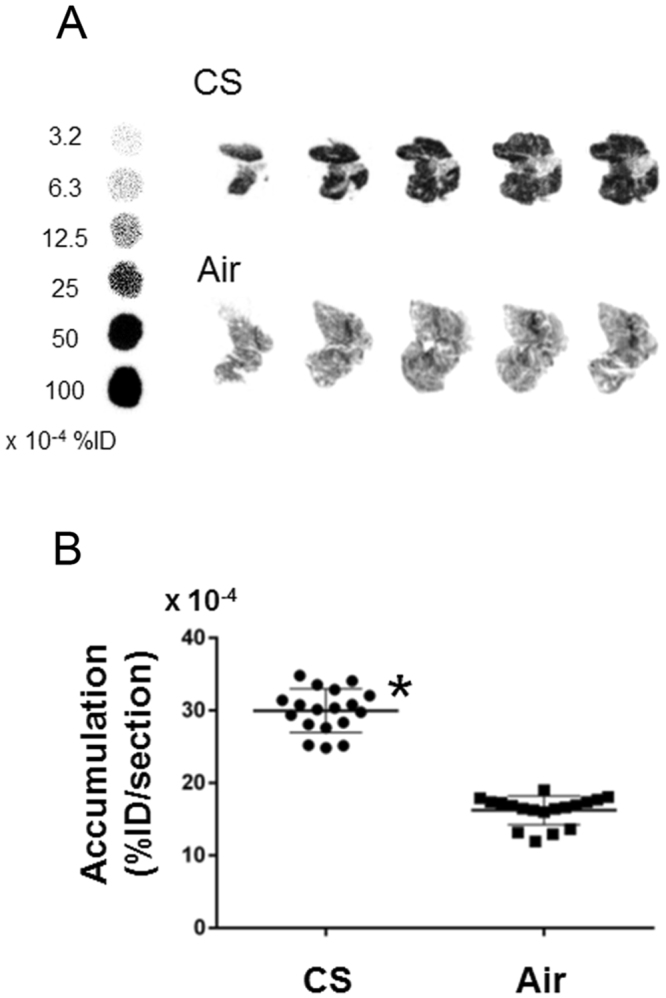
As matrix metalloproteinases (MMPs), especially MMP-9 and MMP-12 are involved in the pathological processes associated with chronic obstructive pulmonary disease (COPD), we developed a novel radiofluorinated probe, F-IPFP, for MMPs-targeted positron emission tomography (PET). F-IPFP was designed by iodination of MMP inhibitor to enhance the affinity, and labelled with a compact prosthetic agent, 4-nitrophenyl 2-F-fluoropropionate (F-NFP). As a result, IPFP demonstrated the highest affinity toward MMP-12 (IC = 1.5 nM) among existing PET probes. A COPD model was employed by exposing mice to cigarette smoke and the expression levels of MMP-9 and MMP-12 were significantly increased in the lungs. Radioactivity accumulation in the lungs 90 min after administration of F-IPFP was 4× higher in COPD mice than normal mice, and 10× higher than in the heart, muscle, and blood. Ex vivo PET confirmed the radioactivity distribution in the tissues and autoradiography analysis demonstrated that accumulation differences in the lungs of COPD mice were 2× higher than those of normal mice. These results suggest that F-IPFP is a promising probe for pulmonary imaging and expected to be applied to various MMP-related diseases for early diagnosis, tracking of therapeutic effects, and new drug development in both preclinical and clinical applications.
由于基质金属蛋白酶(MMPs),尤其是 MMP-9 和 MMP-12 参与与慢性阻塞性肺疾病(COPD)相关的病理过程,我们开发了一种新型放射性氟标记探针 F-IPFP,用于 MMPs 靶向正电子发射断层扫描(PET)。F-IPFP 通过 MMP 抑制剂的碘化来设计,以增强亲和力,并标记有紧凑的假体试剂 4-硝基苯基 2-F-氟丙酸酯(F-NFP)。结果,IPFP 表现出对 MMP-12(IC=1.5 nM)的最高亲和力,在现有的 PET 探针中。通过让小鼠暴露于香烟烟雾来建立 COPD 模型,结果显示 MMP-9 和 MMP-12 的表达水平在肺部显著增加。在给予 F-IPFP 90 分钟后,COPD 小鼠肺部的放射性累积量比正常小鼠高 4 倍,比心脏、肌肉和血液高 10 倍。离体 PET 证实了组织中的放射性分布,放射性自显影分析表明 COPD 小鼠肺部的累积差异比正常小鼠高 2 倍。这些结果表明,F-IPFP 是一种有前途的肺部成像探针,有望应用于各种与 MMP 相关的疾病,用于临床前和临床应用中的早期诊断、治疗效果跟踪和新药开发。