Department of Stem Cell and Regenerative Biology, Harvard University, Cambridge, MA, 02138, USA.
Harvard Stem Cell Institute, Cambridge, MA, 02138, USA.
Sci Rep. 2019 Dec 9;9(1):18613. doi: 10.1038/s41598-019-54766-y.
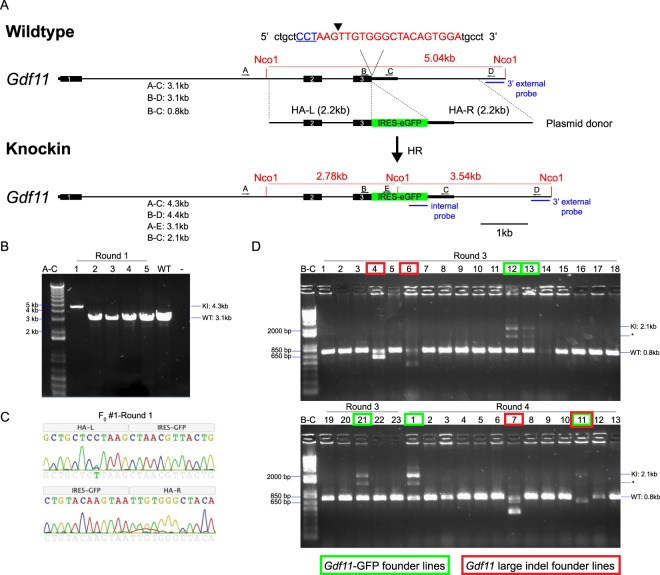
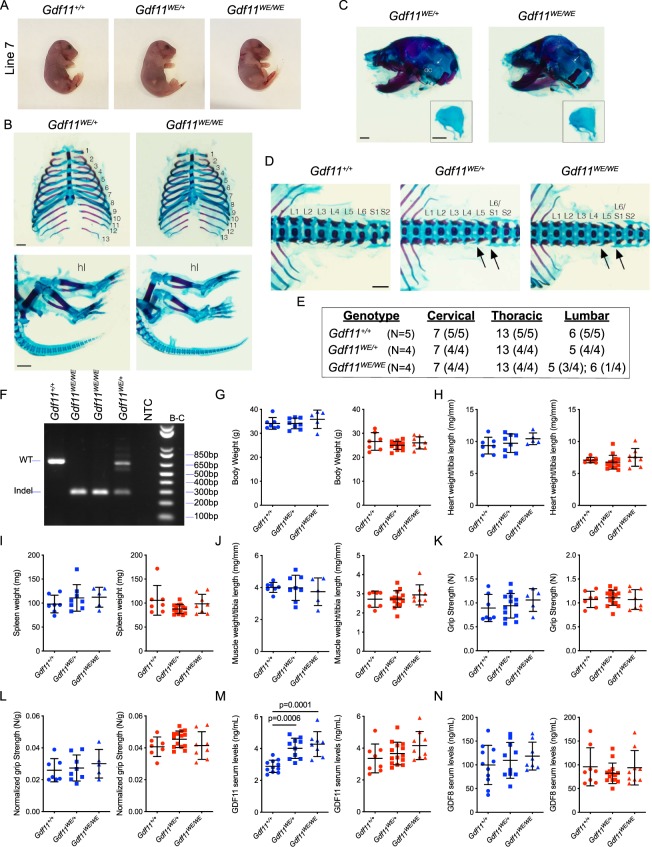
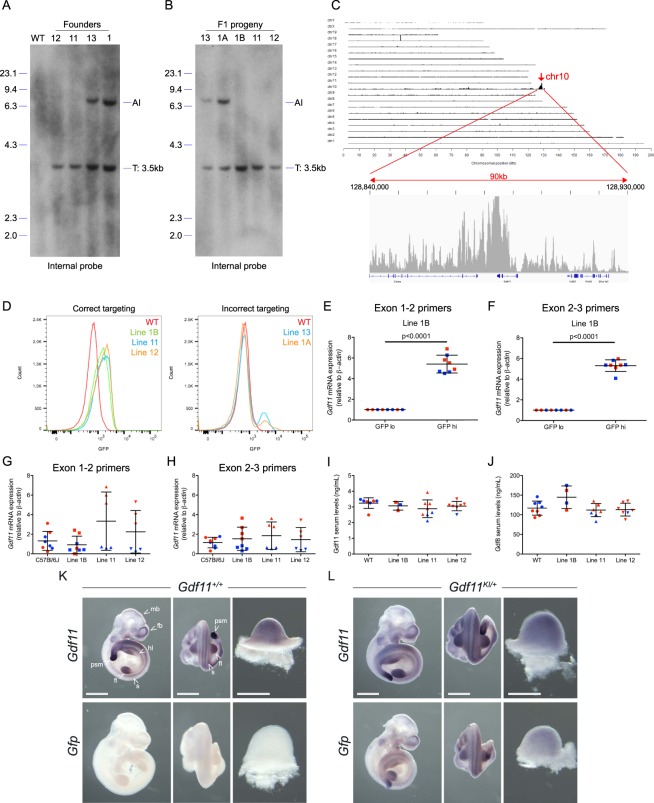
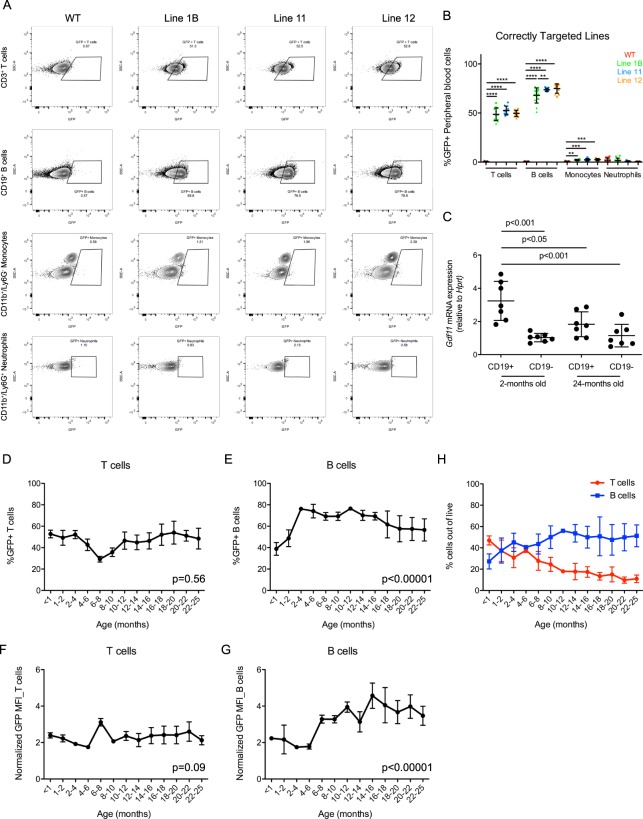
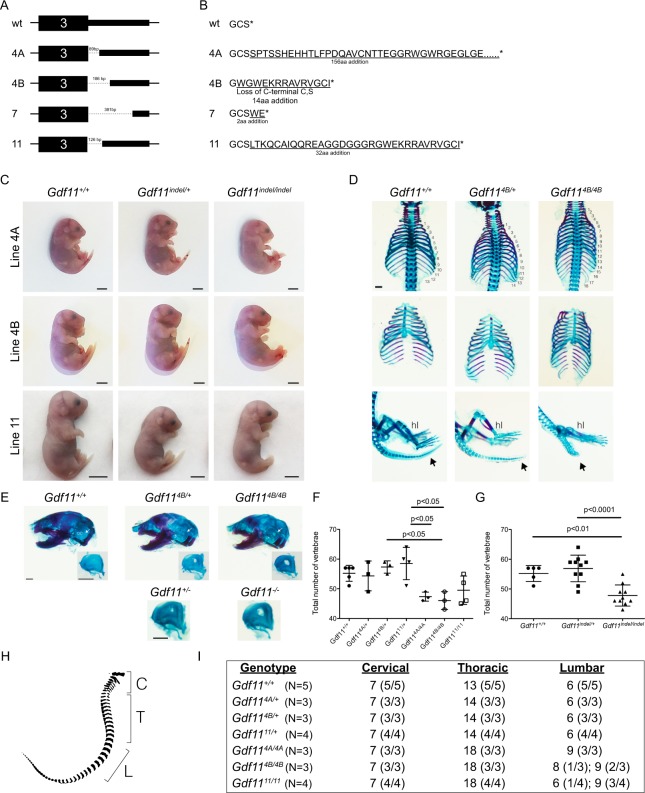
Recent advances in CRISPR/Cas gene editing technology have significantly expanded the possibilities and accelerated the pace of creating genetically engineered animal models. However, CRISPR/Cas-based strategies designed to precisely edit the genome can often yield unintended outcomes. Here, we report the use of zygotic CRISPR/Cas9 injections to generate a knock-in GFP reporter mouse at the Gdf11 locus. Phenotypic and genomic characterization of founder animals from these injections revealed a subset that contained the correct targeting event and exhibited GFP expression that, within the hematopoietic system, was restricted predominantly to lymphoid cells. Yet, in another subset of founder mice, we detected aberrant integration events at the target site that dramatically and inaccurately shifted hematopoietic GFP expression from the lymphoid to the myeloid lineage. Additionally, we recovered multiple Gdf11 deletion alleles that modified the C-terminus of the GDF11 protein. When bred to homozygosity, most of these alleles recapitulated skeletal phenotypes reported previously for Gdf11 knockout mice, suggesting that these represent null alleles. However, we also recovered one Gdf11 deletion allele that encodes a novel GDF11 variant protein ("GDF11-WE") predicted to contain two additional amino acids (tryptophan (W) and glutamic acid (E)) at the C-terminus of the mature ligand. Unlike the other Gdf11 deletion alleles recovered in this study, homozygosity for the Gdf11 allele did not phenocopy Gdf11 knockout skeletal phenotypes. Further investigation using in vivo and in vitro approaches demonstrated that GDF11-WE retains substantial physiological function, indicating that GDF11 can tolerate at least some modifications of its C-terminus and providing unexpected insights into its biochemical activities. Altogether, our study confirms that one-step zygotic injections of CRISPR/Cas gene editing complexes provide a quick and powerful tool to generate gene-modified mouse models. Moreover, our findings underscore the critical importance of thorough characterization and validation of any modified alleles generated by CRISPR, as unintended on-target effects that fail to be detected by simple PCR screening can produce substantially altered phenotypic readouts.
CRISPR/Cas 基因编辑技术的最新进展极大地扩展了可能性,并加速了创建基因工程动物模型的步伐。然而,旨在精确编辑基因组的基于 CRISPR/Cas 的策略通常会产生意想不到的结果。在这里,我们报告了使用合子 CRISPR/Cas9 注射在 Gdf11 基因座产生 GFP 报告基因敲入小鼠。这些注射产生的起始动物的表型和基因组特征表明,一部分包含正确的靶向事件,并表现出 GFP 表达,在造血系统中,主要局限于淋巴细胞。然而,在另一部分起始小鼠中,我们在靶位点检测到异常的整合事件,这些事件导致造血 GFP 表达从淋巴谱系剧烈且不准确地转移到髓系。此外,我们还回收了多个修饰 GDF11 蛋白 C 末端的 Gdf11 缺失等位基因。当与纯合子繁殖时,这些等位基因中的大多数重现了先前报道的 Gdf11 敲除小鼠的骨骼表型,表明这些等位基因是无效等位基因。然而,我们还回收了一个 Gdf11 缺失等位基因,该基因编码一种新的 GDF11 变体蛋白(“GDF11-WE”),预测在成熟配体的 C 末端含有另外两个氨基酸(色氨酸(W)和谷氨酸(E))。与本研究中回收的其他 Gdf11 缺失等位基因不同,Gdf11 等位基因的纯合性并不模拟 Gdf11 敲除骨骼表型。使用体内和体外方法的进一步研究表明,GDF11-WE 保留了相当大的生理功能,表明 GDF11 可以耐受其 C 末端的至少一些修饰,并为其生化活性提供了意外的见解。总之,我们的研究证实,一步法合子 CRISPR/Cas 基因编辑复合物提供了一种快速而强大的工具来生成基因修饰的小鼠模型。此外,我们的研究结果强调了对 CRISPR 产生的任何修饰等位基因进行彻底表征和验证的重要性,因为简单的 PCR 筛选未能检测到的非预期靶向效应可能会产生明显改变的表型读数。