Viana Agostinho Gonçalves, Magalhães Luísa Mourão Dias, Giunchetti Rodolfo Cordeiro, Dutra Walderez O, Gollob Kenneth J
Laboratório de Biologia das Interações Celulares, Departamento de Morfologia, Instituto de Ciências Biológicas, Universidade Federal de Minas Gerais, Belo Horizonte, Brazil.
Instituto Nacional de Ciência e Tecnologia de Doenças Tropicais (INCT-DT), Belo Horizonte, Brazil.
Front Immunol. 2018 Jan 8;8:1896. doi: 10.3389/fimmu.2017.01896. eCollection 2017.
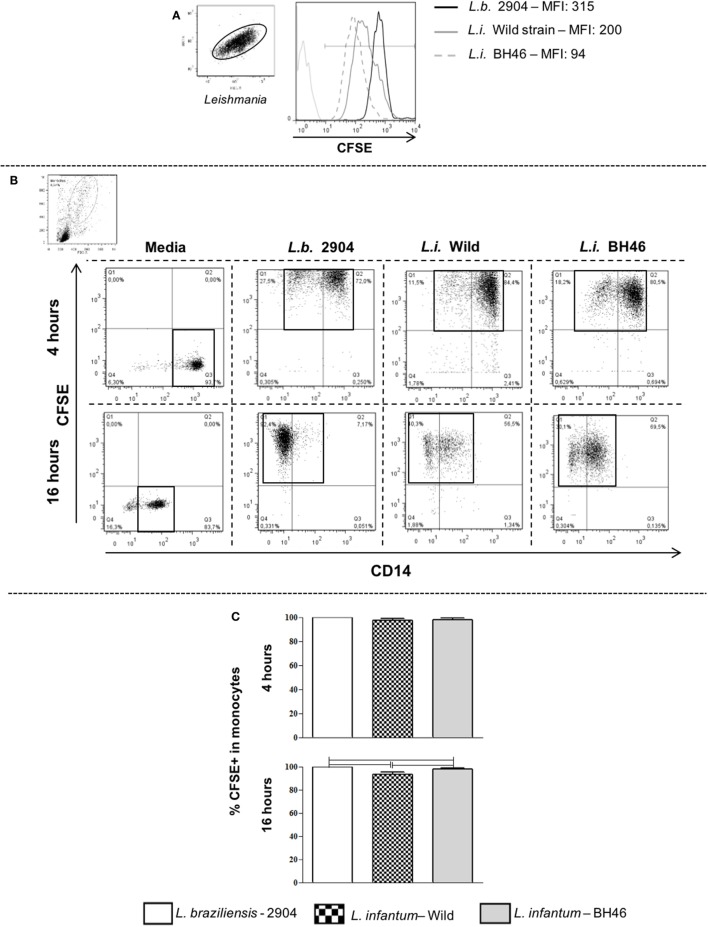
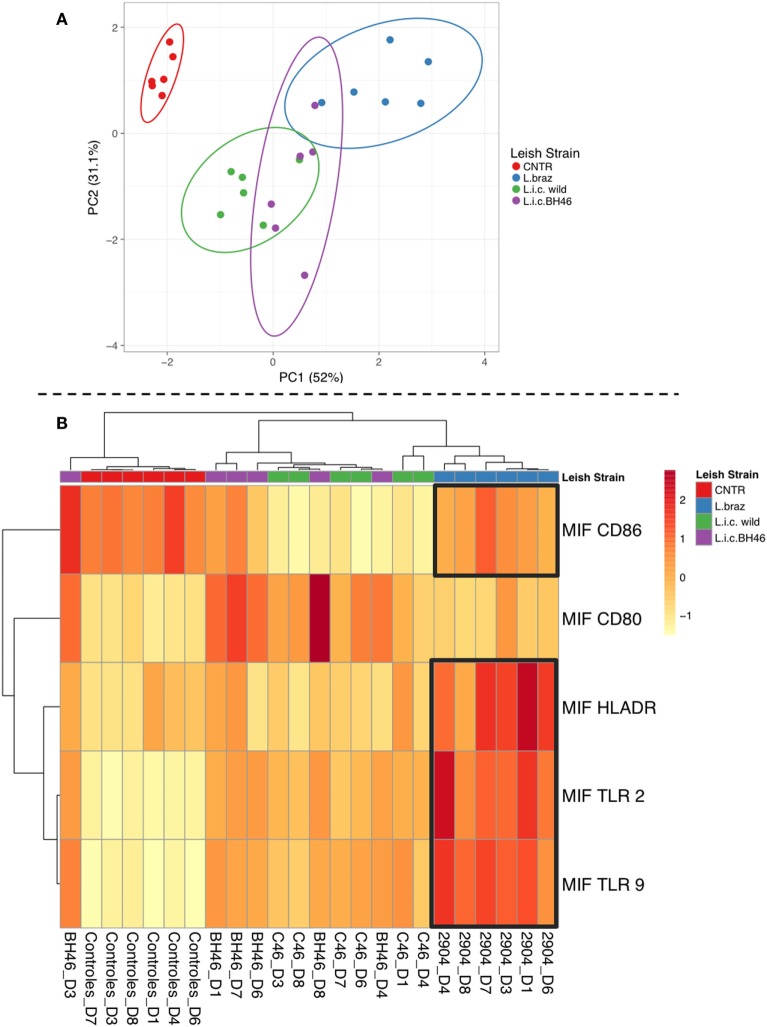
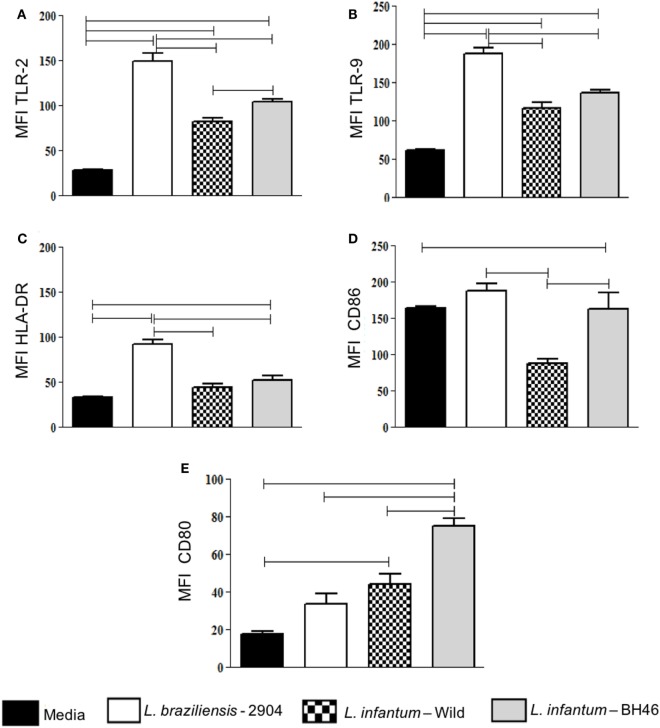
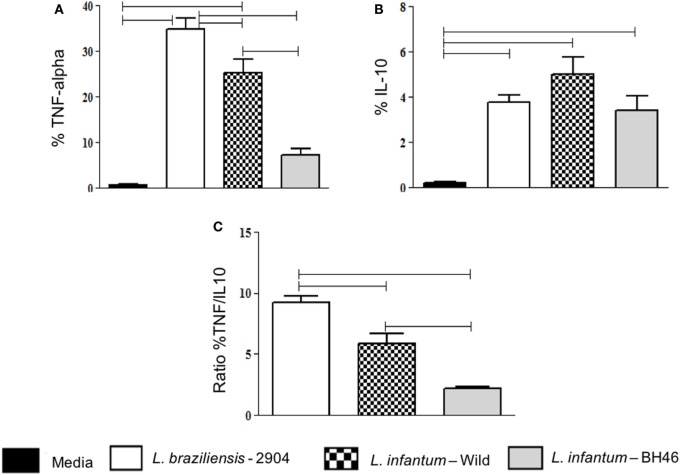
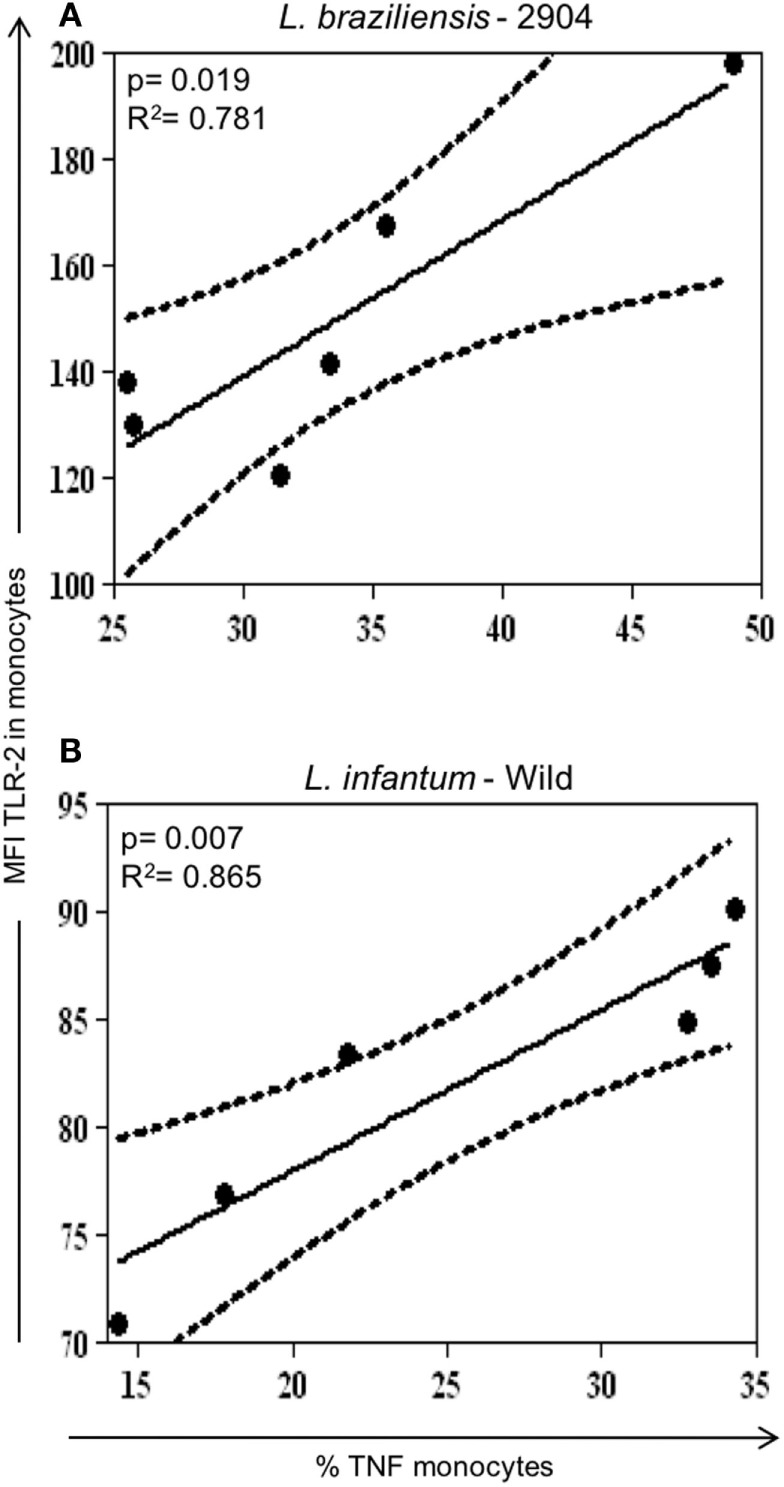
Human infection with different species of leads to distinct clinical manifestations, ranging from relatively mild cutaneous ( braziliensis) to severe visceral () forms of leishmaniasis. Here, we asked whether infection of human monocytes by strains responsible for distinct clinical manifestations leads to early changes in immunological characteristics and ability of the host cells to control . We evaluated the expression of toll-like receptors and MHC class II molecules, cytokines, and control by human monocytes following short-term infection with (M2904), a reference strain of (BH46), and a wild strain of (wild). The induction of TLR2, TLR9, and HLA-DR were all lower in when compared with -infected cells. Moreover, -infected monocytes (both strains) produced lower TNF-alpha and a lower TNF-alpha/IL-10 ratio, resulting in a weaker inflammatory profile and a 100-fold less effective control of than cells infected with . Our results show that strains fail to induce a strong inflammatory response, less activation, and less control of from human monocytes, when compared with that induced by infection. This functional profile may help explain the distinct clinical course observed in patients infected with the different species.
人类感染不同种类的利什曼原虫会导致不同的临床表现,从相对轻微的皮肤型(巴西利什曼原虫)到严重的内脏型(杜氏利什曼原虫)利什曼病。在此,我们探讨了导致不同临床表现的利什曼原虫菌株感染人类单核细胞是否会导致宿主细胞免疫特征和控制利什曼原虫能力的早期变化。我们评估了人类单核细胞在短期感染利什曼原虫(M2904)、杜氏利什曼原虫参考菌株(BH46)和野生利什曼原虫菌株(野生株)后Toll样受体和MHC II类分子的表达、细胞因子以及对利什曼原虫的控制情况。与感染杜氏利什曼原虫的细胞相比,感染利什曼原虫的细胞中TLR2、TLR9和HLA-DR的诱导水平均较低。此外,感染利什曼原虫的单核细胞(两种菌株)产生的肿瘤坏死因子-α(TNF-α)较低,TNF-α/白细胞介素-10(IL-10)比值也较低,导致炎症反应较弱,对利什曼原虫的控制效果比对感染杜氏利什曼原虫的细胞低100倍。我们的结果表明,与感染杜氏利什曼原虫相比,利什曼原虫菌株无法诱导人类单核细胞产生强烈的炎症反应、较少激活以及对利什曼原虫的控制能力较弱。这种功能特征可能有助于解释感染不同利什曼原虫种类的患者所观察到的不同临床病程。