Kamilos Márcia Farina, Borrelli Celso Luiz
Hospital Heliópolis, São Paulo, SP, Brazil.
Einstein (Sao Paulo). 2017 Oct-Dec;15(4):445-451. doi: 10.1590/S1679-45082017AO4051.
To evaluate the clinical response of patients with symptoms of genitourinary syndrome of menopause after application of microablative fractional radiofrequency in the vagina and vaginal introitus.
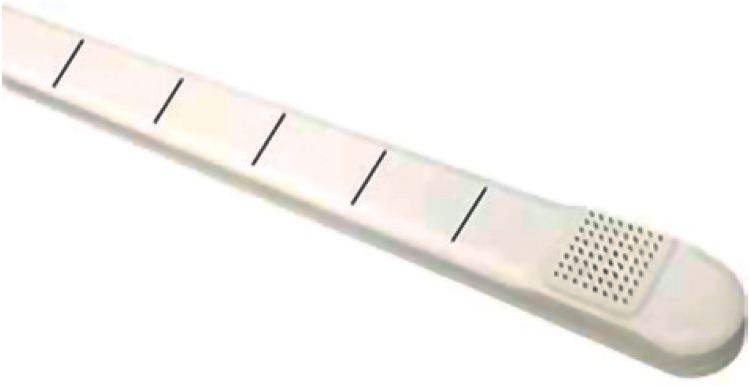
Fourteen patients with symptoms of genitourinary syndrome of menopause underwent three applications of microablative fractional radiofrequency with a 30-day interval, using the Wavetronic 6000HF-FRAXX device and a fractional vaginal electrode. The questionnaires World Health Organization Quality of Life (for quality of life evaluation), Female Sexual Function Index and Quality of Life Adapted Questionnaire in the Domain of Sexual Satisfaction (for sexual function and satisfaction evaluation) were administered before and after the applications (30 to 60 days after the last procedure), in addition to the satisfaction questionnaire after procedure.
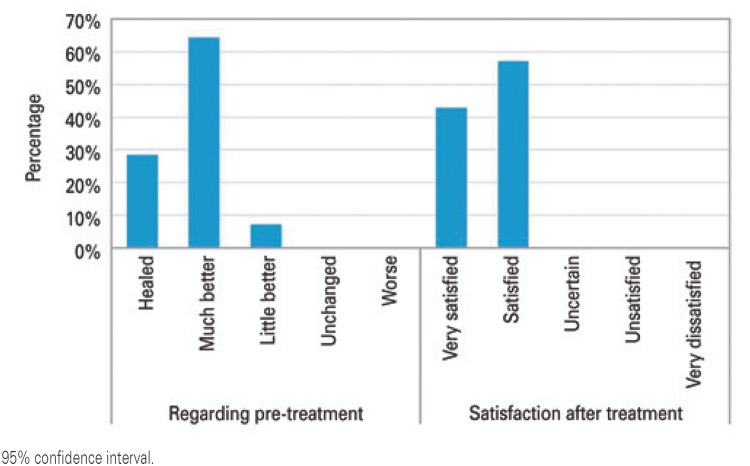
There was an increase in almost all dimensions on average in quality of life, with statistical significance only in the health domain. There was a significant improvement in the sexual domains in almost all dimensions. All patients stopped using lubricant during intercourse after treatment. In the satisfaction questionnaire after treatment, we observed that the vast majority felt cured or much better (29% and 64%, respectively, total of 92.6%) and were very satisfied or satisfied (43 and 57%, respectively, total of 100%). The only patient who reported little improvement had an 18-year postmenopausal history and was treatment naïve.
Microablative fractional radiofrequency was effective in treating symptoms of vaginal dryness and dyspareunia, and eliminated the use of vaginal lubricant during the period observed. Since this is a pilot study with a small number of patients, further studies are required to corroborate our findings and evaluate the long-term effects of microablative fractional radiofrequency on the vaginal tissue.
评估在阴道及阴道口应用微剥脱性分次射频后,绝经后泌尿生殖综合征患者的临床反应。
14例绝经后泌尿生殖综合征患者使用Wavetronic 6000HF-FRAXX设备及分次阴道电极,每隔30天进行3次微剥脱性分次射频治疗。在治疗前后(最后一次治疗后30至60天)发放世界卫生组织生活质量问卷(用于生活质量评估)、女性性功能指数问卷以及性满意度领域适应性生活质量问卷(用于性功能及满意度评估),此外还发放治疗后满意度问卷。
生活质量几乎所有维度平均有所提高,仅在健康领域具有统计学意义。几乎所有维度的性领域均有显著改善。所有患者治疗后性交时均停止使用润滑剂。在治疗后满意度问卷中,我们观察到绝大多数患者感觉治愈或明显好转(分别为29%和64%,总计92.6%),并且非常满意或满意(分别为43%和57%,总计100%)。唯一报告改善不明显的患者绝经后已有18年,且未接受过治疗。
微剥脱性分次射频在治疗阴道干燥和性交困难症状方面有效,并且在观察期内消除了阴道润滑剂的使用。由于这是一项针对少数患者的试点研究,需要进一步研究来证实我们的发现,并评估微剥脱性分次射频对阴道组织的长期影响。