Bazot Quentin, Paschos Kostas, Allday Martin J
Molecular Virology, Department of Medicine, Imperial College London, London, United Kingdom
Molecular Virology, Department of Medicine, Imperial College London, London, United Kingdom.
J Virol. 2018 Mar 14;92(7). doi: 10.1128/JVI.01918-17. Print 2018 Apr 1.
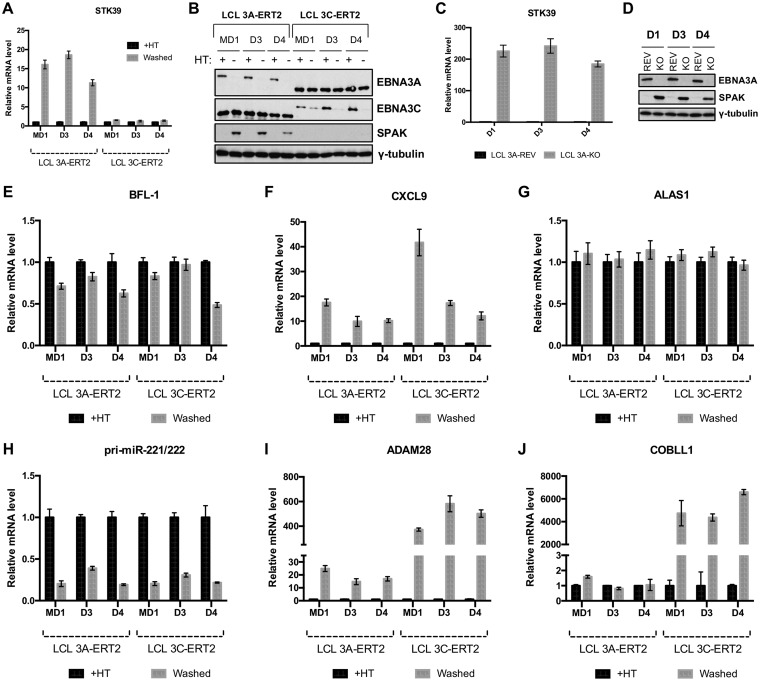
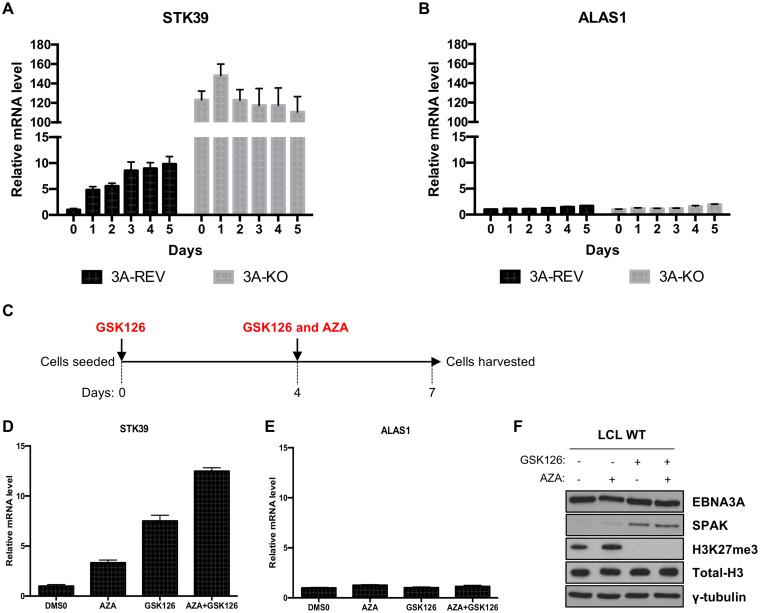
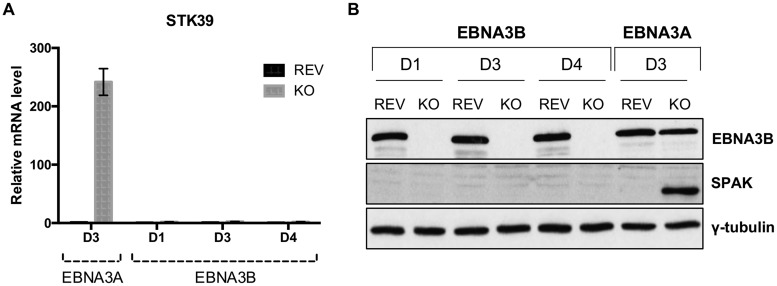
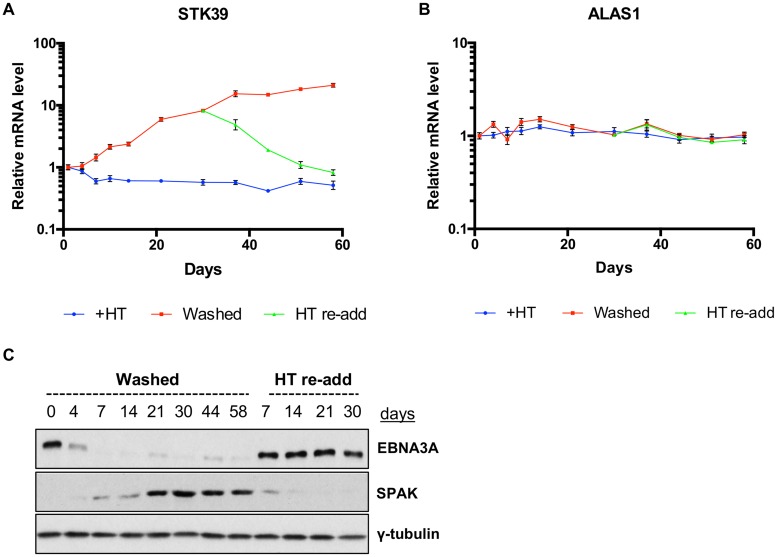
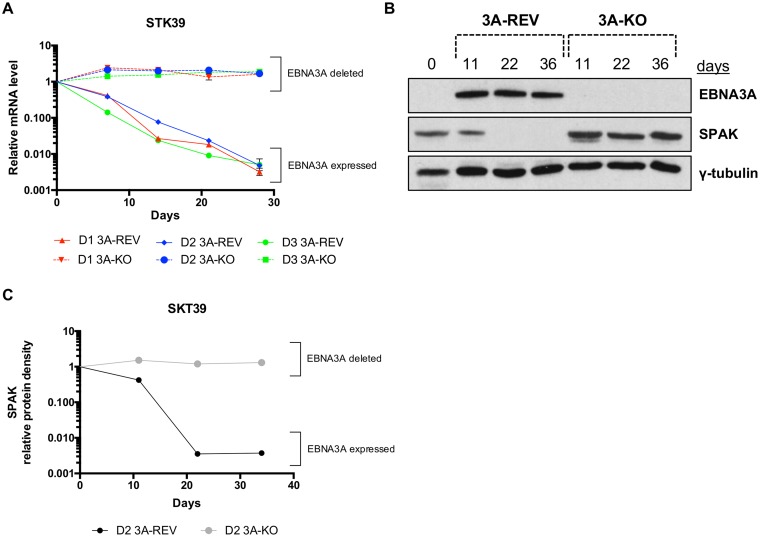
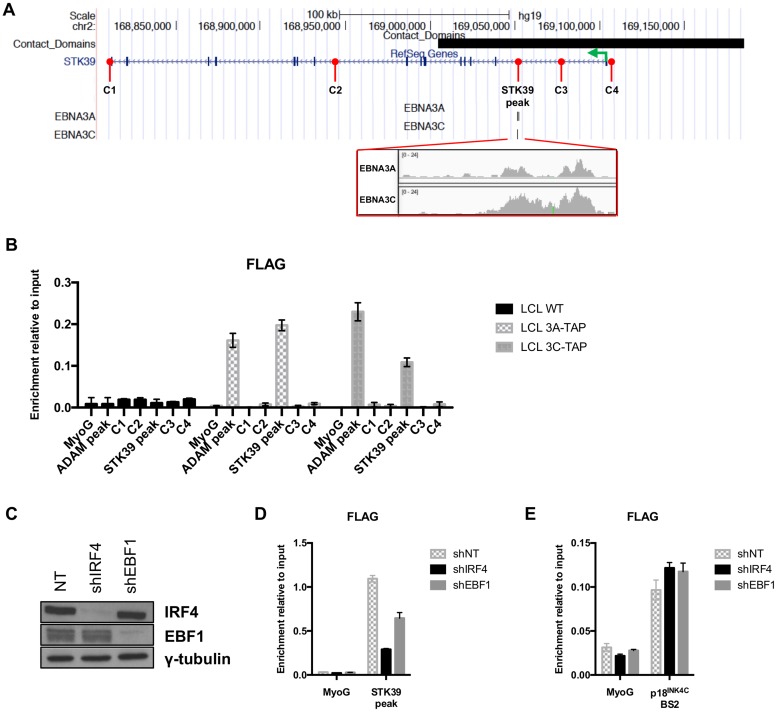
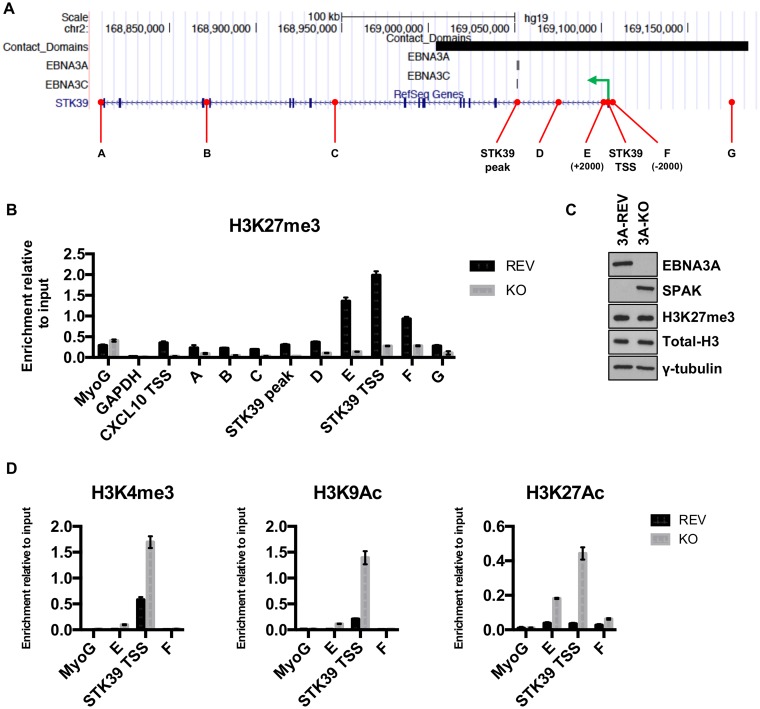
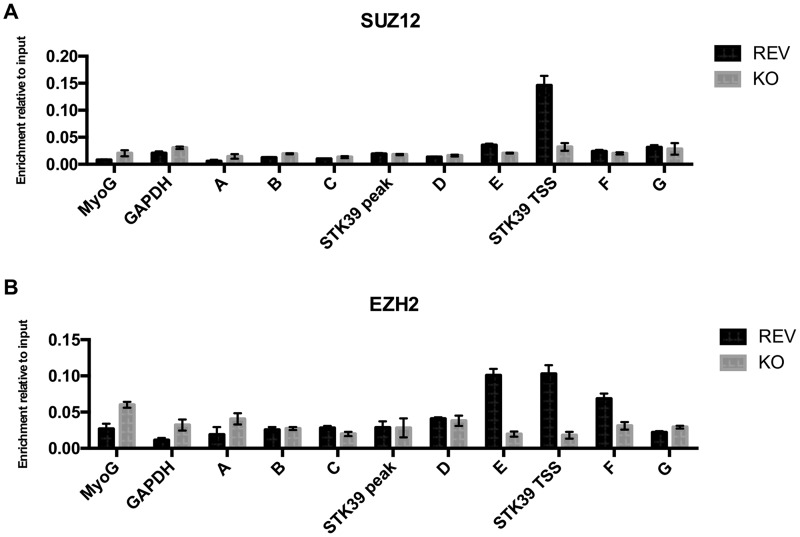
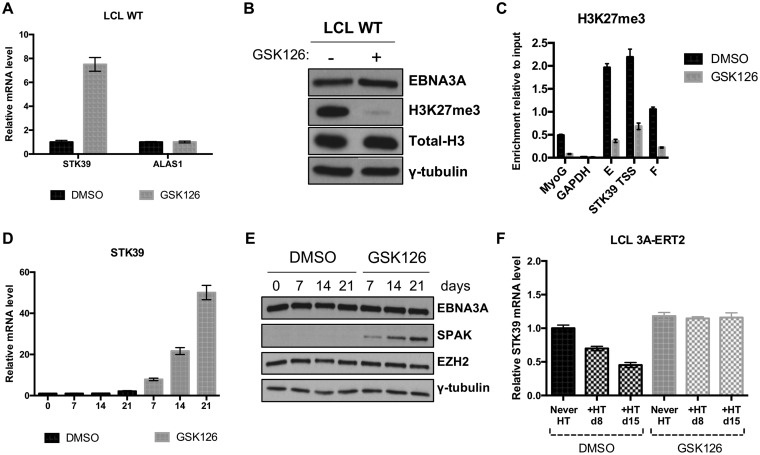
Epstein-Barr virus (EBV) establishes latent infection in human B cells and is associated with a wide range of cancers. The EBV nuclear antigen 3 (EBNA3) family proteins are critical for B cell transformation and function as transcriptional regulators. It is well established that EBNA3A and EBNA3C cooperate in the regulation of cellular genes. Here, we demonstrate that the gene is repressed only by EBNA3A. This is the first example of a gene regulated only by EBNA3A in EBV-transformed lymphoblastoid cell lines (LCLs) without the help of EBNA3C. This was demonstrated using a variety of LCLs carrying either knockout, revertant, or conditional EBNA3 recombinants. Investigating the kinetics of EBNA3A-mediated changes in expression showed that becomes derepressed quickly after EBNA3A inactivation. This derepression is reversible as EBNA3A reactivation represses in the same cells expressing a conditional EBNA3A. is silenced shortly after primary B cell infection by EBV, and no -encoded protein (SPAK) is detected 3 weeks postinfection. Chromatin immunoprecipitation (ChIP) analysis indicates that EBNA3A directly binds to a regulatory region downstream of the transcription start site. For the first time, we demonstrated that the polycomb repressive complex 2 with the deposition of the repressive mark H3K27me3 is not only important for the maintenance of an EBNA3A target gene () but is also essential for the initial establishment of its silencing. Finally, we showed that DNA methyltransferases are involved in the EBNA3A-mediated repression of EBV is well known for its ability to transform B lymphocytes to continuously proliferating lymphoblastoid cell lines. This is achieved in part by the reprogramming of cellular gene transcription by EBV transcription factors, including the EBNA3 proteins that play a crucial role in this process. In the present study, we found that EBNA3A epigenetically silences This is the first gene where EBNA3A has been found to exert its repressive role by itself, without needing its coregulators EBNA3B and EBNA3C. Furthermore, we demonstrated that the polycomb repressor complex is essential for EBNA3A-mediated repression of Findings in this study provide new insights into the regulation of cellular genes by the transcription factor EBNA3A.
爱泼斯坦-巴尔病毒(EBV)在人类B细胞中建立潜伏感染,并与多种癌症相关。EBV核抗原3(EBNA3)家族蛋白对于B细胞转化至关重要,并且作为转录调节因子发挥作用。EBNA3A和EBNA3C在细胞基因的调控中协同作用,这一点已得到充分证实。在此,我们证明该基因仅被EBNA3A抑制。这是在EBV转化的淋巴母细胞系(LCLs)中首个仅由EBNA3A调控而无需EBNA3C协助的基因实例。这是通过使用携带敲除、回复或条件性EBNA3重组体的多种LCLs得以证明的。研究EBNA3A介导的该基因表达变化的动力学表明,EBNA3A失活后该基因迅速去抑制。这种去抑制是可逆的,因为EBNA3A重新激活会在表达条件性EBNA3A的相同细胞中抑制该基因。EBV初次感染原代B细胞后不久该基因即被沉默,感染后3周未检测到该基因编码的蛋白(SPAK)。染色质免疫沉淀(ChIP)分析表明,EBNA3A直接结合到该基因转录起始位点下游的一个调控区域。我们首次证明,具有抑制性标记H3K27me3沉积的多梳抑制复合物2不仅对于维持EBNA3A靶基因(该基因)很重要,而且对于其沉默的初始建立也必不可少。最后,我们表明DNA甲基转移酶参与了EBNA3A介导的该基因的抑制。EBV以其将B淋巴细胞转化为持续增殖的淋巴母细胞系的能力而闻名。这部分是通过EBV转录因子对细胞基因转录的重编程来实现的,包括在这一过程中起关键作用的EBNA3蛋白。在本研究中,我们发现EBNA3A通过表观遗传方式使该基因沉默。这是首个被发现EBNA3A自身发挥抑制作用而无需其共调节因子EBNA3B和EBNA3C的基因。此外,我们证明多梳抑制复合物对于EBNA3A介导的该基因抑制至关重要。本研究中的发现为转录因子EBNA3A对细胞基因的调控提供了新的见解。