Department of Pharmacology and Center for Translational Targeted Therapeutics and Nanomedicine of the Institute for Translational Medicine and Therapeutics, University of Pennsylvania, Philadelphia, PA, United States of America.
Pulmonary, Allergy & Critical Care Division, The Perelman School of Medicine, University of Pennsylvania, Philadelphia, PA, United States of America.
Sci Rep. 2018 Jan 24;8(1):1510. doi: 10.1038/s41598-018-20027-7.
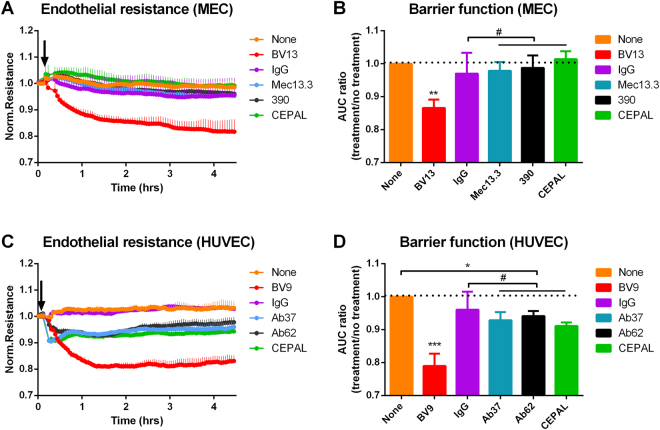
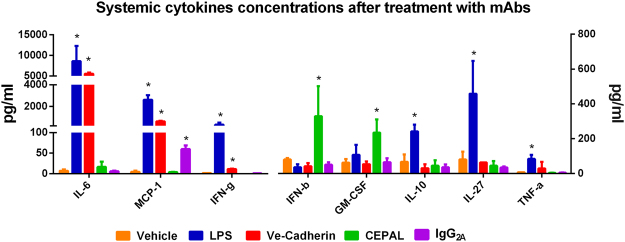
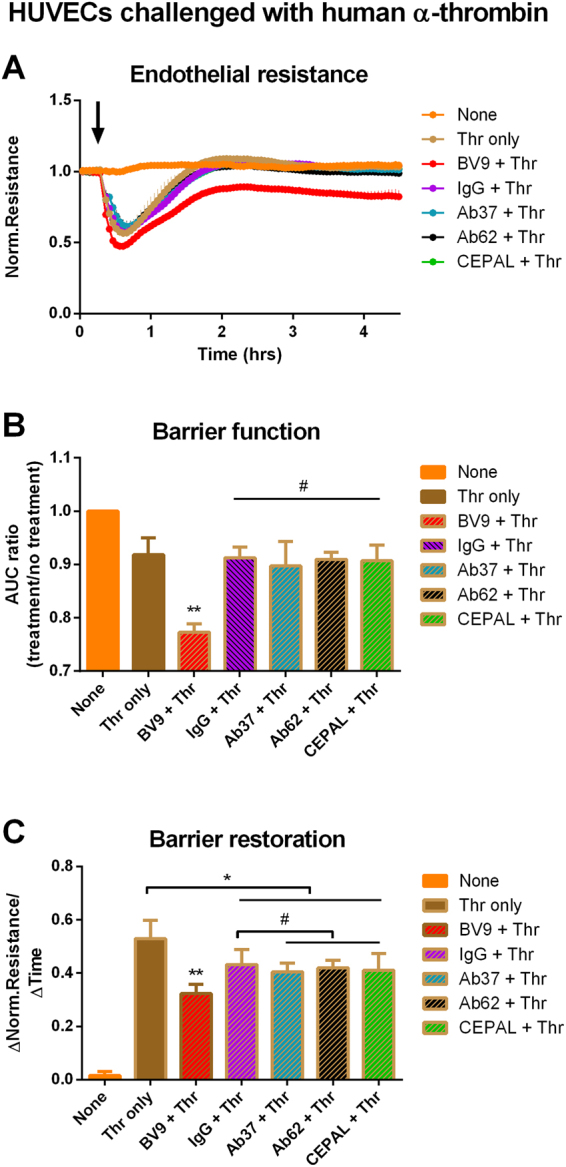
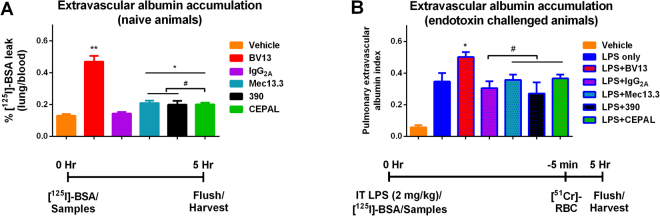
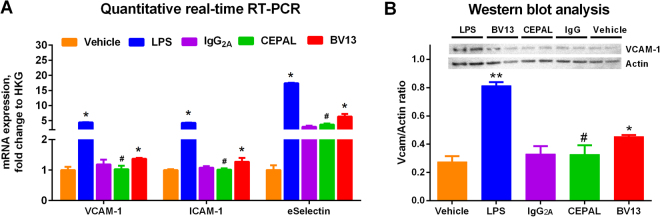
Targeting drugs to endothelial cells has shown the ability to improve outcomes in animal models of inflammatory, ischemic and thrombotic diseases. Previous studies have revealed that certain pairs of ligands (antibodies and antibody fragments) specific for adjacent, but distinct, epitopes on PECAM-1 enhance each other's binding, a phenomenon dubbed Collaborative Enhancement of Paired Affinity Ligands, or CEPAL. This discovery has been leveraged to enable simultaneous delivery of multiple therapeutics to the vascular endothelium. Given the known role of PECAM-1 in promoting endothelial quiescence and cell junction integrity, we sought here to determine if CEPAL might induce unintended vascular effects. Using a combination of in vitro and in vivo techniques and employing human and mouse endothelial cells under physiologic and pathologic conditions, we found only modest or non-significant effects in response to antibodies to PECAM-1, whether given solo or in pairs. In contrast, these methods detected significant elevation of endothelial permeability, pro-inflammatory vascular activation, and systemic cytokine release following antibody binding to the related endothelial junction protein, VE-Cadherin. These studies support the notion that PECAM-1-targeted CEPAL provides relatively well-tolerated endothelial drug delivery. Additionally, the analysis herein creates a template to evaluate potential toxicities of vascular-targeted nanoparticles and protein therapeutics.
靶向内皮细胞的药物已显示出改善炎症、缺血和血栓性疾病动物模型结局的能力。先前的研究表明,某些针对 PECAM-1 上相邻但不同表位的配对配体(抗体和抗体片段)增强了彼此的结合能力,这种现象被称为配对亲和力配体的协同增强,或 CEPAL。这一发现已被利用来实现将多种治疗药物同时递送至血管内皮。鉴于 PECAM-1 在促进血管内皮静止和细胞连接完整性方面的已知作用,我们在这里试图确定 CEPAL 是否可能引起意外的血管效应。我们使用体外和体内技术,并在生理和病理条件下使用人源和鼠源内皮细胞,发现单独或配对使用针对 PECAM-1 的抗体时,只有适度或无显著作用。相比之下,这些方法检测到在抗体与相关的内皮连接蛋白 VE-Cadherin 结合后,内皮通透性、促炎血管激活和全身细胞因子释放显著增加。这些研究支持这样的观点,即靶向 PECAM-1 的 CEPAL 提供了相对耐受良好的内皮药物递送。此外,本文中的分析为评估血管靶向纳米颗粒和蛋白治疗药物的潜在毒性提供了模板。