Department of Biomedical Engineering, Vanderbilt University, Nashville, TN 37235, USA.
Department of Materials and Department of Bioengineering, Imperial College London, London SW7 2AZ, UK.
Int J Mol Sci. 2018 Jan 25;19(2):359. doi: 10.3390/ijms19020359.
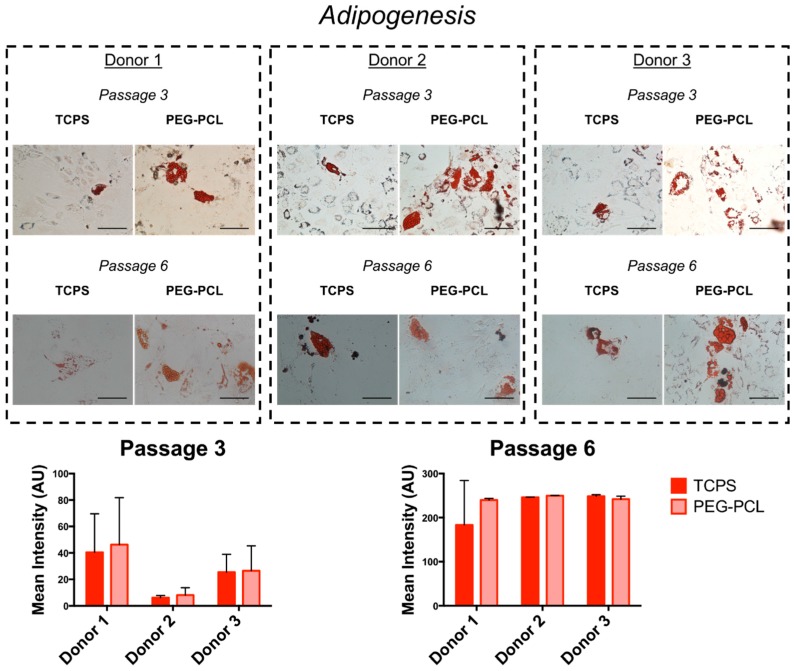
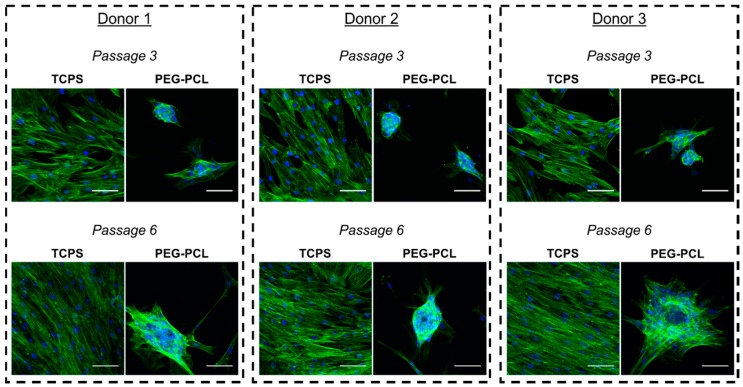
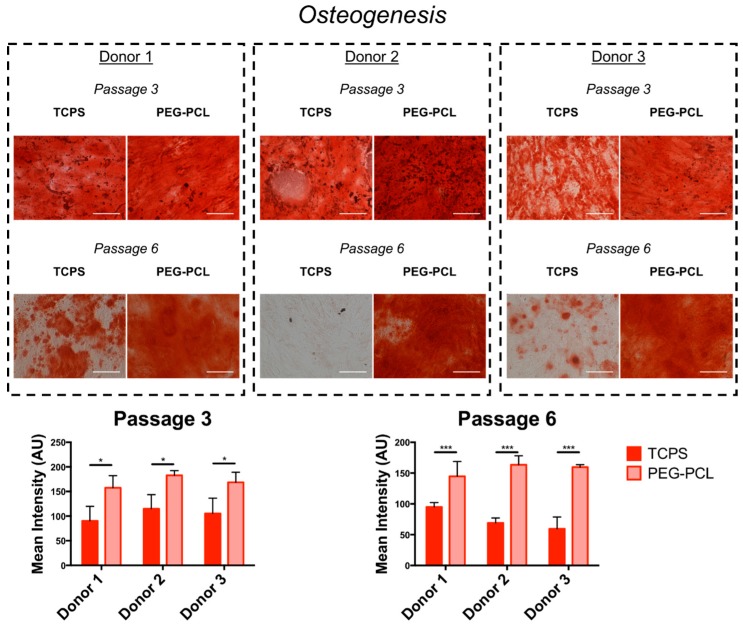
Human mesenchymal stem cells (hMSCs) have been widely studied for therapeutic development in tissue engineering and regenerative medicine. They can be harvested from human donors via tissue biopsies, such as bone marrow aspiration, and cultured to reach clinically relevant cell numbers. However, an unmet issue lies in the fact that the hMSC donors for regenerative therapies are more likely to be of advanced age. Their stem cells are not as potent compared to those of young donors, and continue to lose healthy, stemness-related activities when the hMSCs are serially passaged in tissue culture plates. Here, we have developed a cheap, scalable, and effective copolymer film to culture hMSCs obtained from aged human donors over several passages without loss of reactive oxygen species (ROS) handling or differentiation capacity. Assays of cell morphology, reactive oxygen species load, and differentiation potential demonstrate the effectiveness of copolymer culture on reduction in senescence-related activities of aging donor-derived hMSCs that could hinder the therapeutic potential of autologous stem cell therapies.
人类间充质干细胞(hMSCs)在组织工程和再生医学的治疗开发中得到了广泛研究。它们可以通过组织活检(如骨髓抽吸)从人类供体中采集,并进行培养以达到临床相关的细胞数量。然而,一个尚未解决的问题是,用于再生治疗的 hMSC 供体更有可能年龄较大。与年轻供体相比,他们的干细胞功能较弱,并且当 hMSCs 在组织培养板中连续传代时,其与健康相关的干细胞特性会继续丧失。在这里,我们开发了一种廉价、可扩展且有效的共聚物薄膜,可在几轮传代中培养来自老年人类供体的 hMSCs,而不会损失活性氧(ROS)处理或分化能力。细胞形态、活性氧负荷和分化潜能的测定表明,共聚物培养可有效降低衰老供体来源的 hMSCs 的衰老相关活性,这可能会阻碍自体干细胞治疗的治疗潜力。