Department of Obstetrics and Gynecology, University of Iowa, Iowa City, IA 52242, U.S.A.
Center for Immunology and Immune Based Diseases, University of Iowa, Iowa City, IA 52242, U.S.A.
Clin Sci (Lond). 2018 Feb 14;132(3):419-436. doi: 10.1042/CS20171059.
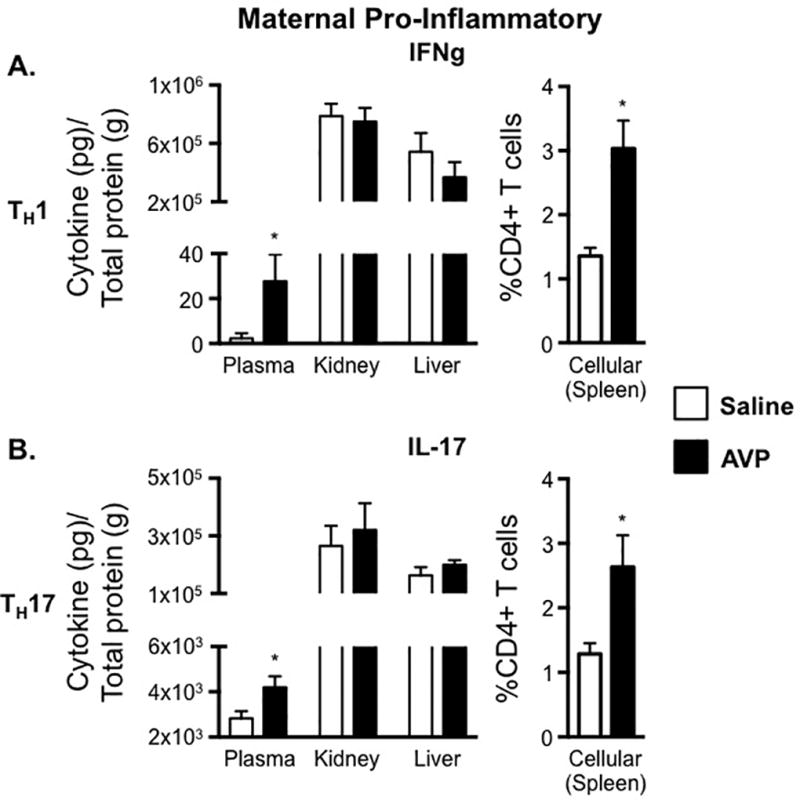
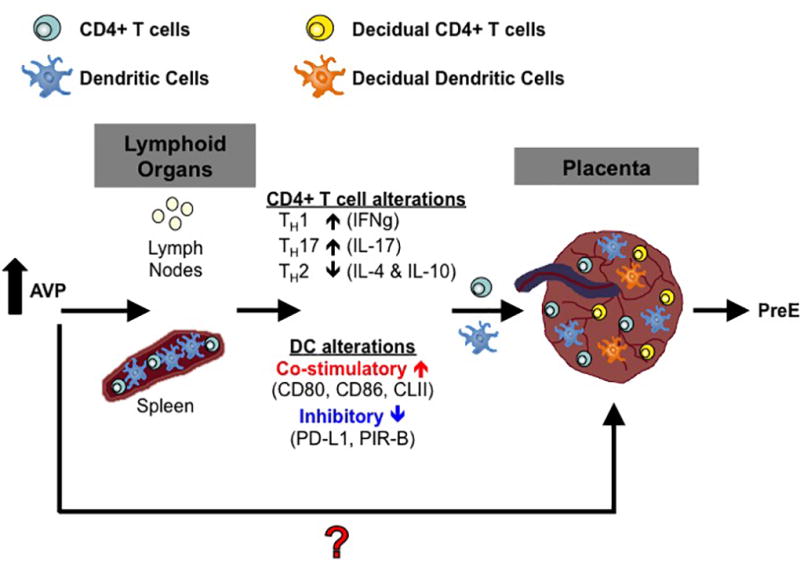
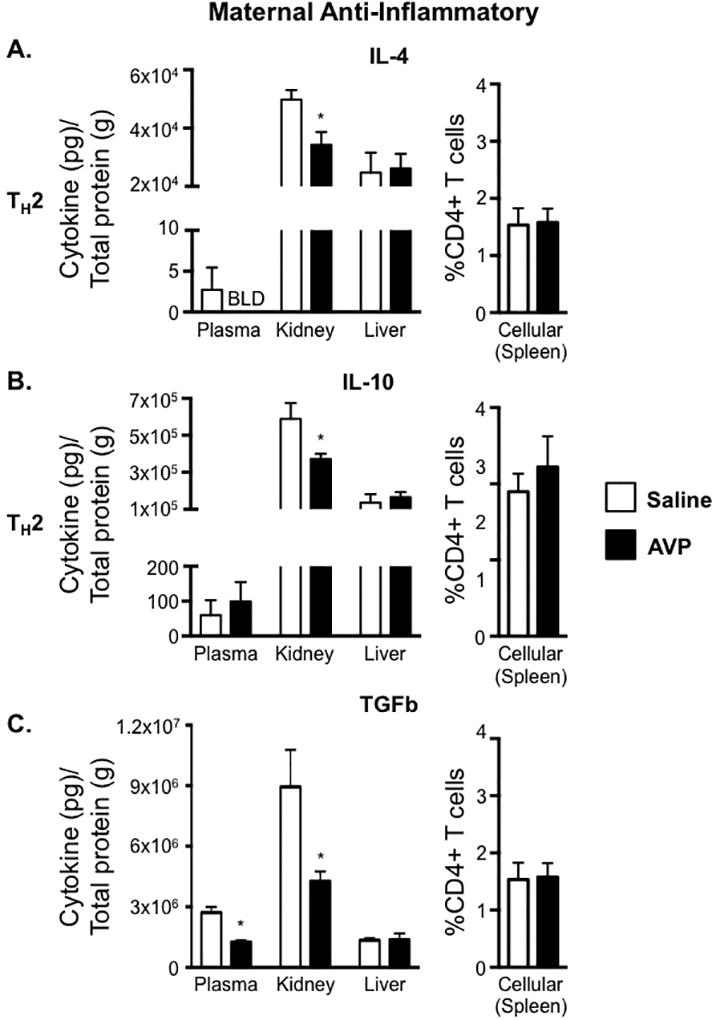
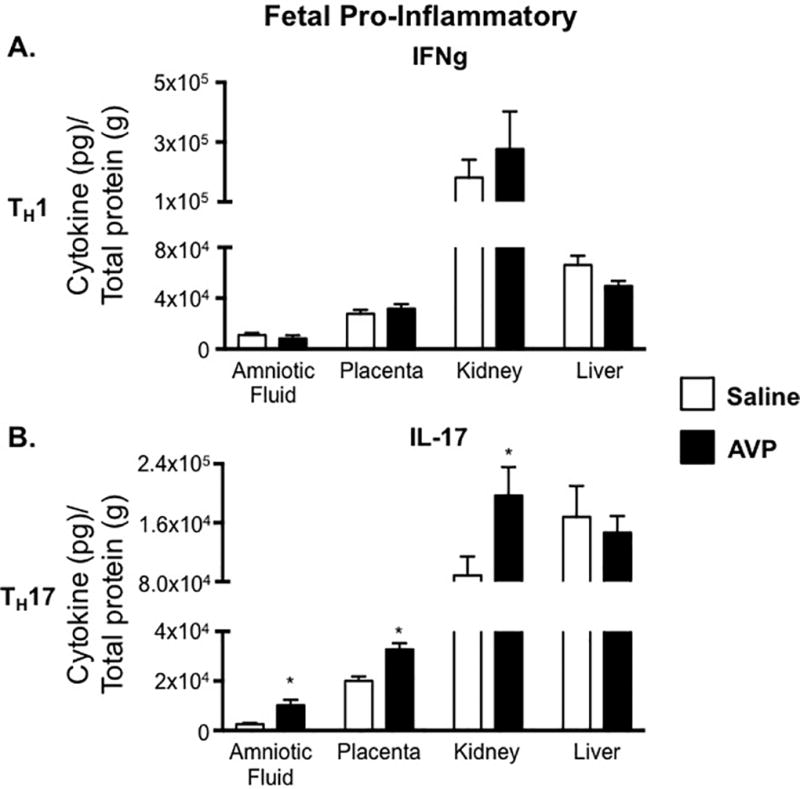
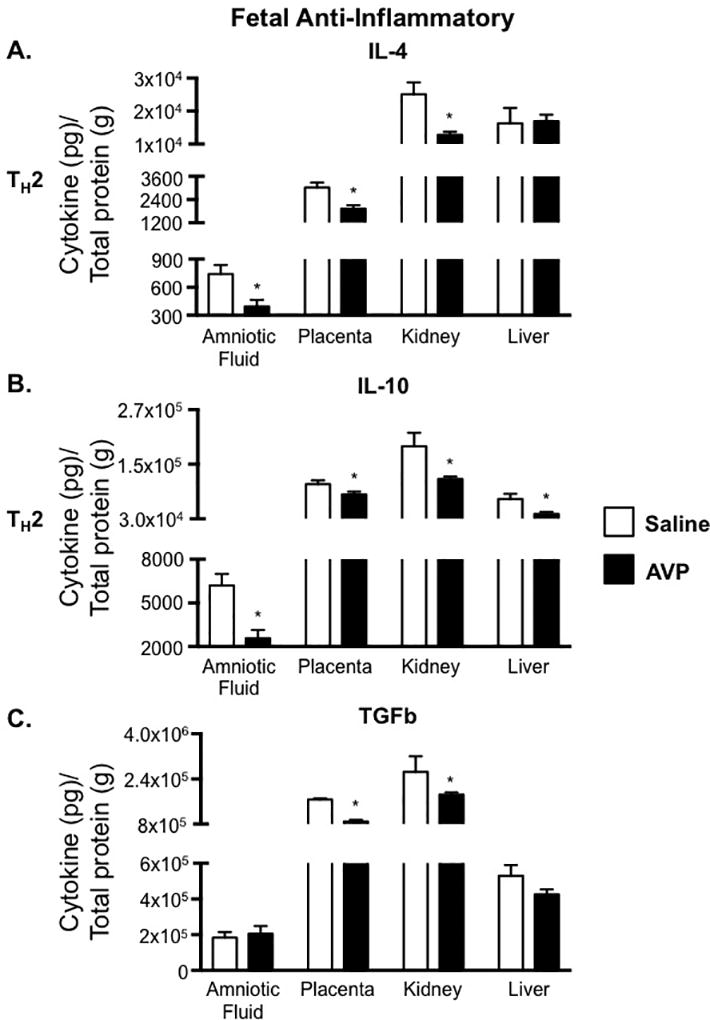
The pathogenesis of preeclampsia (PreE), a hypertensive disorder of pregnancy, involves imbalanced T helper (T) cell populations and resultant changes in pro- and anti-inflammatory cytokine release. Elevated copeptin (an inert biomarker of arginine vasopressin (AVP)), secretion precedes the development of symptoms in PreE in humans, and infusion of AVP proximal to and throughout gestation is sufficient to initiate cardiovascular and renal phenotypes of PreE in wild-type C57BL/6J mice. We hypothesize that AVP infusion in wild-type mice is sufficient to induce the immune changes observed in human PreE. AVP infusion throughout gestation in mice resulted in increased pro-inflammatory interferon γ (IFNg) (T1) in the maternal plasma. The T17-associated cytokine interleukin (IL)-17 was elevated in the maternal plasma, amniotic fluid, and placenta following AVP infusion. Conversely, the T2-associated anti-inflammatory cytokine IL-4 was decreased in the maternal and fetal kidneys from AVP-infused dams, while IL-10 was decreased in the maternal kidney and all fetal tissues. Collectively, these results demonstrate the sufficiency of AVP to induce the immune changes typical of PreE. We investigated if T cells can respond directly to AVP by evaluating the expression of AVP receptors (AVPRs) on mouse and human CD4+ T cells. Mouse and human T cells expressed AVPR1a, AVPR1b, and AVPR2. The expression of AVPR1a was decreased in CD4+ T cells obtained from PreE-affected women. In total, our data are consistent with a potential initiating role for AVP in the immune dysfunction typical of PreE and identifies putative signaling mechanism(s) for future investigation.
子痫前期(PreE)是一种妊娠高血压疾病,其发病机制涉及辅助性 T 细胞(T 细胞)群体失衡,以及促炎和抗炎细胞因子释放的相应变化。在人类中,升高的 copeptin(精氨酸加压素(AVP)的无活性生物标志物)的分泌先于 PreE 症状的发展,并且在妊娠期间近端和整个妊娠期间输注 AVP 足以在野生型 C57BL/6J 小鼠中引发 PreE 的心血管和肾脏表型。我们假设在野生型小鼠中输注 AVP 足以诱导人类 PreE 中观察到的免疫变化。在小鼠中整个妊娠期间输注 AVP 导致母体血浆中促炎干扰素 γ(IFNg)(T1)增加。在输注 AVP 后,母体血浆、羊水和胎盘中的 T17 相关细胞因子白细胞介素(IL)-17 升高。相反,来自输注 AVP 的母鼠的母体和胎儿肾脏中的 T2 相关抗炎细胞因子 IL-4 减少,而母肾和所有胎儿组织中的 IL-10 减少。总之,这些结果表明 AVP 足以诱导 PreE 的典型免疫变化。我们通过评估小鼠和人 CD4+T 细胞上的 AVP 受体(AVPRs)的表达来研究 T 细胞是否可以直接对 AVP 做出反应。小鼠和人 T 细胞表达 AVPR1a、AVPR1b 和 AVPR2。来自受 PreE 影响的女性的 CD4+T 细胞中 AVPR1a 的表达减少。总的来说,我们的数据与 AVP 在 PreE 典型免疫功能障碍中的潜在起始作用一致,并确定了未来研究的潜在信号转导机制。