Division of Pharmacology Physiology and Neuroscience, School of Life Sciences, University of Nottingham, Nottingham, NG7 2UH, UK.
Centre of Membrane Proteins and Receptors, University of Birmingham and University of Nottingham, Midlands, UK.
Sci Rep. 2018 Jan 25;8(1):1572. doi: 10.1038/s41598-018-19714-2.
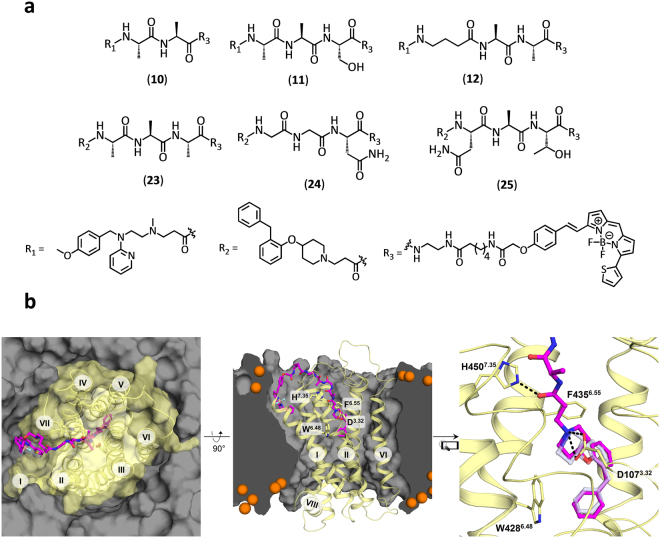
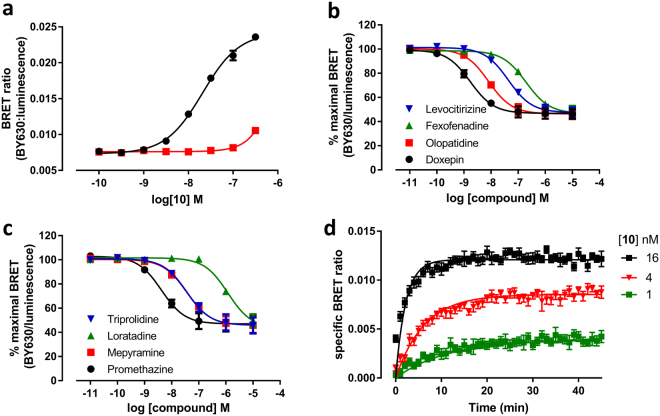
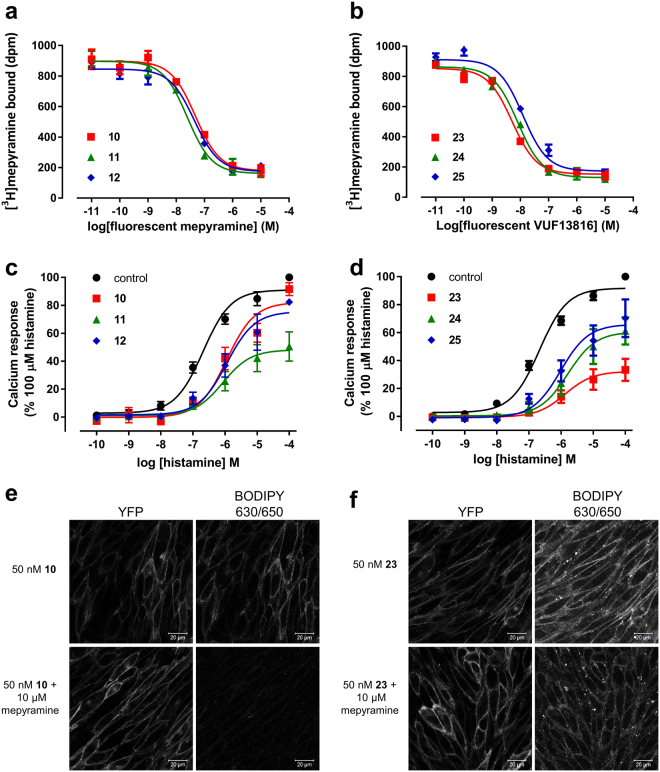
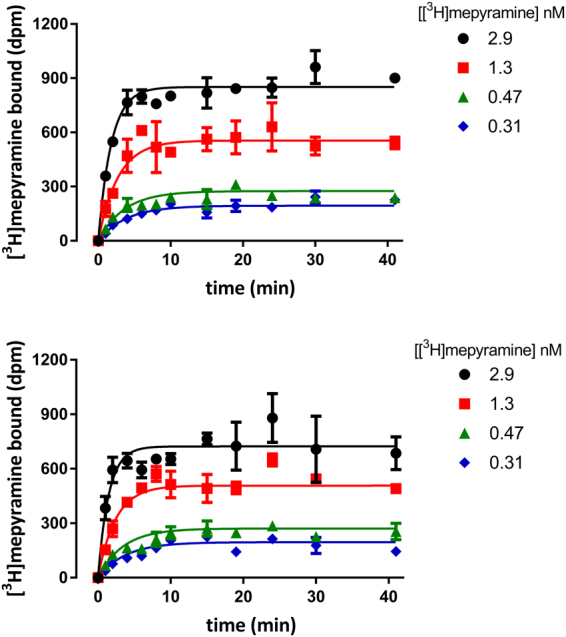
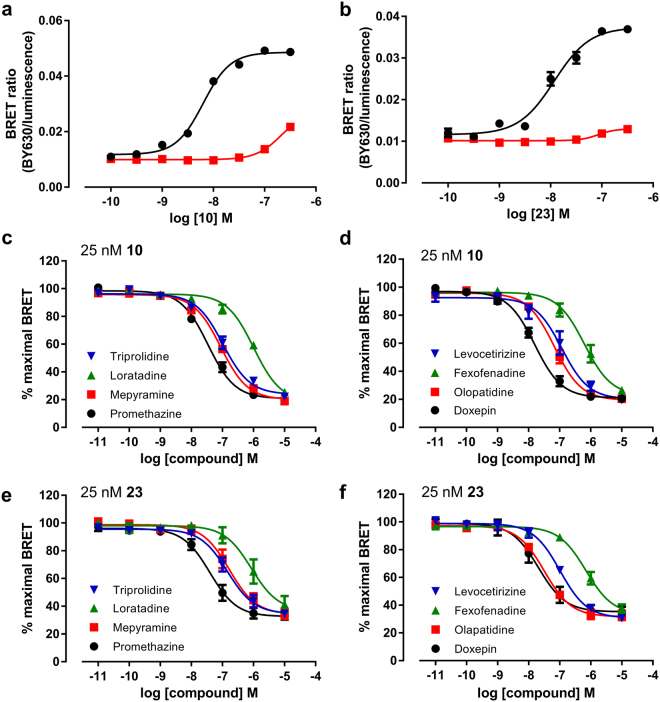
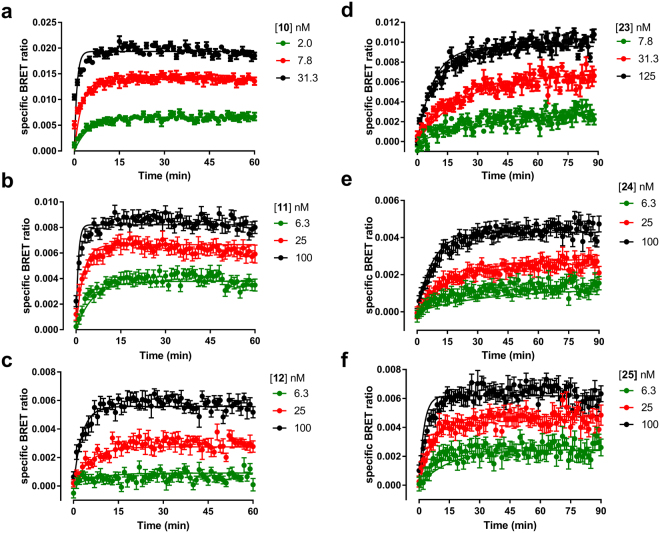
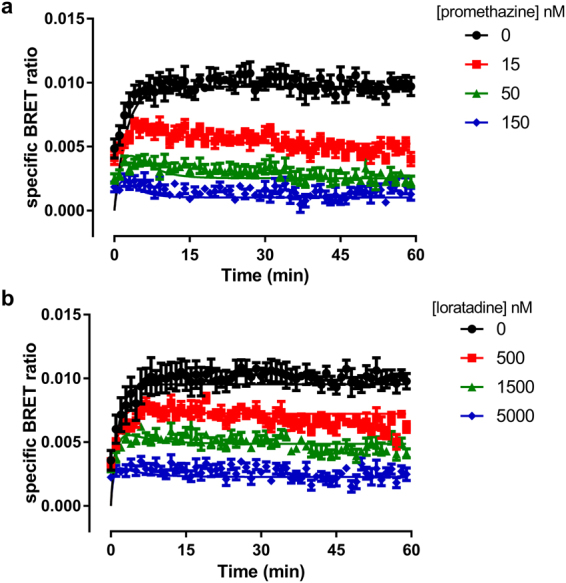
The histamine H-receptor (HR) is an important mediator of allergy and inflammation. HR antagonists have particular clinical utility in allergic rhinitis and urticaria. Here we have developed six novel fluorescent probes for this receptor that are very effective for high resolution confocal imaging, alongside bioluminescence resonance energy transfer approaches to monitor HR ligand binding kinetics in living cells. The latter technology exploits the opportunities provided by the recently described bright bioluminescent protein NanoLuc when it is fused to the N-terminus of a receptor. Two different pharmacophores (mepyramine or the fragment VUF13816) were used to generate fluorescent HR antagonists conjugated via peptide linkers to the fluorophore BODIPY630/650. Kinetic properties of the probes showed wide variation, with the VUF13816 analogues having much longer HR residence times relative to their mepyramine-based counterparts. The kinetics of these fluorescent ligands could also be monitored in membrane preparations providing new opportunities for future drug discovery applications.
组胺 H 受体(HR)是过敏和炎症的重要介质。HR 拮抗剂在过敏性鼻炎和荨麻疹中具有特殊的临床应用价值。在这里,我们开发了针对该受体的六种新型荧光探针,它们非常适合用于高分辨率共聚焦成像,以及生物发光共振能量转移方法来监测活细胞中 HR 配体结合动力学。后一种技术利用了最近描述的明亮生物发光蛋白 NanoLuc 提供的机会,当它融合到受体的 N 端时。两种不同的药效团(甲哌啶或片段 VUF13816)被用来生成通过肽接头连接到荧光团 BODIPY630/650 的荧光 HR 拮抗剂。探针的动力学特性显示出广泛的变化,与基于甲哌啶的类似物相比,VUF13816 类似物具有更长的 HR 停留时间。这些荧光配体的动力学也可以在膜制剂中进行监测,为未来的药物发现应用提供了新的机会。