University of Torino, Department of Agricultural, Forest and Food Sciences (DISAFA), Largo Paolo Braccini 2, I-10095, Grugliasco (TO), Italy.
Centre of Competence for the Innovation in the Agro-Environmental Field (AGROINNOVA), University of Torino, Largo Paolo Braccini 2, I-10095, Grugliasco (TO), Italy.
Sci Rep. 2018 Jan 26;8(1):1706. doi: 10.1038/s41598-018-19922-w.
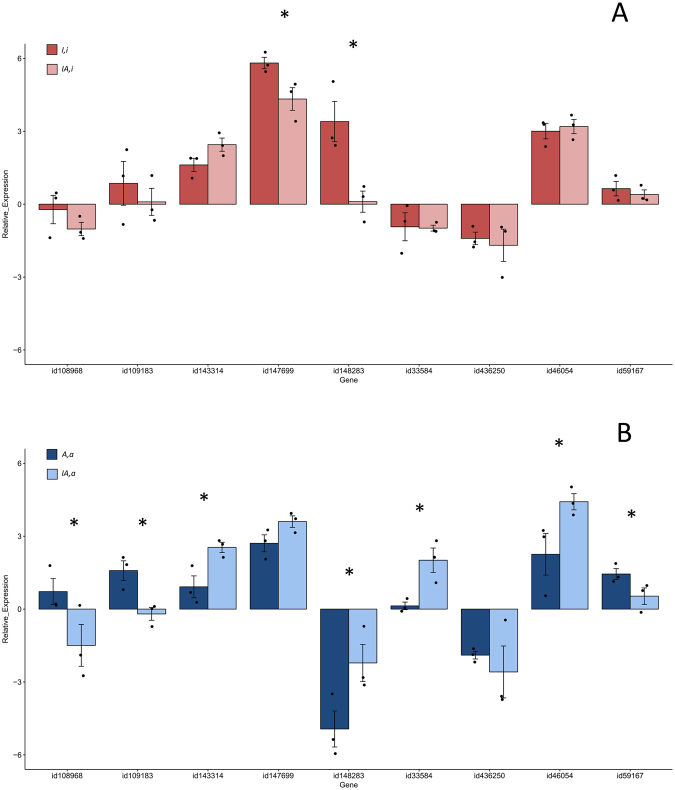
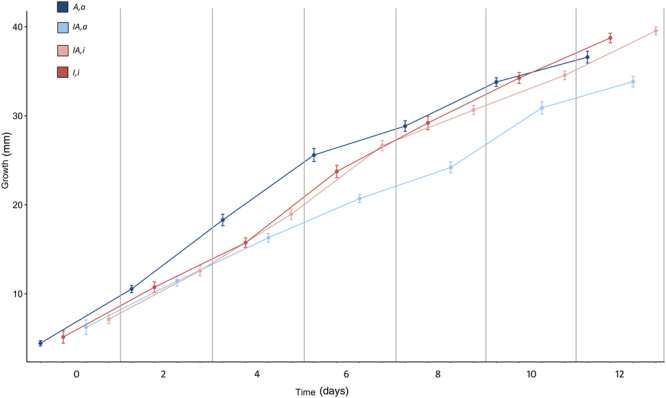
Hybridization between species is being recognized as a major force in the rapid adaptive evolution of fungal plant pathogens. The first stages of interspecific hybridization necessarily involve nuclear-mitochondrial chimeras. In their 2001 publication, Olson and Stenlid reported that mitochondria control the virulence of first generation hybrids between the North American fungal pathogen Heterobasidion irregulare and its congeneric H. occidentale. By assessing saprobic ability and gene expression of H. irregulare × H. annosum sensu stricto hybrids and of their parental genotypes, we demonstrate that mitochondria also influence saprobic growth of hybrids. Moreover, gene expression data suggest that fungal fitness is modulated by an intimate interplay between nuclear genes and mitochondrial type, and is dependent on the specific mitonuclear combination.
种间杂交被认为是真菌植物病原体快速适应进化的主要力量。种间杂交的最初阶段必然涉及核-线粒体嵌合体。在他们 2001 年的出版物中,Olson 和 stenlid 报道称,线粒体控制了北美真菌病原体 Heterobasidion irregulare 与其同属种 H. occidentale 之间第一代杂交种的毒力。通过评估 Heterobasidion irregulare × H. annosum sensu stricto 杂种及其亲本基因型的腐生能力和基因表达,我们证明线粒体也会影响杂种的腐生生长。此外,基因表达数据表明,真菌适应性是由核基因和线粒体类型之间的密切相互作用以及特定的线粒体组合所调节的。