Amini Rana, Rocha-Martins Mauricio, Norden Caren
Max Planck Institute of Molecular Cell Biology and Genetics, Dresden, Germany.
Front Neurosci. 2018 Jan 9;11:742. doi: 10.3389/fnins.2017.00742. eCollection 2017.
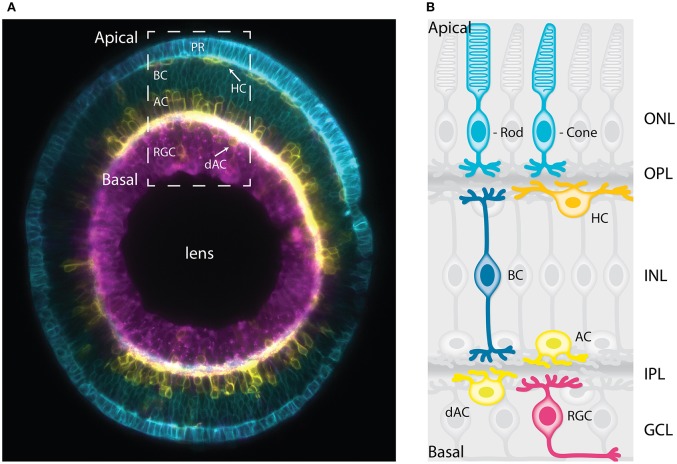
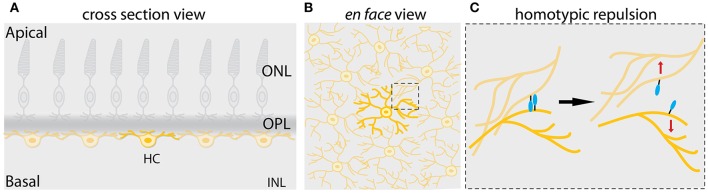
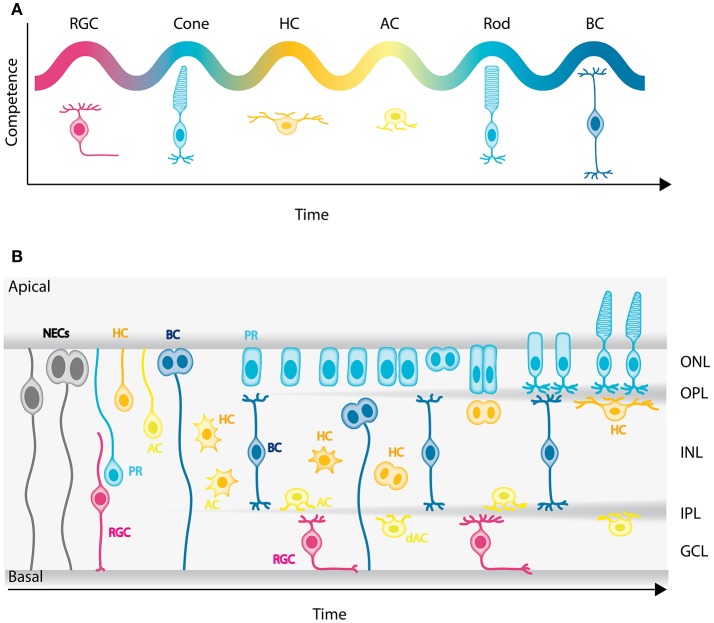
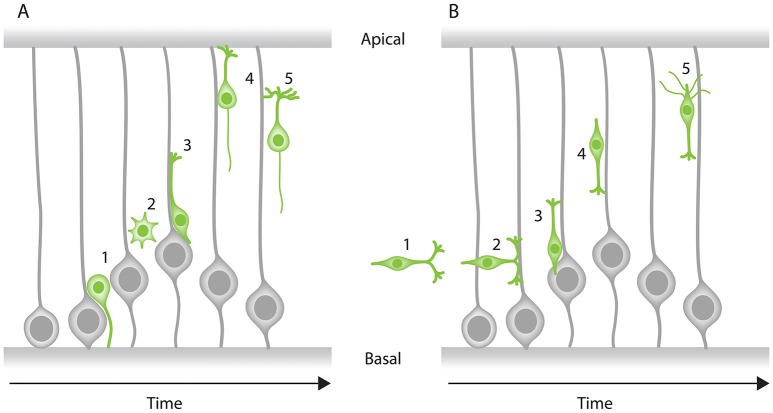
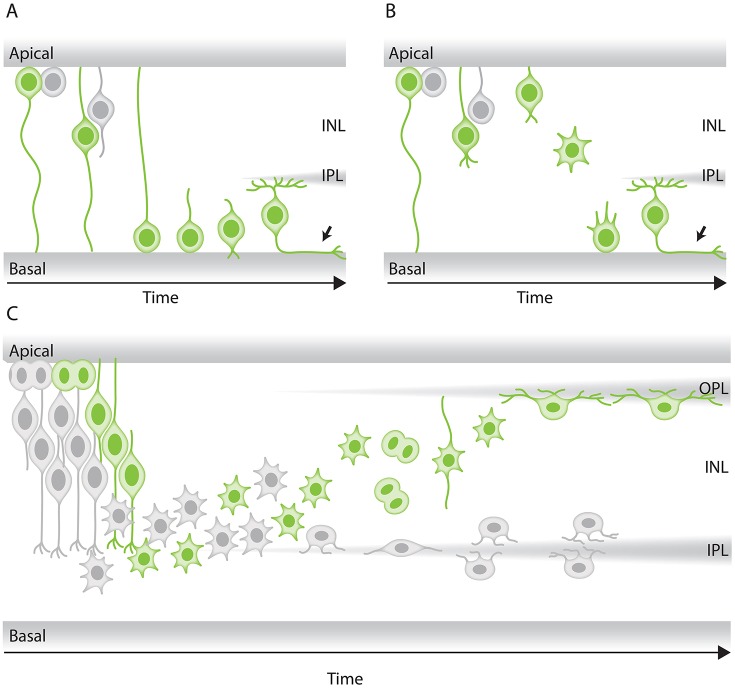
In the retina, like in most other brain regions, developing neurons are arranged into distinct layers giving the mature tissue its stratified appearance. This process needs to be highly controlled and orchestrated, as neuronal layering defects lead to impaired retinal function. To achieve successful neuronal layering and lamination in the retina and beyond, three main developmental steps need to be executed: First, the correct type of neuron has to be generated at a precise developmental time. Second, as most retinal neurons are born away from the position at which they later function, newborn neurons have to move to their final layer within the developing tissue, a process also termed neuronal lamination. Third, these neurons need to connect to their correct synaptic partners. Here, we discuss neuronal migration and lamination in the vertebrate retina and summarize our knowledge on these aspects of retinal development. We give an overview of how lamination emerges and discuss the different modes of neuronal translocation that occur during retinogenesis and what we know about the cell biological machineries driving them. In addition, retinal mosaics and their importance for correct retinal function are examined. We close by stating the open questions and future directions in this exciting field.
在视网膜中,如同在大多数其他脑区一样,发育中的神经元排列成不同的层,使成熟组织呈现出分层外观。这个过程需要高度控制和精心编排,因为神经元分层缺陷会导致视网膜功能受损。为了在视网膜及其他部位成功实现神经元分层和板层形成,需要执行三个主要的发育步骤:第一,必须在精确的发育时间产生正确类型的神经元。第二,由于大多数视网膜神经元在远离其后来发挥功能的位置产生,新生神经元必须迁移到发育组织内的最终层,这个过程也称为神经元板层形成。第三,这些神经元需要与正确的突触伙伴建立连接。在此,我们讨论脊椎动物视网膜中的神经元迁移和板层形成,并总结我们在视网膜发育这些方面的知识。我们概述板层形成是如何出现的,讨论视网膜发生过程中发生的神经元移位的不同模式,以及我们对驱动它们的细胞生物学机制的了解。此外,还研究了视网膜镶嵌及其对正确视网膜功能的重要性。最后,我们阐述了这个令人兴奋的领域中尚未解决的问题和未来的研究方向。