Jurado Sandra
Instituto de Neurociencias CSIC-UMH, San Juan de Alicante, Spain.
Front Mol Neurosci. 2018 Jan 9;10:446. doi: 10.3389/fnmol.2017.00446. eCollection 2017.
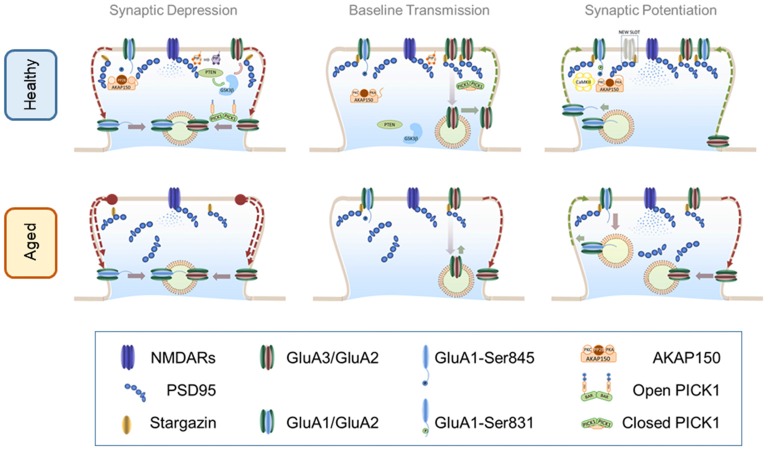
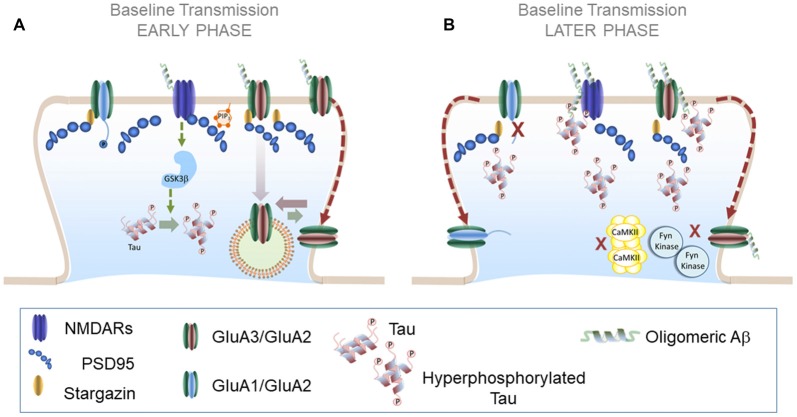
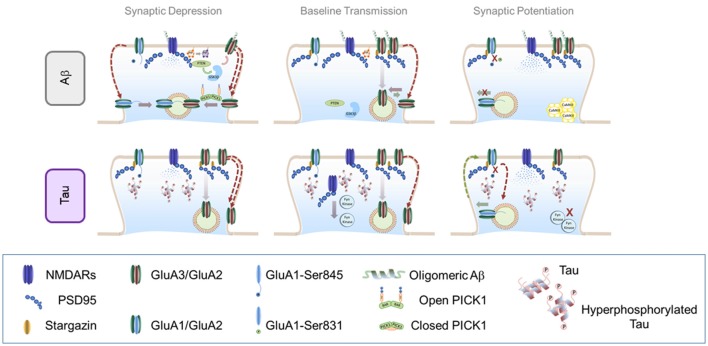
α-amino-3-hydroxy-5-methyl-4-isoxazolepropionic acid receptors (AMPARs) enable most excitatory transmission in the brain and are crucial for mediating basal synaptic strength and plasticity. Because of the importance of their function, AMPAR dynamics, activity and subunit composition undergo a tight regulation which begins as early as prenatal development and continues through adulthood. Accumulating evidence suggests that the precise regulatory mechanisms involved in orchestrating AMPAR trafficking are challenged in the aging brain. In turn dysregulation of AMPARs can be linked to most neurological and neurodegenerative disorders. Understanding the mechanisms that govern AMPAR signaling during natural and pathological cognitive decline will guide the efforts to develop most effective ways to tackle neurodegenerative diseases which are one of the primary burdens afflicting an increasingly aging population. In this review, I provide a brief overview of the molecular mechanisms involved in AMPAR trafficking highlighting what is currently known about how these processes change with age and disease. As a particularly well-studied example of AMPAR dysfunction in pathological aging I focus in Alzheimer's disease (AD) with special emphasis in how the production of neurofibrillary tangles (NFTs) and amyloid-β plaques may contribute to disruption in AMPAR function.
α-氨基-3-羟基-5-甲基-4-异恶唑丙酸受体(AMPARs)介导大脑中的大多数兴奋性神经传递,对于介导基础突触强度和可塑性至关重要。由于其功能的重要性,AMPAR的动力学、活性和亚基组成受到严格调控,这种调控早在产前发育阶段就已开始,并持续至成年期。越来越多的证据表明,在衰老的大脑中,协调AMPAR转运的精确调控机制受到挑战。反过来,AMPAR的失调可能与大多数神经和神经退行性疾病有关。了解在自然和病理性认知衰退过程中控制AMPAR信号传导的机制,将有助于开发最有效的方法来应对神经退行性疾病,这些疾病是日益老龄化人口面临的主要负担之一。在这篇综述中,我简要概述了参与AMPAR转运的分子机制,重点介绍了目前已知的这些过程如何随年龄和疾病而变化。作为病理性衰老中AMPAR功能障碍的一个特别深入研究的例子,我重点关注阿尔茨海默病(AD),特别强调神经纤维缠结(NFTs)和淀粉样β斑块的产生可能如何导致AMPAR功能紊乱。