Saré Rachel M, Song Alex, Loutaev Inna, Cook Anna, Maita Isabella, Lemons Abigail, Sheeler Carrie, Smith Carolyn B
Section on Neuroadaptation and Protein Metabolism, National Institute of Mental Health, National Institutes of Health, United States Department of Health and Human Services, Bethesda, MD, United States.
Front Mol Neurosci. 2018 Jan 12;10:452. doi: 10.3389/fnmol.2017.00452. eCollection 2017.
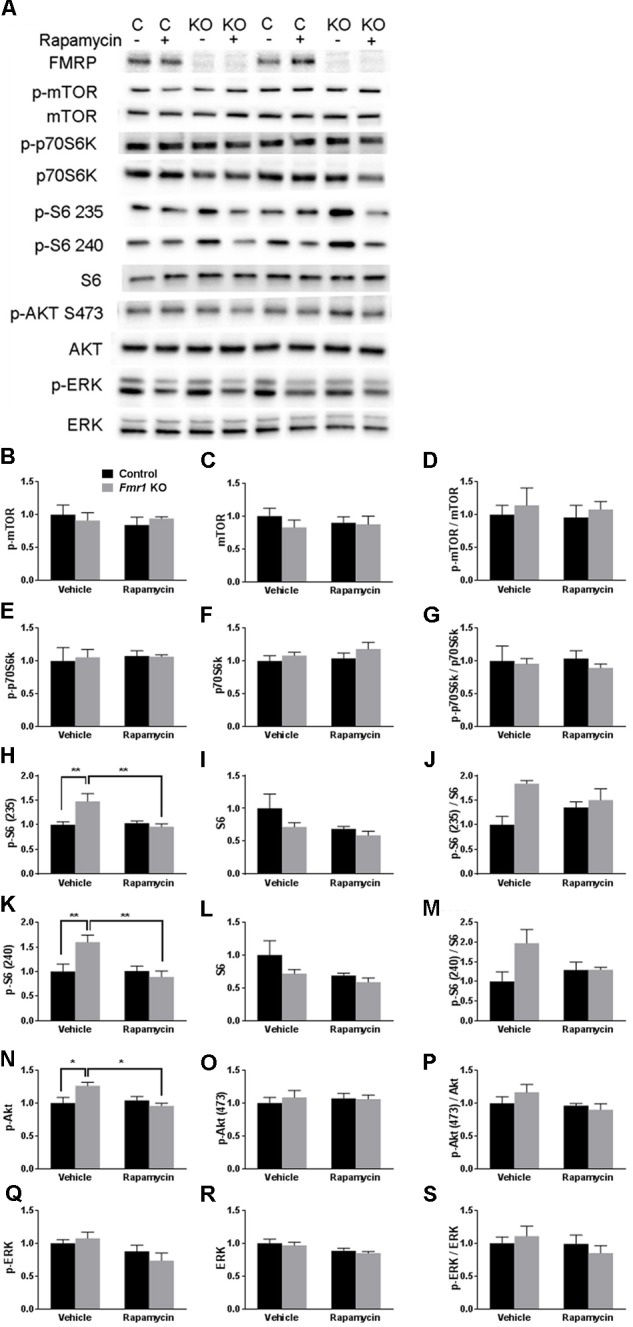
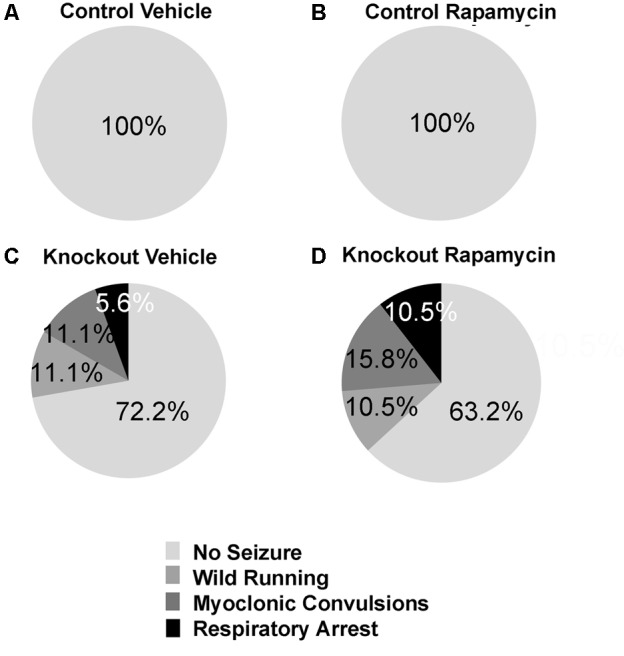
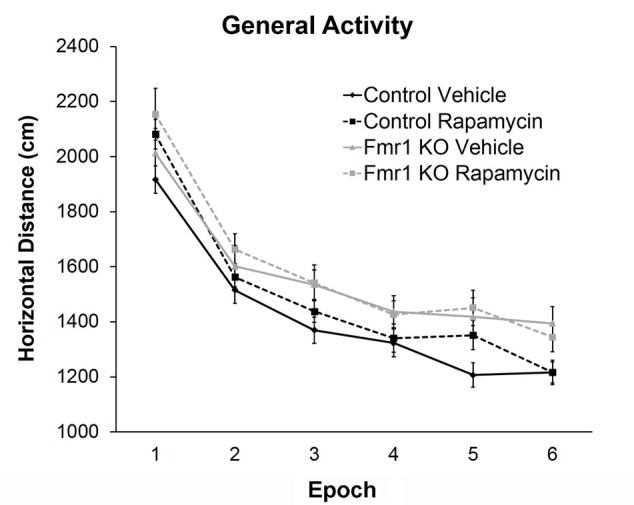
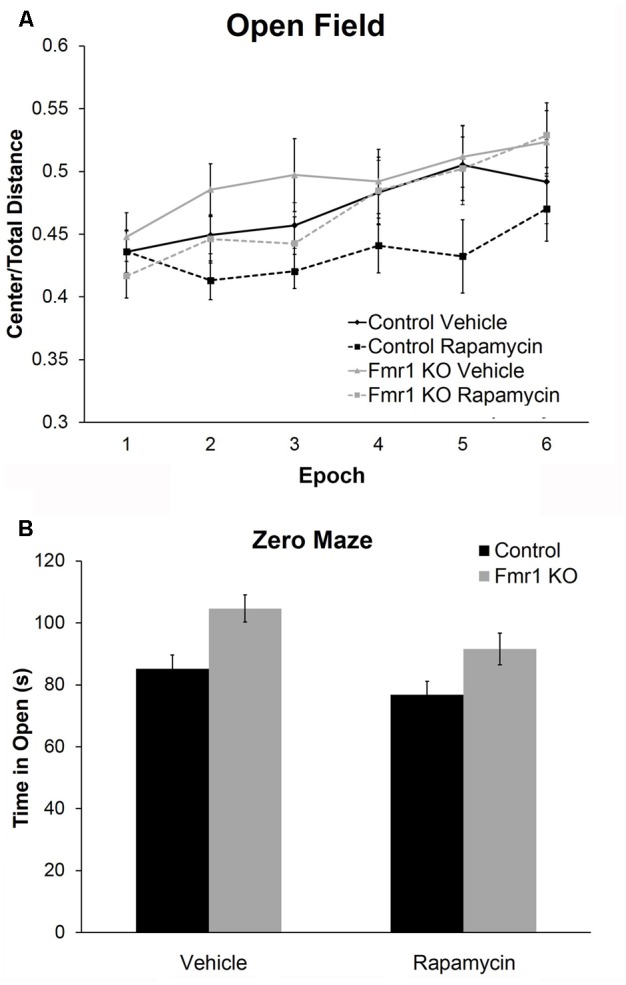
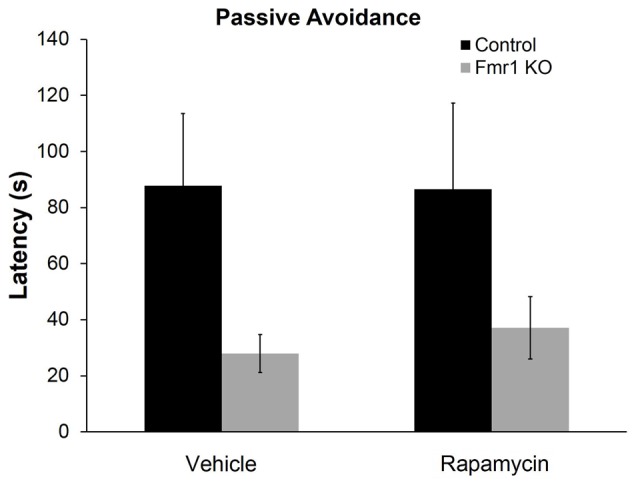
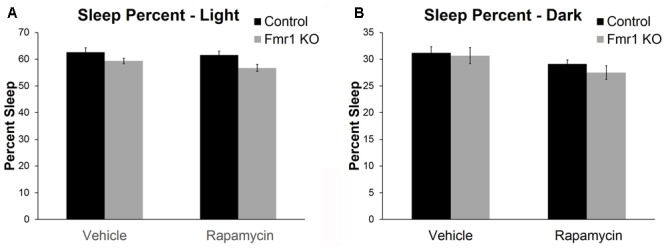
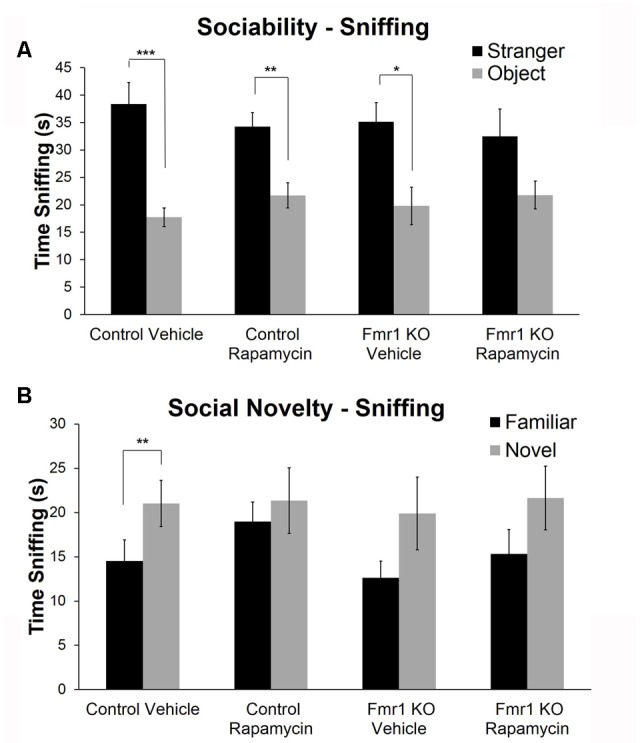
Fragile X syndrome (FXS), the most common form of inherited intellectual disability, is also highly associated with autism spectrum disorders (ASD). It is caused by expansion of a CGG repeat sequence on the X chromosome resulting in silencing of the gene. This is modeled in the mouse by deletion of ( KO). KO mice recapitulate many of the behavioral features of the disorder including seizure susceptibility, hyperactivity, impaired social behavior, sleep problems, and learning and memory deficits. The mammalian target of rapamycin pathway (mTORC1) is upregulated in KO mice and is thought to be important for the pathogenesis of this disorder. We treated KO mice chronically with an mTORC1 inhibitor, rapamycin, to determine if rapamycin treatment could reverse behavioral phenotypes. We performed open field, zero maze, social behavior, sleep, passive avoidance, and audiogenic seizure testing. We found that pS6 was upregulated in KO mice and normalized by rapamycin treatment, but, except for an anxiogenic effect, it did not reverse any of the behavioral phenotypes examined. In fact, rapamycin treatment had an adverse effect on sleep and social behavior in both control and KO mice. These results suggest that targeting the mTOR pathway in FXS is not a good treatment strategy and that other pathways should be considered.
脆性X综合征(FXS)是遗传性智力障碍最常见的形式,也与自闭症谱系障碍(ASD)高度相关。它由X染色体上CGG重复序列的扩增引起,导致该基因沉默。在小鼠中通过删除(基因敲除)来模拟这种情况。基因敲除小鼠概括了该疾病的许多行为特征,包括癫痫易感性、多动、社交行为受损、睡眠问题以及学习和记忆缺陷。雷帕霉素哺乳动物靶点通路(mTORC1)在基因敲除小鼠中上调,被认为对该疾病的发病机制很重要。我们用mTORC1抑制剂雷帕霉素长期治疗基因敲除小鼠,以确定雷帕霉素治疗是否能逆转行为表型。我们进行了旷场试验、零迷宫试验、社交行为试验、睡眠试验、被动回避试验和听源性癫痫试验。我们发现基因敲除小鼠中pS6上调,雷帕霉素治疗使其恢复正常,但除了产生致焦虑作用外,它并未逆转所检测的任何行为表型。事实上,雷帕霉素治疗对对照小鼠和基因敲除小鼠的睡眠和社交行为都有不良影响。这些结果表明,针对FXS中的mTOR通路不是一个好的治疗策略,应该考虑其他通路。