Esteves Cibele Zanardi, de Aguiar Dias Letícia, de Oliveira Lima Estela, de Oliveira Diogo Noin, Rodrigues Melo Carlos Fernando Odir, Delafiori Jeany, Souza Gomez Carla Cristina, Ribeiro José Dirceu, Ribeiro Antônio Fernando, Levy Carlos Emílio, Catharino Rodrigo Ramos
Innovare Biomarkers Laboratory, Medicine and Experimental Surgery Nucleus, University of Campinas, Campinas, Brazil.
Pediatric Department, University of Campinas, Campinas, Brazil.
Front Pediatr. 2018 Jan 10;5:290. doi: 10.3389/fped.2017.00290. eCollection 2017.
Cystic fibrosis (CF) is a disabling genetic disease with an increased prevalence in European heritage populations. Currently, the most used technique for collection of CF samples and diagnosis is provided through uncomfortable tests, with uncertain results, mostly based on chloride concentration in sweat. Since CF mutation induces many metabolic changes in patients, exploring these alterations might be an alternative to visualize potential biomarkers that could be used as interesting tools for further diagnostic upgrade, prioritizing simplicity, low cost, and quickness.
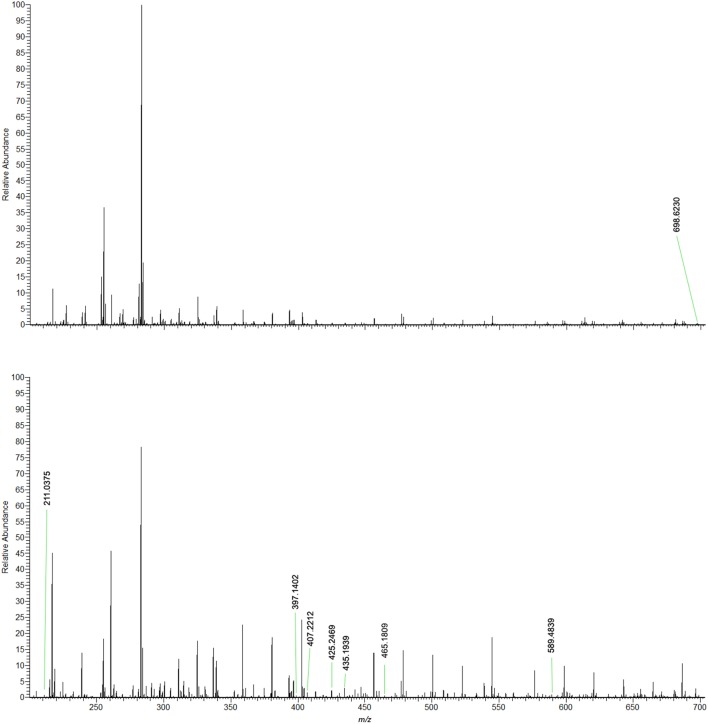
This contribution describes an accurate strategy to provide potential biomarkers related to CF, which may be understood as a potential tool for new diagnostic approaches and/or for monitoring disease evolution. Therefore, the present proposal consists of using skin imprints on silica plates as a way of sample collection, followed by direct-infusion high-resolution mass spectrometry and multivariate data analysis, intending to identify metabolic changes in skin composition of CF patients.
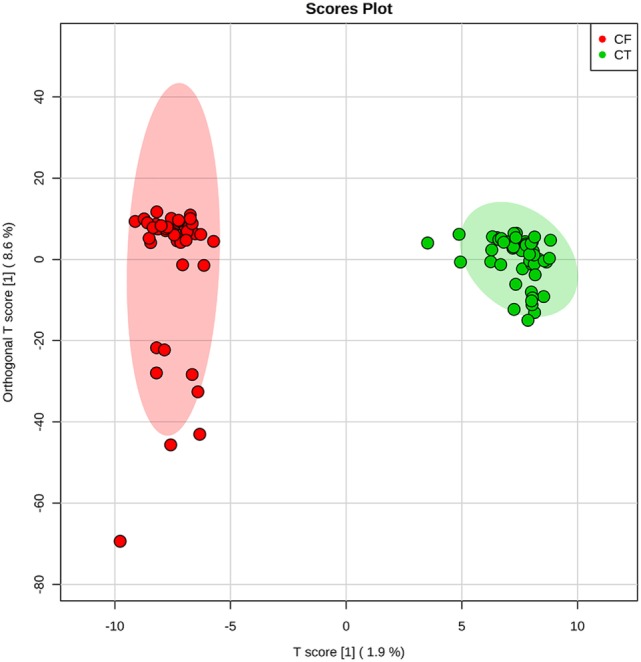
Metabolomics analysis allowed identifying chemical markers that can be traced back to CF in patients' skin imprints, differently from control subjects. Seven chemical markers from several molecular classes were elected, represented by bile acids, a glutaric acid derivative, thyrotropin-releasing hormone, an inflammatory mediator, a phosphatidic acid, and diacylglycerol isomers, all reflecting metabolic disturbances that occur due to of CF.
The comfortable method of sample collection combined with the identified set of biomarkers represent potential tools that open the range of possibilities to manage CF and follow the disease evolution. This exploratory approach points to new perspectives about the development of diagnostic assay using biomarkers and the management CF.
囊性纤维化(CF)是一种致残性遗传病,在欧洲裔人群中的患病率较高。目前,用于采集CF样本和诊断的最常用技术是通过令人不适的检测方法,结果不确定,主要基于汗液中的氯化物浓度。由于CF突变会在患者体内引发许多代谢变化,探索这些改变可能是一种替代方法,以可视化潜在的生物标志物,这些生物标志物可作为进一步诊断升级的有趣工具,重点在于操作简便、成本低廉和速度快捷。
本研究描述了一种准确的策略,以提供与CF相关的潜在生物标志物,这可被视为一种用于新诊断方法和/或监测疾病进展的潜在工具。因此,本方案包括使用硅胶板上的皮肤印记作为样本采集方式,随后进行直接进样高分辨率质谱分析和多变量数据分析,旨在识别CF患者皮肤成分中的代谢变化。
代谢组学分析能够识别出可追溯到CF患者皮肤印记中的化学标志物,这与对照受试者不同。从几个分子类别中选出了七种化学标志物,分别为胆汁酸、一种戊二酸衍生物、促甲状腺激素释放激素、一种炎症介质、一种磷脂酸和二酰基甘油异构体,所有这些都反映了CF导致的代谢紊乱。
这种简便的样本采集方法与已识别的生物标志物组合代表了潜在工具,为管理CF和跟踪疾病进展开辟了多种可能性。这种探索性方法为利用生物标志物开发诊断检测方法和管理CF指明了新的方向。