Liang Lijun, Wang Lei, Zhu Panrong, Xia Youyou, Qiao Yun, Hui Kaiyuan, Hu Chenxi, Ren Yan, Jiang Xiaodong
Department of Radiation Oncology, The Affiliated Lianyungang Hospital of Xuzhou Medical University Tumor Laboratory, The Affiliated Lianyungang Hospital of Xuzhou Medical University, Lianyungang, Jiangsu, People's Republic of China.
Medicine (Baltimore). 2017 Nov;96(47):e8725. doi: 10.1097/MD.0000000000008725.
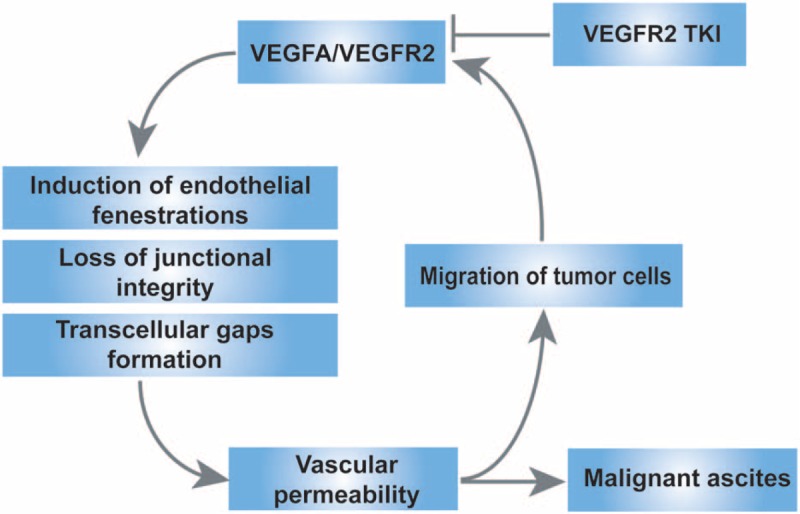
Malignant ascites (MA) is one of the poor prognostic factors for advanced pancreatic cancer and can bring about serious symptoms. The improvement of quality of life for patients is priority. However, there is no standard method for the treatment for pancreatic cancer-mediated MA. Apatinib is a novel and highly selective tyrosine kinase inhibitor targeting vascular endothelial growth factor receptor-2. There are no reports of concurrent apatinib with gemcitabine in patients with pancreatic cancer-mediated MA.
Herein, we presented a 64-year-old man patient who visited hospital due to abdominal pain for 1 month.
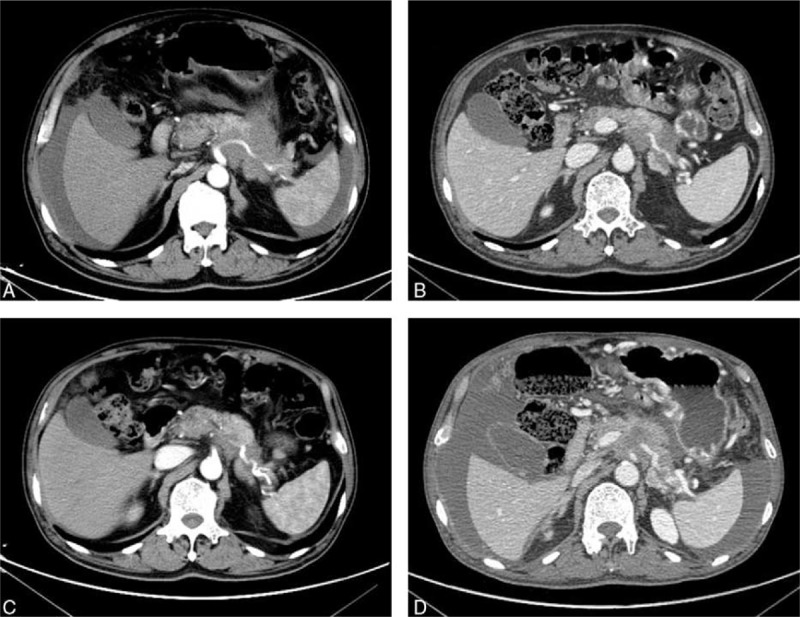
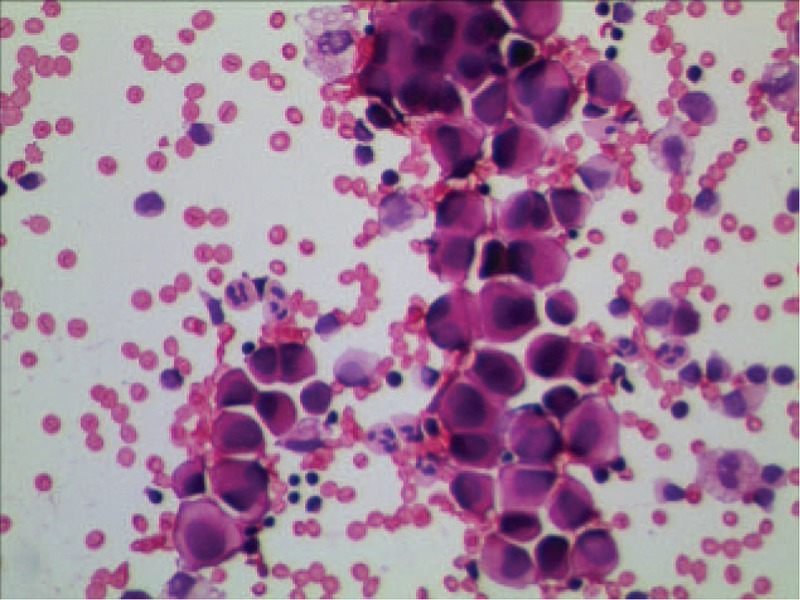
He was initially diagnosed with pancreatic cancer and his first symptom was MA.
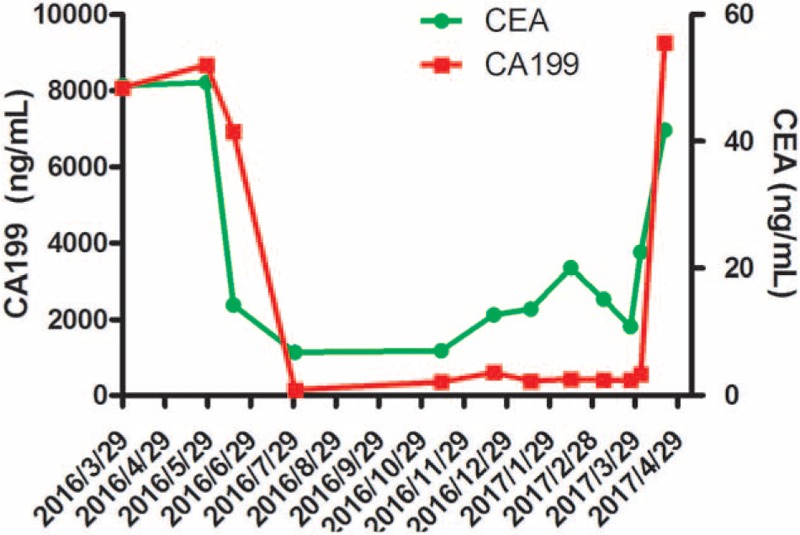
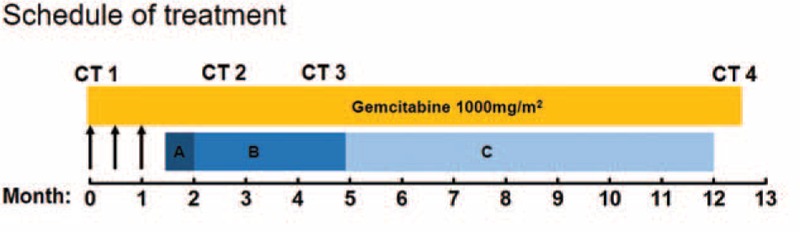
After failing in tube drainage and gemcitabine therapy, the patient received gemcitabine combined apatinib orally and after administrated 1 month, the MA was evaluated as nearly clear response according to the RECIST 1.1 standard, and without further need of paracentesis. The CEA and CA199 reached the lowest level after administrating for 2.5 months during the treatment process.
10.5 months following apatinib administration, the patient achieved a progression-free survival for more than 11 months. Hypertension (grade IV), hand-foot syndrome (grade I) and proteinuria (grade II) were observed.
It indicated that apatinib concurrent gemcitabine may be a superior choice for pancreatic cancer-mediated MA. Further clinical trials required to confirm its efficacy and safety.
恶性腹水(MA)是晚期胰腺癌预后不良的因素之一,可导致严重症状。改善患者生活质量是首要任务。然而,对于胰腺癌介导的MA,尚无标准治疗方法。阿帕替尼是一种新型的、高度选择性的靶向血管内皮生长因子受体-2的酪氨酸激酶抑制剂。尚无关于阿帕替尼与吉西他滨联合用于胰腺癌介导的MA患者的报道。
在此,我们报告一名64岁男性患者,因腹痛1个月入院。
他最初被诊断为胰腺癌,首发症状为MA。
在置管引流和吉西他滨治疗失败后,患者口服吉西他滨联合阿帕替尼,用药1个月后,根据RECIST 1.1标准,MA评估为接近完全缓解,无需进一步腹腔穿刺。在治疗过程中,用药2.5个月后癌胚抗原(CEA)和糖类抗原199(CA199)降至最低水平。
服用阿帕替尼10.5个月后,患者无进展生存期超过11个月。观察到高血压(IV级)、手足综合征(I级)和蛋白尿(II级)。
这表明阿帕替尼联合吉西他滨可能是治疗胰腺癌介导的MA的较好选择。需要进一步的临床试验来证实其疗效和安全性。