Milanese Chiara, Cavedon Valentina, Sandri Marco, Tam Enrico, Piscitelli Francesco, Boschi Federico, Zancanaro Carlo
Department of Neurosciences, Biomedicine and Movement Sciences, University of Verona, Verona, Italy.
Department of Computer Science, University of Verona, Verona, Italy.
PLoS One. 2018 Jan 31;13(1):e0192046. doi: 10.1371/journal.pone.0192046. eCollection 2018.
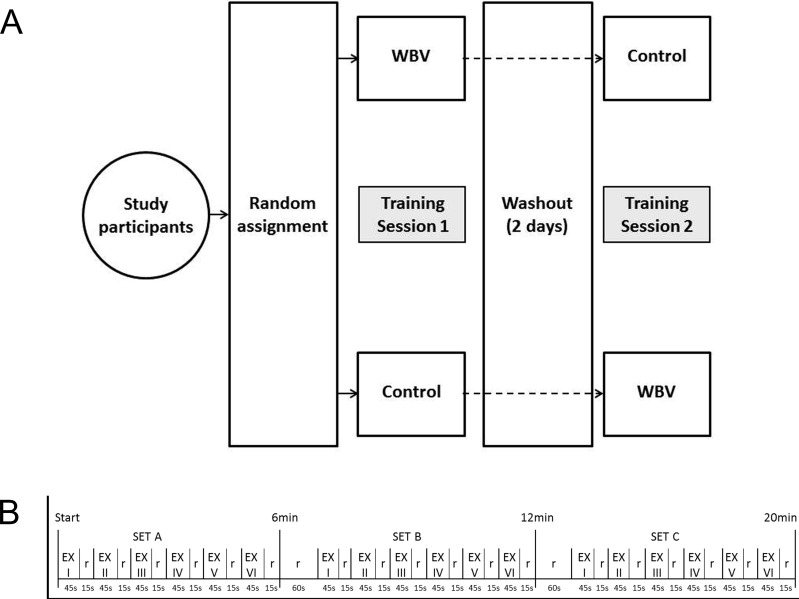
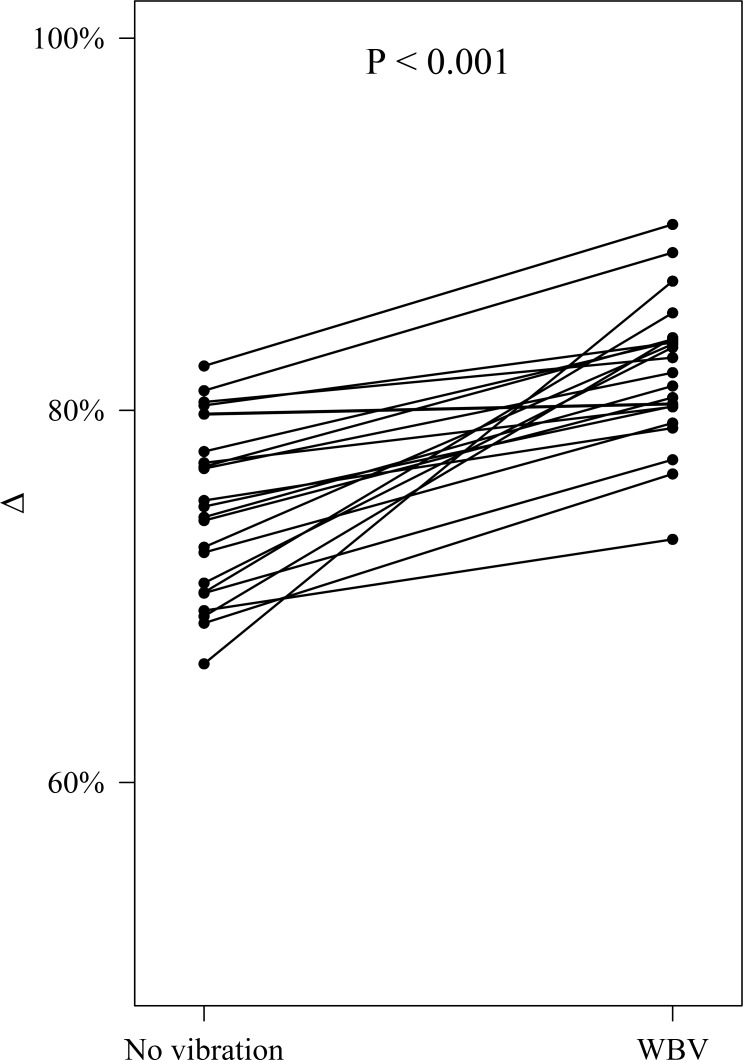
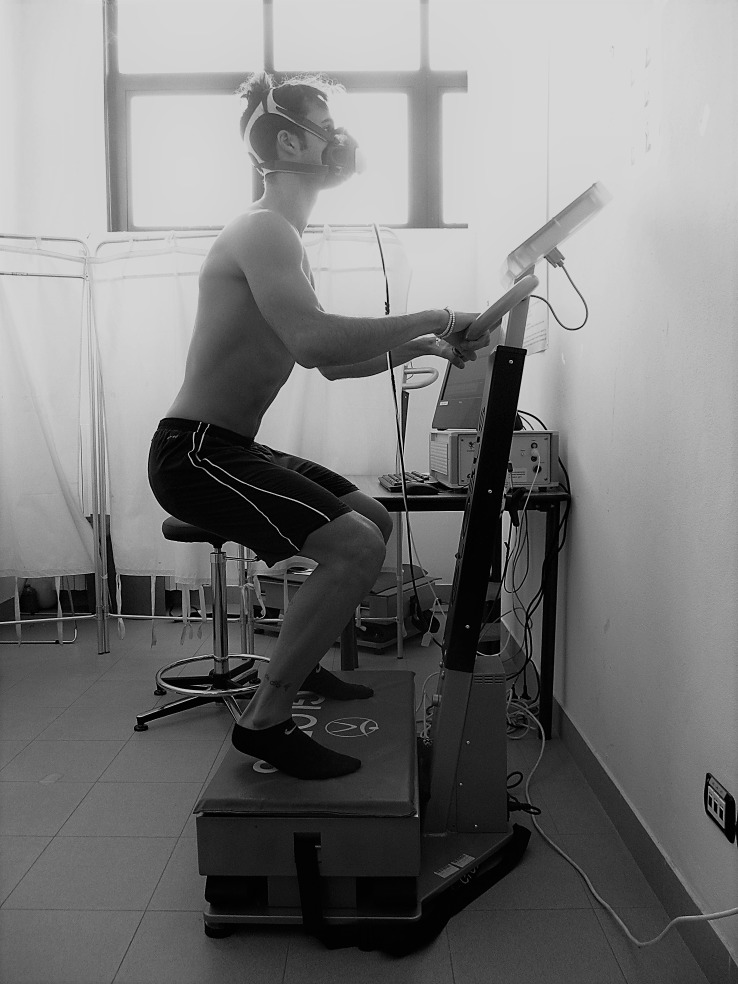
The ability of whole body vibration (WBV) to increase energy expenditure (EE) has been investigated to some extent in the past using short-term single exercises or sets of single exercises. However, the current practice in WBV training for fitness is based on the execution of multiple exercises during a WBV training session for a period of at least 20 min; nevertheless, very limited and inconsistent data are available on EE during long term WBV training session. This crossover study was designed to demonstrate, in an adequately powered sample of participants, the ability of WBV to increase the metabolic cost of exercise vs. no vibration over the time span of a typical WBV session for fitness (20 min). Twenty-two physically active young males exercised on a vibration platform (three identical sets of six different exercises) using an accelerometer-verified vibration stimulus in both the WBV and no vibration condition. Oxygen consumption was measured with indirect calorimetry and expressed as area under the curve (O2(AUC)). Results showed that, in the overall 20-min training session, WBV increased both the O2(AUC) and the estimated EE vs. no vibration by about 22% and 20%, respectively (P<0.001 for both, partial eta squared [η2] ≥0.35) as well as the metabolic equivalent of task (+5.5%, P = 0.043; η2 = 0.02) and the rate of perceived exertion (+13%, P<0.001; ŋ2 = 0.16). Results demonstrated that vibration is able to significantly increase the metabolic cost of exercise in a 20-min WBV training session.
过去曾在一定程度上研究过全身振动(WBV)增加能量消耗(EE)的能力,采用的是短期单次运动或单次运动组。然而,目前WBV健身训练的做法是在一次WBV训练课程中进行至少20分钟的多次运动;尽管如此,关于长期WBV训练课程期间的能量消耗数据非常有限且不一致。这项交叉研究旨在以足够数量的参与者样本,证明在典型的20分钟WBV健身训练期间,WBV相对于无振动状态增加运动代谢成本的能力。22名身体活跃的年轻男性在振动平台上进行锻炼(三套相同的六种不同运动),在WBV和无振动两种条件下均使用经过加速度计验证的振动刺激。通过间接量热法测量氧气消耗量,并表示为曲线下面积(O2(AUC))。结果显示,在整个20分钟的训练课程中,与无振动相比,WBV使O2(AUC)和估计的EE分别增加了约22%和20%(两者P<0.001,偏 eta 平方[η2]≥0.35),同时使运动代谢当量增加了5.5%(P = 0.043;η2 = 0.02),自觉用力程度增加了13%(P<0.001;ŋ2 = 0.16)。结果表明,在20分钟的WBV训练课程中,振动能够显著增加运动的代谢成本。