Key Laboratory of Hormones and Development (Ministry of Health), Tianjin Key Laboratory of Metabolic Diseases, Tianjin Metabolic Diseases Hospital and Tianjin Institute of Endocrinology, Tianjin Medical University, Tianjin 300070, P.R. China.
Emergency Department, The Second Affiliated Hospital of Tianjin University of Traditional Chinese Medicine, Tianjin 300150, P.R. China.
Mol Med Rep. 2018 Apr;17(4):5202-5212. doi: 10.3892/mmr.2018.8475. Epub 2018 Jan 24.
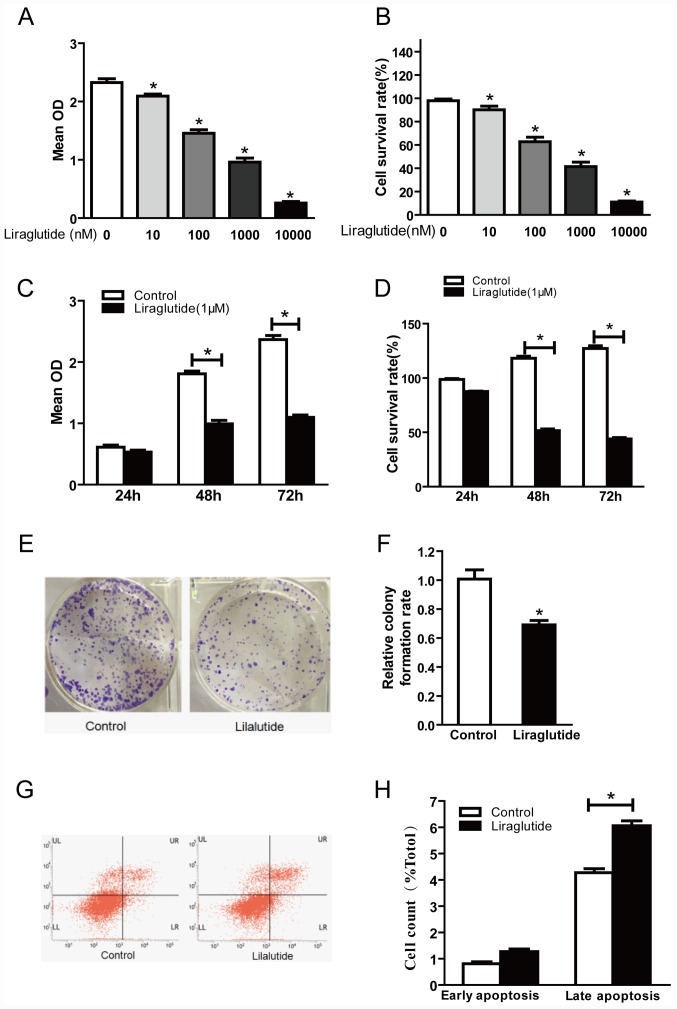
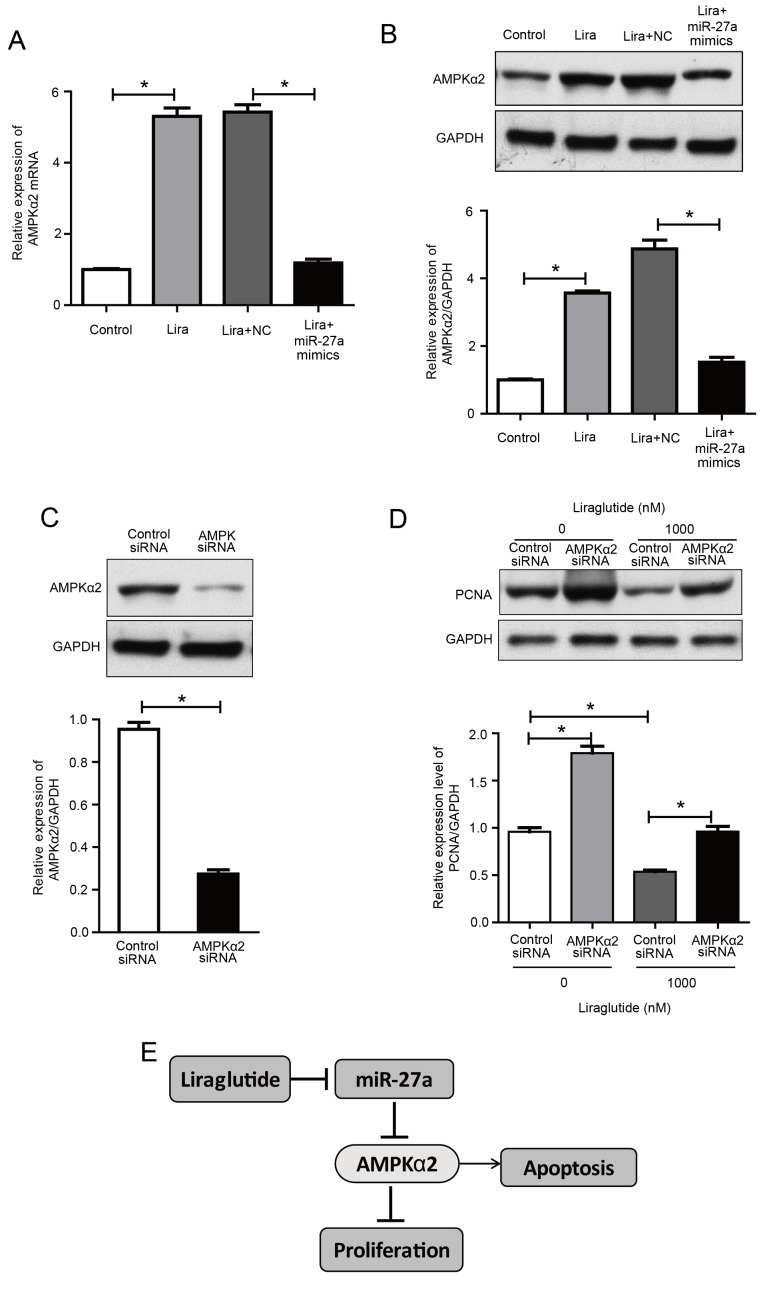
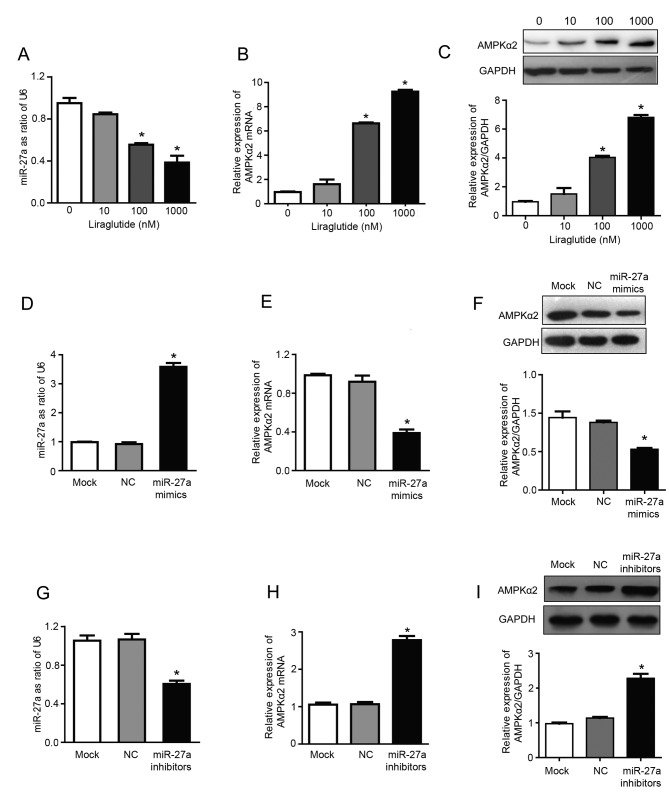
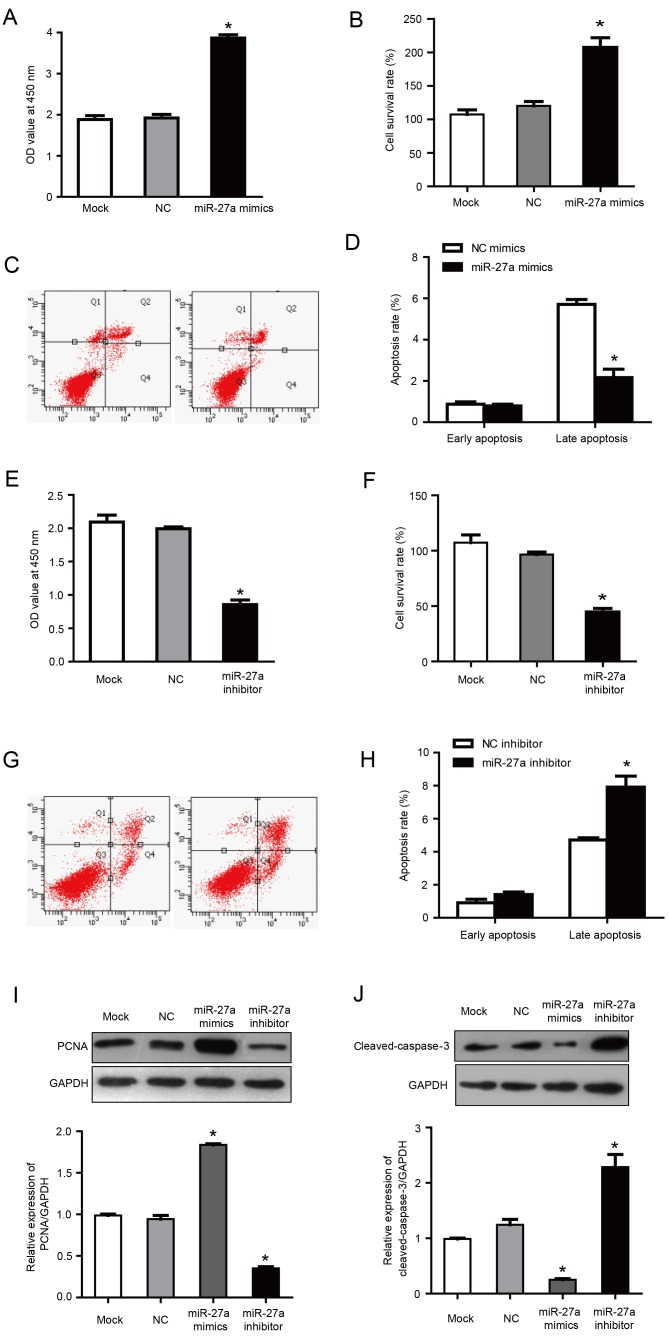
The use of glucagon-like peptide-1 analogues, such as liraglutide, as hypoglycemic drugs has been widely employed in clinical practice. Liraglutide is reported to exert potential anti‑breast cancer effects, however the specific mechanisms of this action remain unknown. In the present study, MCF‑7 human breast cancer cells were cultured in vitro and treated with various concentrations of liraglutide. Cell Counting Kit‑8, colony formation and flow cytometry assays were performed to determine the proliferation and apoptosis of cells following treatment. Furthermore, reverse transcription‑quantitative polymerase chain reaction was employed to measure the expression level of microRNA (miRNA/miR)-27a. In addition, miR‑27a mimics, inhibitors and negative controls were transfected into MCF‑7 cells and the proliferation and apoptosis of cells following transfection was subsequently determined. Western blotting was performed to detect alterations in the protein expression of AMP‑activated protein kinase catalytic subunit α2 (AMPKα2), proliferating cell nuclear antigen and cleaved‑caspase‑3 following treatments. The results demonstrated that, following treatment with liraglutide, the proliferation of MCF‑7 cells was reduced and the apoptosis was increased, compared with the control group; this effect was increased with increasing concentrations of liraglutide. In addition, liraglutide treatment downregulated miR‑27a expression in MCF‑7 cells. While the overexpression of miR‑27a promoted cell proliferation and inhibited apoptosis, knockdown of endogenous miR‑27a inhibited cell proliferation and promoted apoptosis in MCF‑7 cells. Furthermore, the expression of AMPKα2 protein in the group transfected with miR‑27a mimics was decreased, while it was increased in MCF‑7 cells transfected with miR‑27a inhibitors. In conclusion, liraglutide may have a role in the inhibition of proliferation and promotion of apoptosis in MCF‑7 cells. Concerning the mechanism of these effects, liraglutide may inhibit miR‑27a expression, which subsequently increases the expression of AMPKα2 protein. The present study provides an experimental basis for the clinical treatment strategies of T2DM patients with breast cancer.
胰高血糖素样肽-1 类似物(如利拉鲁肽)作为降糖药物在临床实践中得到了广泛应用。据报道,利拉鲁肽具有潜在的抗乳腺癌作用,但具体作用机制尚不清楚。本研究采用体外培养 MCF-7 人乳腺癌细胞,用不同浓度的利拉鲁肽处理细胞。采用细胞计数试剂盒-8 法、集落形成实验和流式细胞术检测细胞增殖和凋亡情况。此外,采用反转录-定量聚合酶链反应检测微小 RNA(miRNA/miR)-27a 的表达水平。另外,将 miR-27a 模拟物、抑制剂和阴性对照物转染至 MCF-7 细胞,检测转染后细胞的增殖和凋亡情况。采用 Western blot 法检测 AMP 激活蛋白激酶催化亚单位α2(AMPKα2)、增殖细胞核抗原和 cleaved-caspase-3 蛋白表达的变化。结果表明,与对照组相比,利拉鲁肽处理后 MCF-7 细胞的增殖减少,凋亡增加,且呈浓度依赖性。此外,利拉鲁肽处理可下调 MCF-7 细胞中 miR-27a 的表达。miR-27a 的过表达促进细胞增殖,抑制细胞凋亡,而内源性 miR-27a 的敲低抑制 MCF-7 细胞的增殖,促进细胞凋亡。此外,转染 miR-27a 模拟物的 MCF-7 细胞中 AMPKα2 蛋白的表达降低,而转染 miR-27a 抑制剂的 MCF-7 细胞中 AMPKα2 蛋白的表达增加。综上所述,利拉鲁肽可能在抑制 MCF-7 细胞增殖和促进凋亡中发挥作用。关于这些作用的机制,利拉鲁肽可能抑制 miR-27a 的表达,进而增加 AMPKα2 蛋白的表达。本研究为 T2DM 合并乳腺癌患者的临床治疗策略提供了实验依据。