New York University, School of Medicine, Department of Psychiatry, New York, NY, USA.
New York University, School of Medicine, Department of Psychiatry, New York, NY, USA; New York University, School of Medicine, Center for Cognitive Neurology, Department of Neurology, New York, NY, USA; New York University, School of Medicine, Department of Pathology, New York, NY, USA.
EBioMedicine. 2018 Feb;28:21-30. doi: 10.1016/j.ebiom.2018.01.021. Epub 2018 Jan 31.
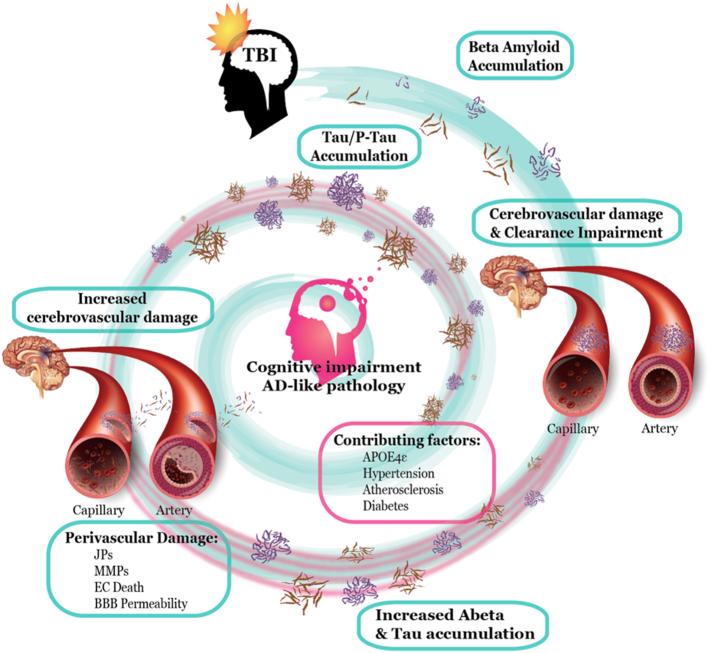
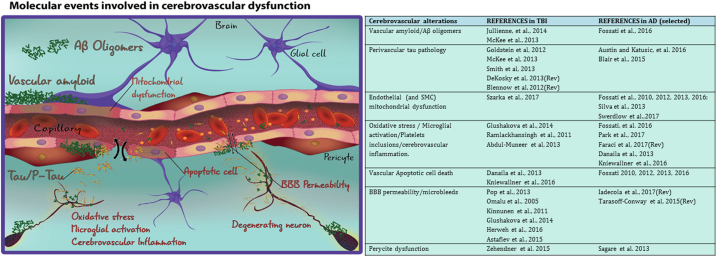
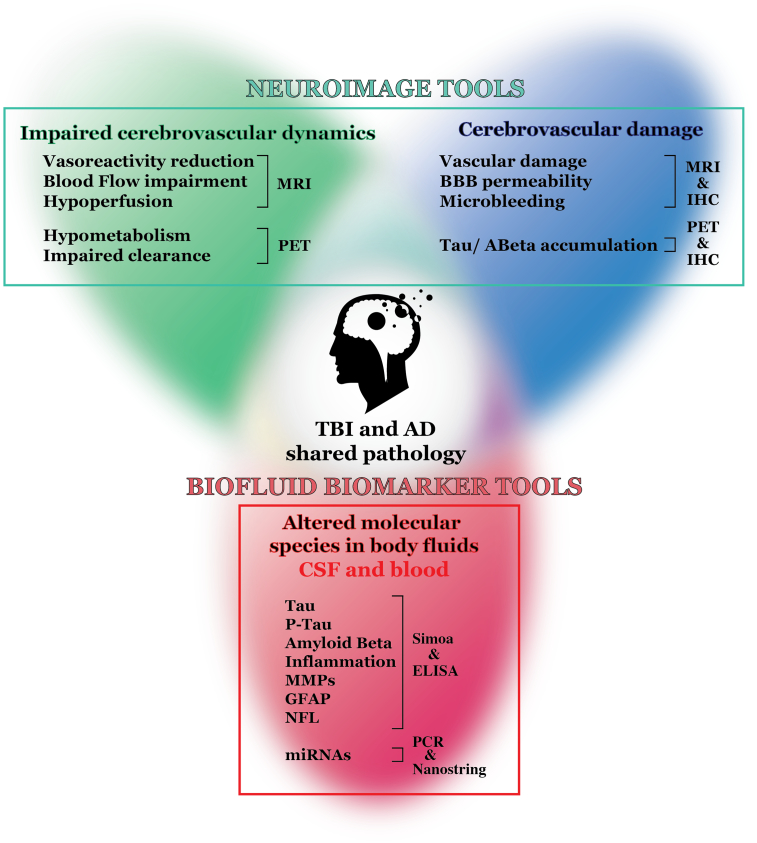
Traumatic brain injury (TBI) and Alzheimer's disease (AD) are devastating neurological disorders, whose complex relationship is not completely understood. Cerebrovascular pathology, a key element in both conditions, could represent a mechanistic link between Aβ/tau deposition after TBI and the development of post concussive syndrome, dementia and chronic traumatic encephalopathy (CTE). In addition to debilitating acute effects, TBI-induced neurovascular injuries accelerate amyloid β (Aβ) production and perivascular accumulation, arterial stiffness, tau hyperphosphorylation and tau/Aβ-induced blood brain barrier damage, giving rise to a deleterious feed-forward loop. We postulate that TBI can initiate cerebrovascular pathology, which is causally involved in the development of multiple forms of neurodegeneration including AD-like dementias. In this review, we will explore how novel biomarkers, animal and human studies with a focus on cerebrovascular dysfunction are contributing to the understanding of the consequences of TBI on the development of AD-like pathology.
创伤性脑损伤 (TBI) 和阿尔茨海默病 (AD) 是两种具有破坏性的神经退行性疾病,其复杂的关系尚未完全阐明。脑血管病变是这两种疾病的一个关键因素,它可能代表了 TBI 后 Aβ/tau 沉积与脑震荡后综合征、痴呆和慢性创伤性脑病 (CTE) 发展之间的一种机制联系。除了导致衰弱的急性影响外,TBI 引起的神经血管损伤还会加速淀粉样蛋白 β (Aβ) 的产生和血管周围的积累、动脉僵硬、tau 过度磷酸化以及 tau/Aβ 引起的血脑屏障损伤,从而导致有害的正向反馈循环。我们假设 TBI 可以引发脑血管病变,而这种病变与多种形式的神经退行性变(包括 AD 样痴呆)的发展有关。在这篇综述中,我们将探讨新的生物标志物、动物和人类研究,以及对脑血管功能障碍的关注,这些研究如何有助于理解 TBI 对 AD 样病理发展的影响。