Department of Chemistry and Biochemistry, Rowan University, Glassboro, NJ 08028, USA.
Thomas N. Bantivoglio Honors Concentration, Rowan University, Glassboro, NJ 08028, USA.
Molecules. 2018 Feb 4;23(2):329. doi: 10.3390/molecules23020329.
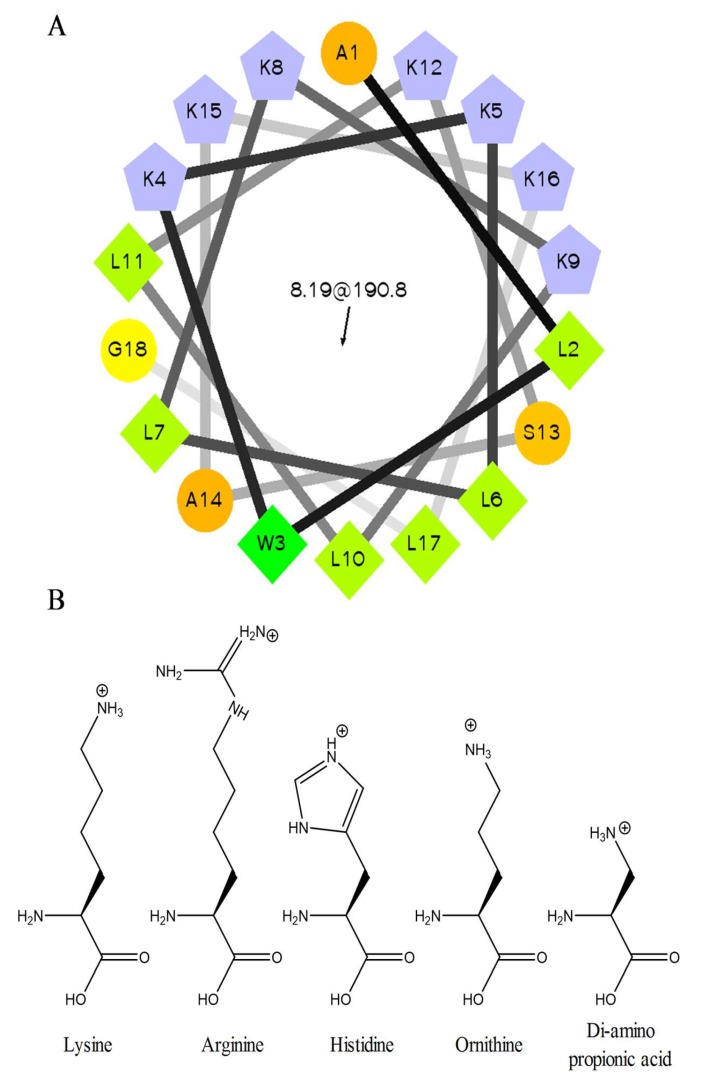
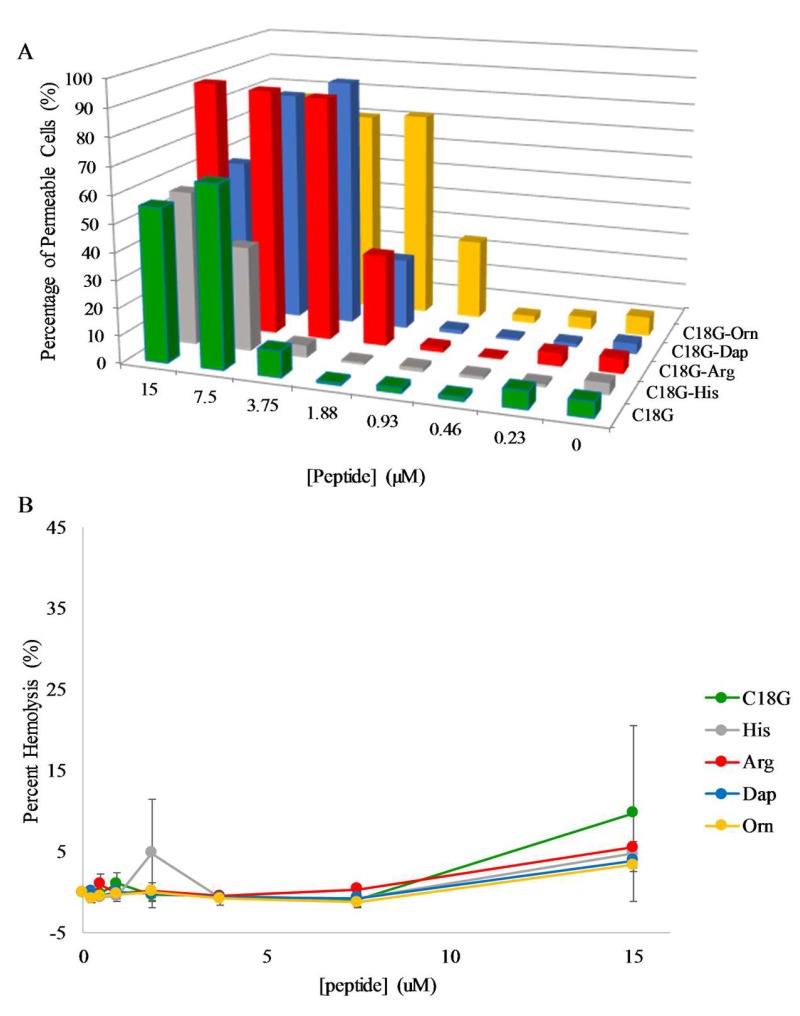
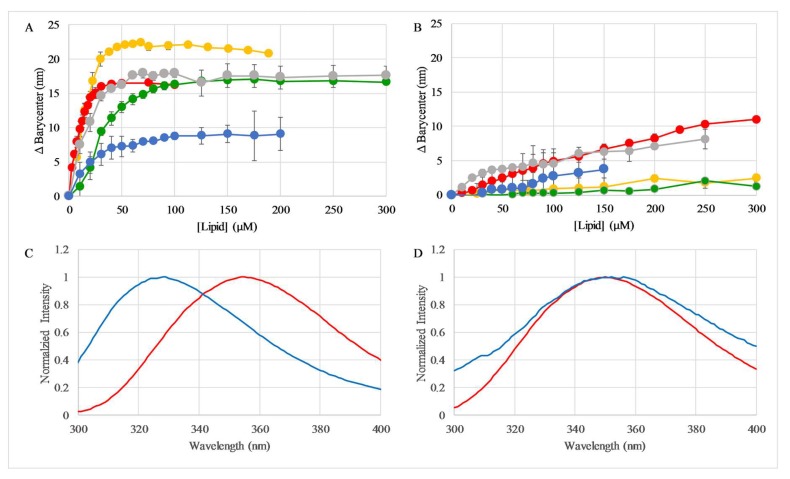
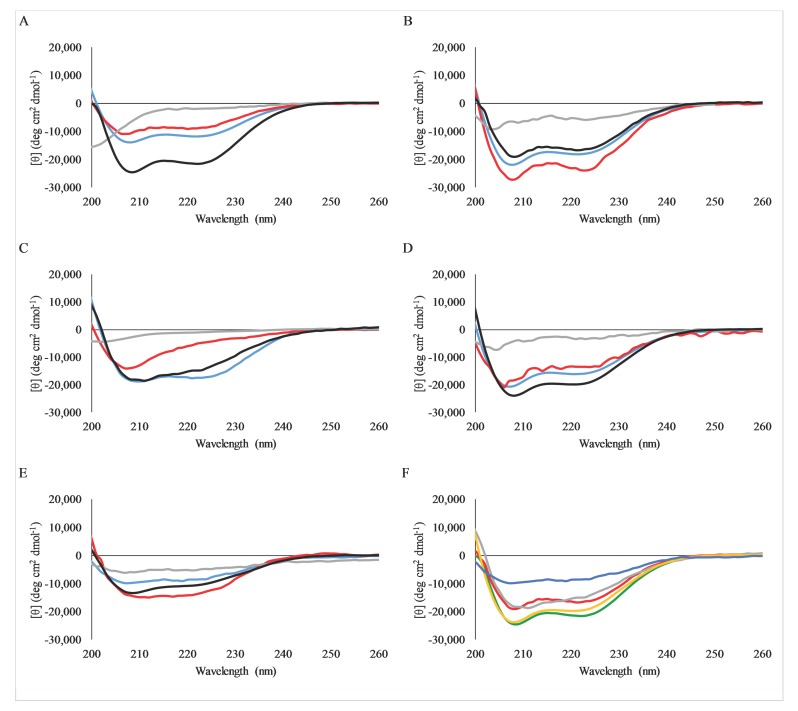
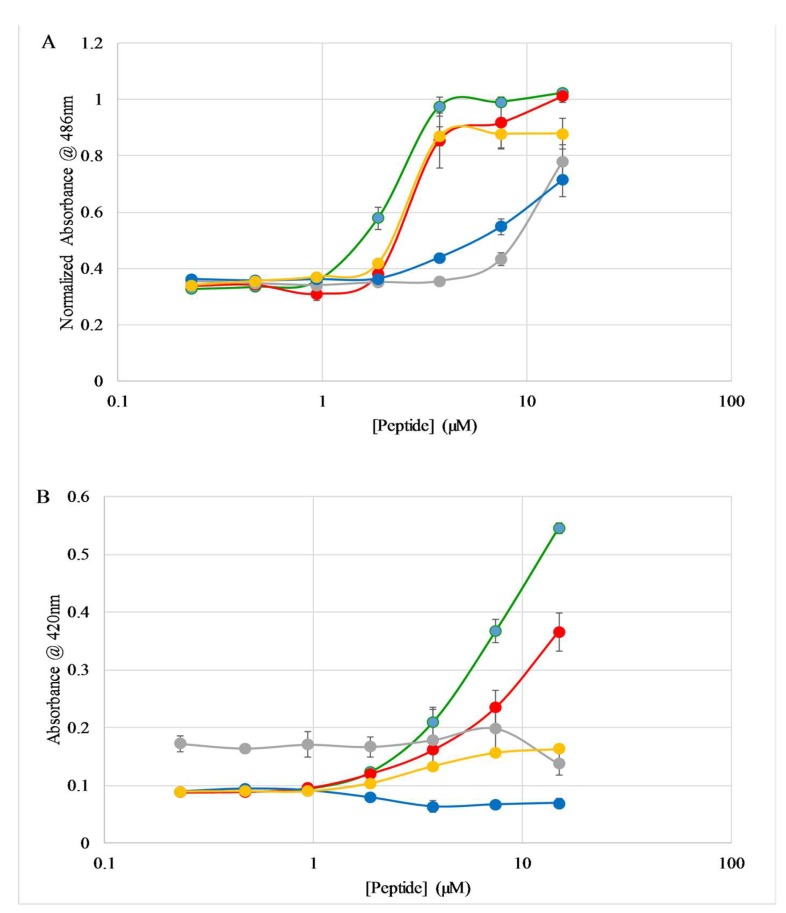
Antimicrobial peptides (AMPs) have been an area of great interest, due to the high selectivity of these molecules toward bacterial targets over host cells and the limited development of bacterial resistance to these molecules throughout evolution. The peptide C18G has been shown to be a selective, broad spectrum AMP with a net +8 cationic charge from seven lysine residues in the sequence. In this work, the cationic Lys residues were replaced with other natural or non-proteinogenic cationic amino acids: arginine, histidine, ornithine, or diaminopropionic acid. These changes vary in the structure of the amino acid side chain, the identity of the cationic moiety, and the pK of the cationic group. Using a combination of spectroscopic and microbiological methods, the influence of these cationic groups on membrane binding, secondary structure, and antibacterial activity was investigated. The replacement of Lys with most other cationic residues had, at most, 2-fold effects on minimal inhibitory concentration against a variety of Gram-positive and Gram-negative bacteria. However, the peptide containing His as the cationic group showed dramatically reduced activity. All peptide variants retained the ability to bind lipid vesicles and showed clear preference for binding vesicles that contained anionic lipids. Similarly, all peptides adopted a helical conformation when bound to lipids or membrane mimetics, although the peptide containing diaminopropionic acid exhibited a decreased helicity. The peptides exhibited a wider variety of activity in the permeabilization of bacterial membranes, with peptides containing Lys, Arg, or Orn being the most broadly active. In all, the antibacterial activity of the C18G peptide is generally tolerant to changes in the structure and identity of the cationic amino acids, yielding new possibilities for design and development of AMPs that may be less susceptible to immune and bacterial recognition or in vivo degradation.
抗菌肽 (AMPs) 一直是研究的热点,因为这些分子对细菌靶标具有高度选择性,而对宿主细胞的选择性较低,并且在整个进化过程中细菌对这些分子的耐药性有限。肽 C18G 已被证明是一种具有选择性的广谱 AMP,其序列中的七个赖氨酸残基使净正电荷为 +8。在这项工作中,将阳离子 Lys 残基替换为其他天然或非蛋白源的阳离子氨基酸:精氨酸、组氨酸、鸟氨酸或二氨基丙酸。这些变化在氨基酸侧链的结构、阳离子部分的身份和阳离子基团的 pK 值上有所不同。通过光谱和微生物学方法的结合,研究了这些阳离子基团对膜结合、二级结构和抗菌活性的影响。用大多数其他阳离子残基替换 Lys 最多对各种革兰氏阳性和革兰氏阴性细菌的最小抑菌浓度有 2 倍的影响。然而,含有组氨酸作为阳离子基团的肽显示出显著降低的活性。所有肽变体都保留了结合脂质体的能力,并显示出对含阴离子脂质的脂质体有明显的结合偏好。同样,所有肽在与脂质或膜类似物结合时都采用螺旋构象,尽管含有二氨基丙酸的肽显示出螺旋度降低。肽在细菌膜的通透性方面表现出更广泛的活性,含有 Lys、Arg 或 Orn 的肽最具广谱活性。总的来说,C18G 肽的抗菌活性通常对阳离子氨基酸的结构和身份变化具有耐受性,为设计和开发可能对免疫和细菌识别或体内降解不太敏感的 AMP 提供了新的可能性。