Hadjiat Yacine, Serrie Alain, Treves Richard, Chomier Berangere, Geranton Laurent, Billon Stephane
Medical Department, Mundipharma SAS, Paris.
Pain and Palliative Care Department, CHU Lariboisiere, Paris.
Clinicoecon Outcomes Res. 2018 Jan 18;10:53-65. doi: 10.2147/CEOR.S148405. eCollection 2018.
This study aimed to estimate the prevalence of pain among French adults and assess the impact of pain on health-related quality of life (HRQoL), activity impairment, and health care resource use (HRU).
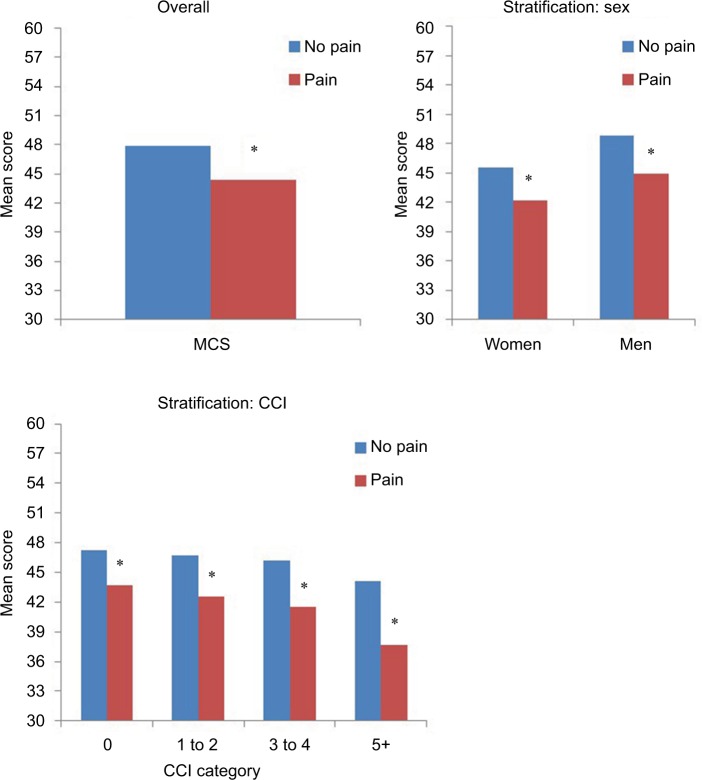
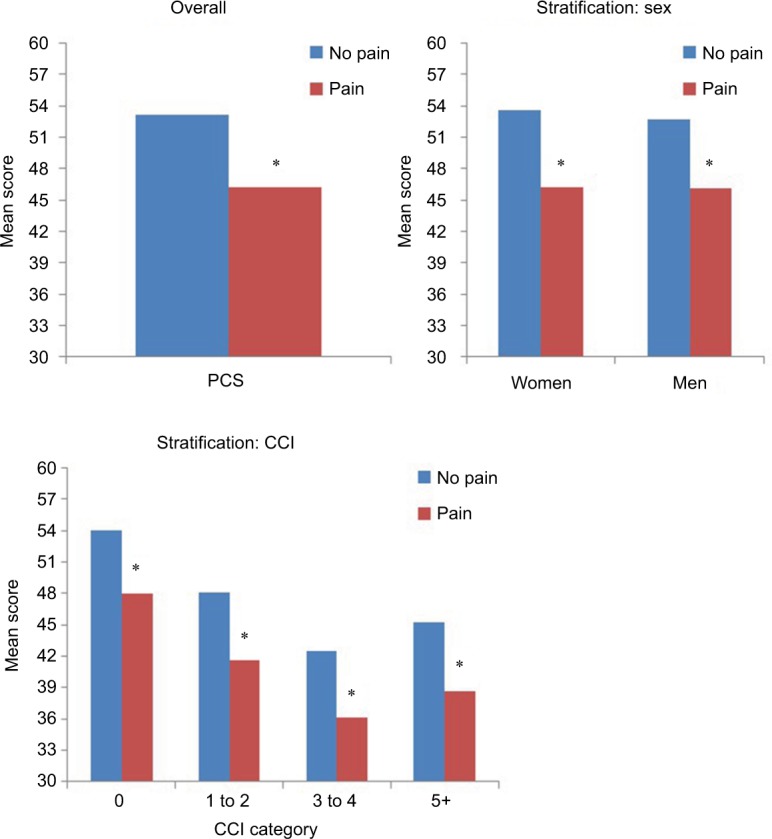
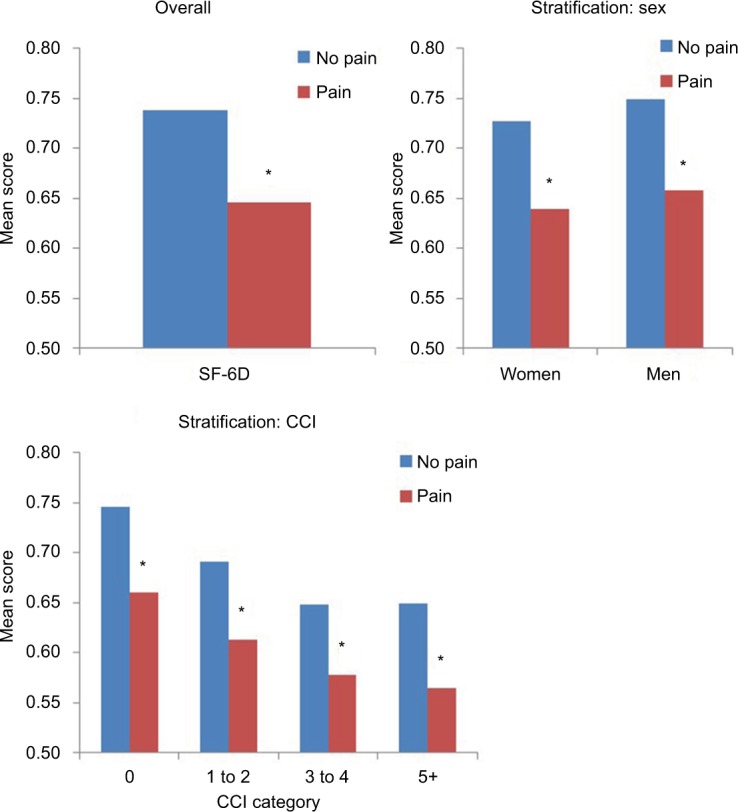
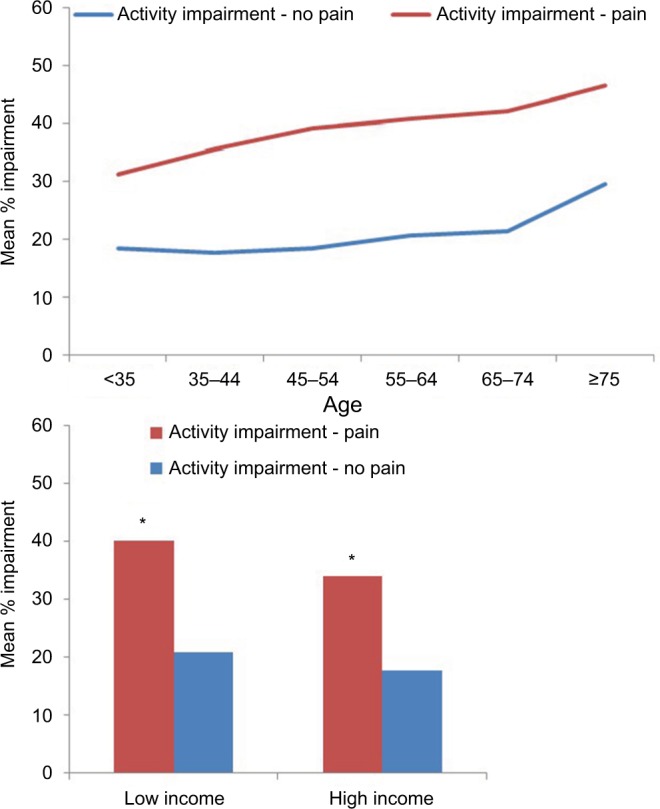
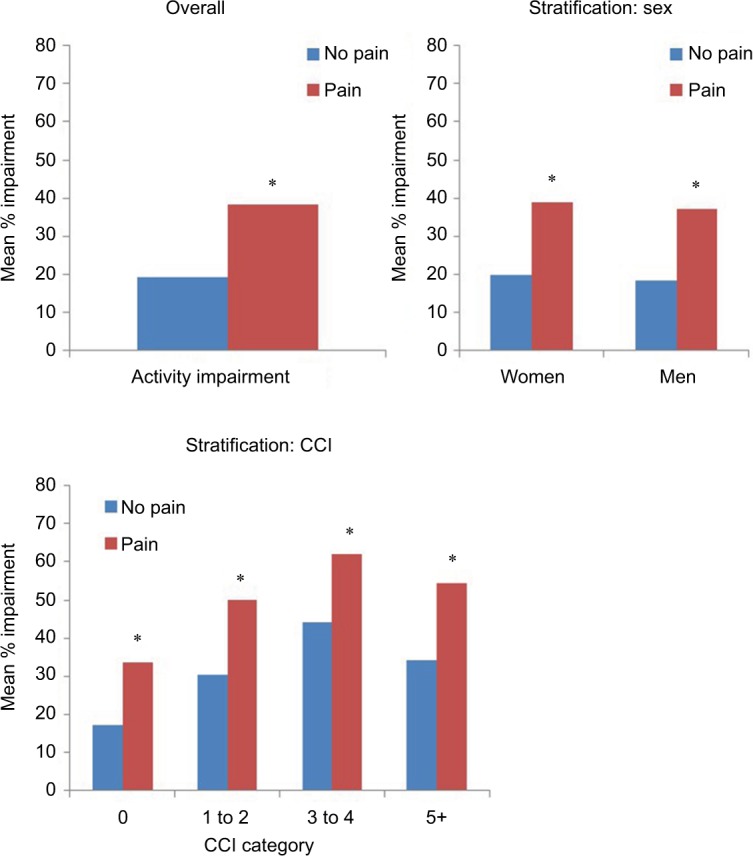
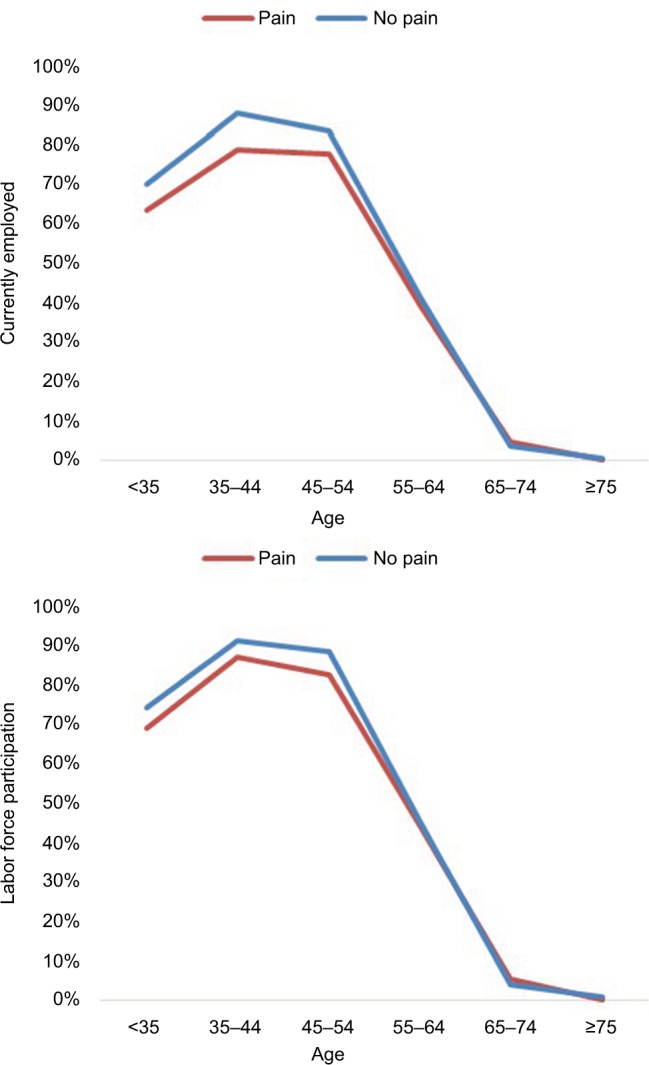
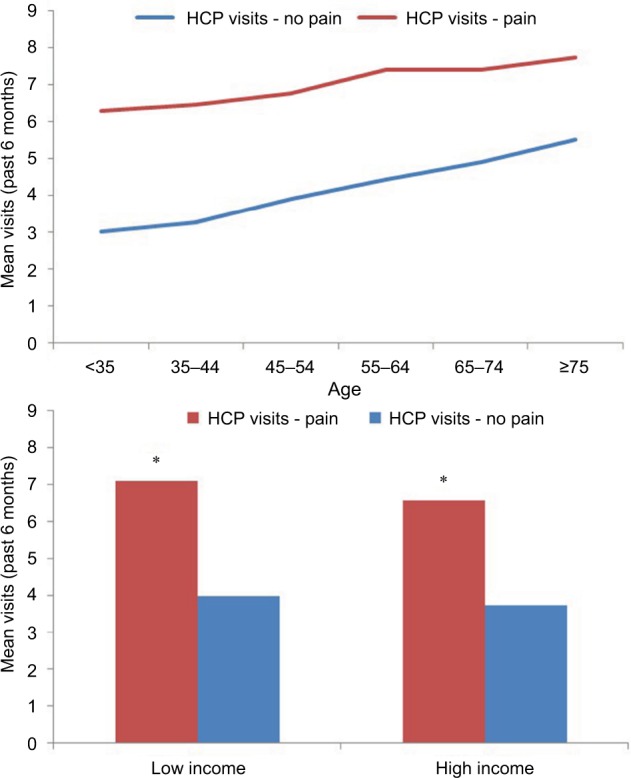
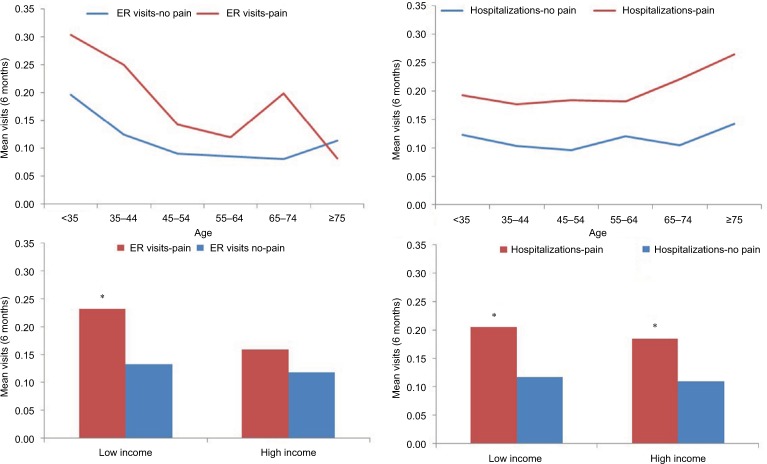
Respondents from the 2015 France National Health and Wellness Survey (N=19,173) were categorized by self-reported pain (experienced pain in the past 12 months vs no pain) and compared on HRQoL (36-Item Short Form Health Survey version 2: Mental Component Summary, Physical Component Summary, and Short Form-6 Dimensions health utilities), activity impairment (Work Productivity and Activity Impairment questionnaire), employment status, and HRU (health care provider visits, emergency room visits, and hospitalizations). Bivariate analyses examined differences between pain groups stratified by age, sex, income, and Charlson comorbidity index (CCI) scores.
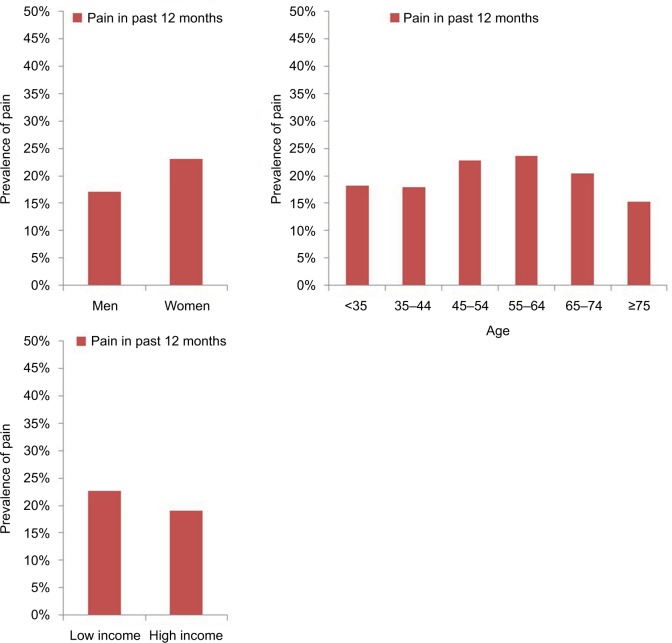
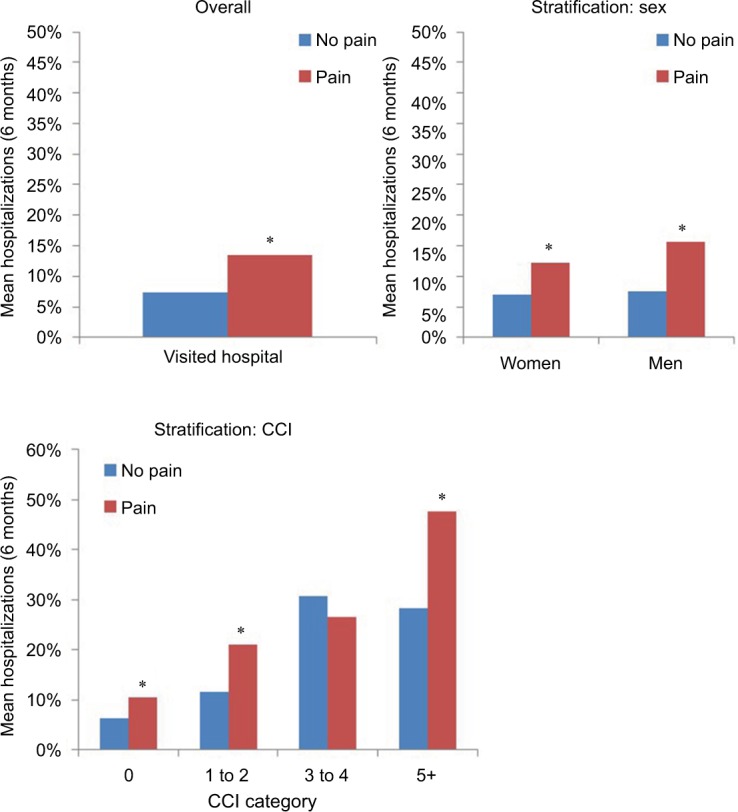
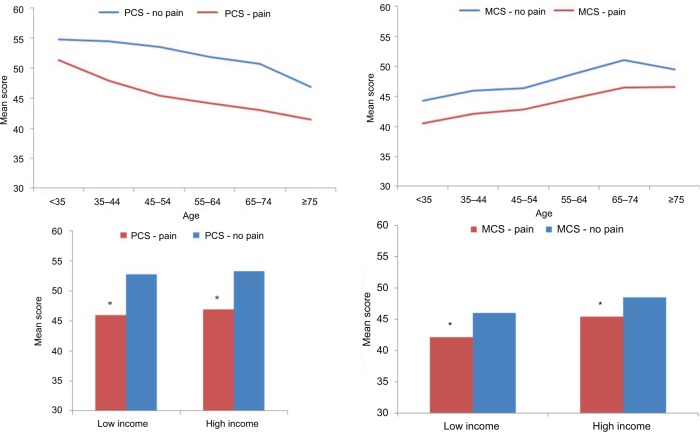
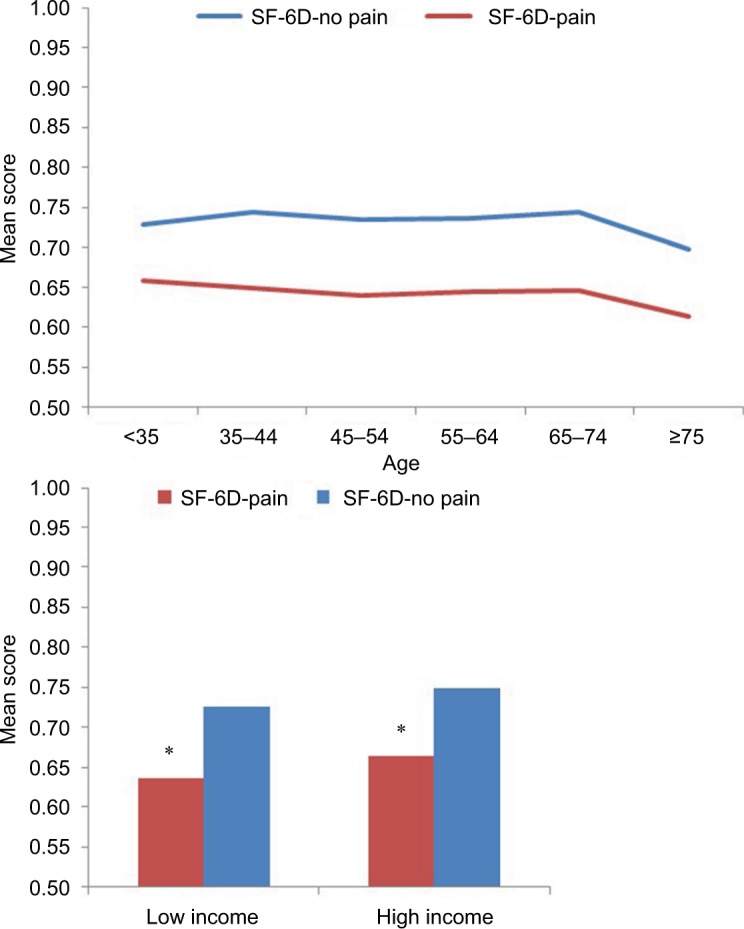
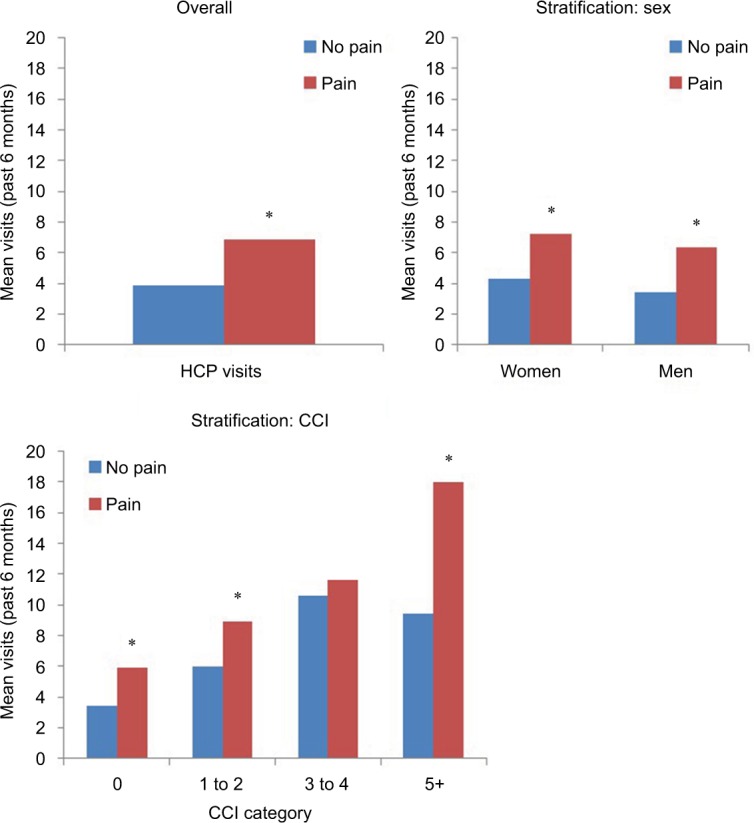
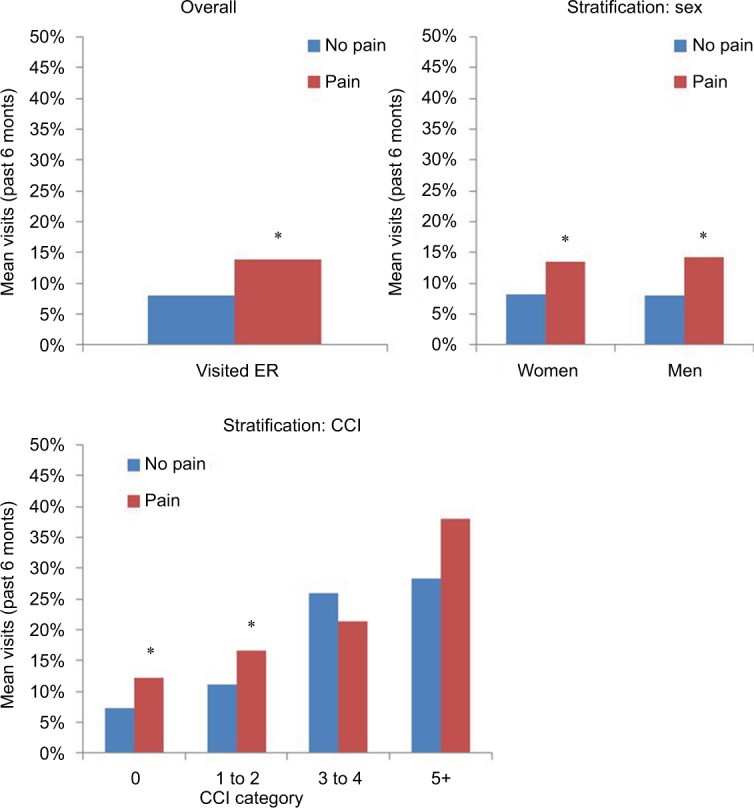
Pain prevalence was 20.2% (n=4007). Mean Physical Component Summary decrements with pain ranged from 3.4 to 8.1 points among those aged <35 years to those aged 45-54 years, respectively. Results for Mental Component Summary and Short Form-6 Dimensions scores followed similar patterns. Regardless of income, sex, or CCI group, pain was associated with significant decrements on all HRQoL measures (for all, <0.05). The impact of pain on activity impairment was lowest among those <35 years; this impact was higher in middle age and then tapered off among those aged ≥75 years. Pain was associated with greater activity impairment and more health care provider visits across income, sex, and CCI groups (for all, <0.05). Generally, emergency room visits were more common among those with pain across age, sex, and CCI, but they were only significantly associated with pain in the lower income group (<0.01). Pain was associated with significantly more hospitalizations across age and income groups.
Results suggest pain negatively affects HRQoL, activity impairment, and HRU across demographic subgroups. These findings help underscore the considerable health and economic burden of pain in France.
本研究旨在估计法国成年人中疼痛的患病率,并评估疼痛对健康相关生活质量(HRQoL)、活动障碍和医疗资源使用(HRU)的影响。
对2015年法国国民健康与福祉调查(N = 19,173)的受访者,根据自我报告的疼痛情况(过去12个月经历过疼痛与无疼痛)进行分类,并在HRQoL(36项简短健康调查问卷第2版:心理成分总结、身体成分总结和简短健康调查问卷6维度健康效用)、活动障碍(工作效率和活动障碍问卷)、就业状况和HRU(医疗服务提供者就诊、急诊室就诊和住院)方面进行比较。双变量分析检查了按年龄、性别、收入和查尔森合并症指数(CCI)评分分层的疼痛组之间的差异。
疼痛患病率为20.2%(n = 4007)。年龄小于35岁至45 - 54岁的人群中,因疼痛导致的身体成分总结平均分下降分别为3.4至8.1分。心理成分总结和简短健康调查问卷6维度评分的结果呈现类似模式。无论收入、性别或CCI分组如何,疼痛与所有HRQoL指标的显著下降相关(所有P值均<0.05)。疼痛对活动障碍的影响在35岁以下人群中最低;在中年人群中影响较高,然后在75岁及以上人群中逐渐减弱。在不同收入、性别和CCI分组中,疼痛与更大的活动障碍和更多的医疗服务提供者就诊相关(所有P值均<0.05)。一般来说,急诊室就诊在各年龄、性别和CCI的疼痛患者中更为常见,但仅在低收入组中与疼痛显著相关(P<0.01)。在不同年龄和收入组中,疼痛与显著更多的住院相关。
结果表明,疼痛对各人口亚组的HRQoL、活动障碍和HRU均有负面影响。这些发现有助于凸显法国疼痛所带来的巨大健康和经济负担。