Goversen Birgit, Becker Nadine, Stoelzle-Feix Sonja, Obergrussberger Alison, Vos Marc A, van Veen Toon A B, Fertig Niels, de Boer Teun P
Division of Heart & Lungs, Department of Medical Physiology, University Medical Center Utrecht, Utrecht, Netherlands.
Nanion Technologies, Munich, Germany.
Front Physiol. 2018 Jan 19;8:1094. doi: 10.3389/fphys.2017.01094. eCollection 2017.
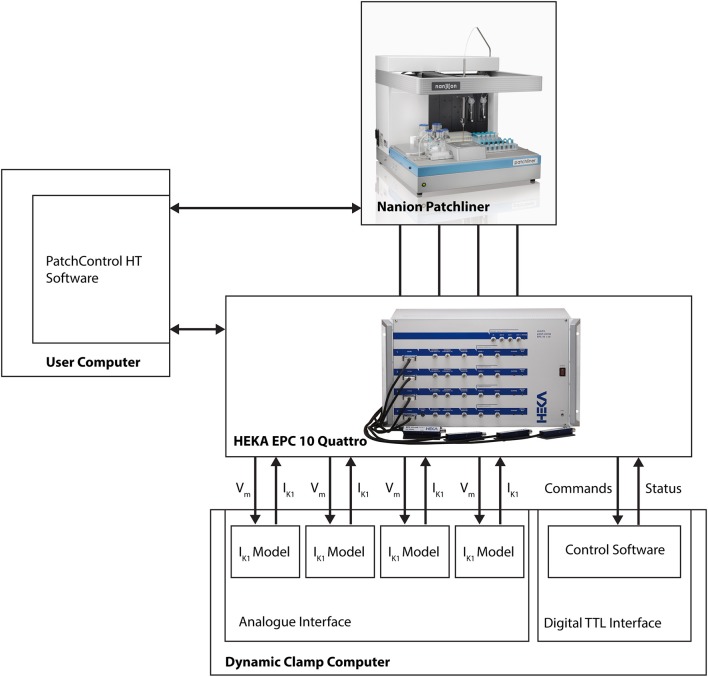
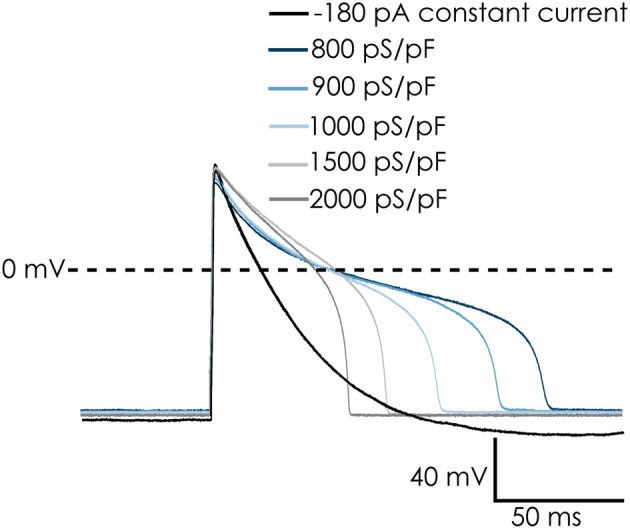
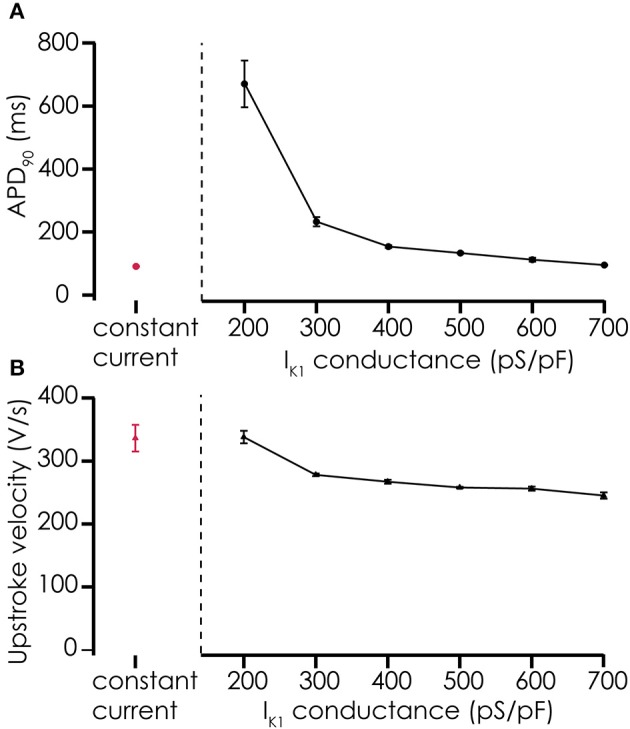
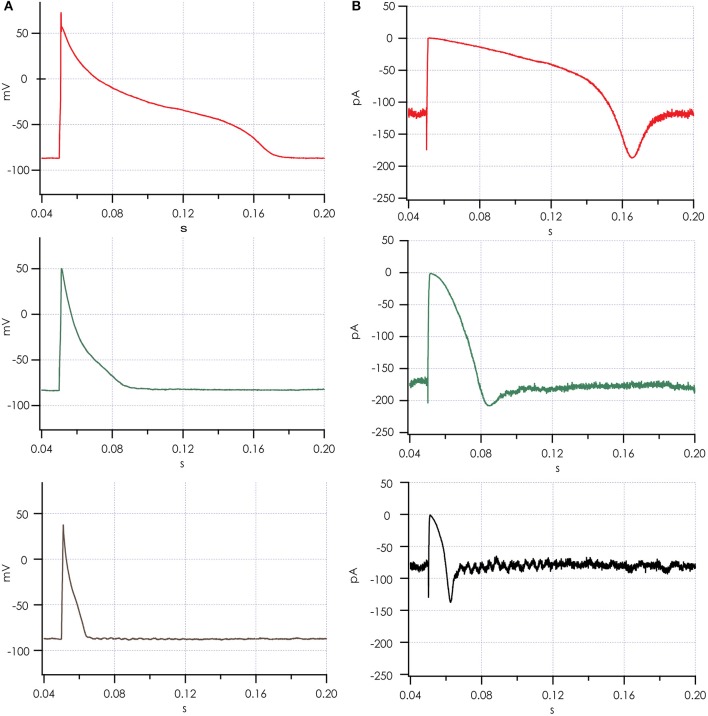
An important aspect of the Comprehensive Proarrhythmia Assay (CiPA) proposal is the use of human stem cell-derived cardiomyocytes and the confirmation of their predictive power in drug safety assays. The benefits of this cell source are clear; drugs can be tested on human cardiomyocytes, with patient-specific genotypes if needed, and differentiation efficiencies are generally excellent, resulting in a virtually limitless supply of cardiomyocytes. There are, however, several challenges that will have to be surmounted before successful establishment of hSC-CMs as an all-round predictive model for drug safety assays. An important factor is the relative electrophysiological immaturity of hSC-CMs, which limits arrhythmic responses to unsafe drugs that are pro-arrhythmic in humans. Potentially, immaturity may be improved functionally by creation of hybrid models, in which the dynamic clamp technique joins simulations of lacking cardiac ion channels (e.g., I) with hSC-CMs in real-time during patch clamp experiments. This approach has been used successfully in manual patch clamp experiments, but throughput is low. In this study, we combined dynamic clamp with automated patch clamp of iPSC-CMs in current clamp mode, and demonstrate that I conductance can be added to iPSC-CMs on an automated patch clamp platform, resulting in an improved electrophysiological maturity.
全面心律失常检测(CiPA)方案的一个重要方面是使用人类干细胞衍生的心肌细胞,并在药物安全性检测中确认其预测能力。这种细胞来源的优势显而易见;可以在人类心肌细胞上测试药物,如有需要还可针对患者特定基因型进行测试,而且分化效率通常很高,从而能产生几乎无限供应的心肌细胞。然而,在成功将人干细胞衍生的心肌细胞(hSC-CMs)确立为药物安全性检测的全面预测模型之前,还需克服几个挑战。一个重要因素是hSC-CMs相对电生理不成熟,这限制了其对在人类中具有促心律失常作用的不安全药物的心律失常反应。通过创建混合模型,功能上的不成熟可能会得到改善,在膜片钳实验期间,动态钳技术将缺乏的心脏离子通道(如I)的模拟与hSC-CMs实时结合。这种方法已在手动膜片钳实验中成功使用,但通量较低。在本研究中,我们将动态钳与诱导多能干细胞衍生心肌细胞(iPSC-CMs)在电流钳模式下的自动膜片钳相结合,并证明可以在自动膜片钳平台上向iPSC-CMs添加I电导,从而提高电生理成熟度。