Begum Yasmin Ara, Rydberg Hanna A, Thorell Kaisa, Kwak Young-Keun, Sun Lei, Joffré Enrique, Qadri Firdausi, Sjöling Åsa
International Centre for Diarrhoeal Disease Research, Bangladesh, Centre for Health and Population Research, Dhaka, Bangladesh.
Department of Microbiology, Tumor and Cell Biology, Centre for Translational Microbiome Research (CTMR), Karolinska Institutet, Stockholm, Sweden.
mSphere. 2018 Jan 24;3(1). doi: 10.1128/mSphere.00517-17. eCollection 2018 Jan-Feb.
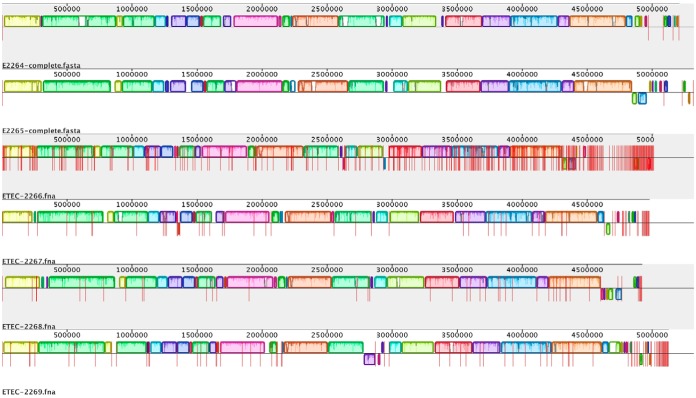
The bacterial pathogens enterotoxigenic (ETEC) and are major causes of diarrhea. ETEC causes diarrhea by production of the heat-labile toxin (LT) and heat-stable toxins (STh and STp), while produces cholera toxin (CT). In this study, we determined the occurrence and bacterial doses of the two pathogens and their respective toxin expression levels directly in liquid diarrheal stools of patients in Dhaka, Bangladesh. By quantitative culture and real-time quantitative PCR (qPCR) detection of the toxin genes, the two pathogens were found to coexist in several of the patients, at concentrations between 10 and 10 bacterial gene copies per ml. Even in culture-negative samples, gene copy numbers of 10 to 10 of either ETEC or toxin genes were detected by qPCR. RNA was extracted directly from stool, and gene expression levels, quantified by reverse transcriptase qPCR (RT-qPCR), of the genes encoding CT, LT, STh, and STp showed expression of toxin genes. Toxin enzyme-linked immunosorbent assay (ELISA) confirmed active toxin secretion directly in the liquid diarrhea. Analysis of ETEC isolates by multiplex PCR, dot blot analysis, and genome sequencing suggested that there are genetic ETEC profiles that are more commonly found as dominating single pathogens and others that are coinfectants with lower bacterial loads. The ETEC genomes, including assembled genomes of dominating ETEC isolates expressing LT/STh/CS5/CS6 and LT/CS7, are provided. In addition, this study highlights an emerging important ETEC strain expressing LT/STp and the novel colonization factor CS27b. These findings have implications for investigations of pathogenesis as well as for vaccine development. The cause of diarrheal disease is usually determined by screening for several microorganisms by various methods, and sole detection is used to assign the agent as the cause of disease. However, it has become increasingly clear that many infections are caused by coinfections with several pathogens and that the dose of the infecting pathogen is important. We quantified the absolute numbers of enterotoxigenic (ETEC) and directly in diarrheal fluid. We noted several events where both pathogens were found but also a large dose dependency. In three samples, we found ETEC as the only pathogen sought for. These isolates belonged to globally distributed ETEC clones and were the dominating species in stool with active toxin expression. This suggests that certain superior virulent ETEC lineages are able to outcompete the gut microbiota and be the sole cause of disease and hence need to be specifically monitored.
产肠毒素性细菌病原体(ETEC)是腹泻的主要病因。ETEC通过产生不耐热毒素(LT)和耐热毒素(STh和STp)导致腹泻,而[此处原文缺失一种细菌名称]产生霍乱毒素(CT)。在本研究中,我们直接在孟加拉国达卡患者的液体腹泻粪便中确定了这两种病原体的存在情况、细菌剂量及其各自毒素的表达水平。通过对毒素基因进行定量培养和实时定量PCR(qPCR)检测,发现这两种病原体在部分患者中共存,浓度为每毫升10至10个细菌基因拷贝。即使在培养阴性的样本中,通过qPCR也检测到ETEC或[此处原文缺失一种细菌名称]毒素基因的拷贝数为10至10。直接从粪便中提取RNA,通过逆转录qPCR(RT-qPCR)对编码CT、LT、STh和STp的基因表达水平进行定量,结果显示毒素基因有表达。毒素酶联免疫吸附测定(ELISA)证实液体腹泻中直接存在活性毒素分泌。通过多重PCR、斑点印迹分析和基因组测序对ETEC分离株进行分析,结果表明存在一些遗传ETEC谱型,其中一些更常见为占主导的单一病原体,另一些则是细菌载量较低的混合感染病原体。提供了ETEC基因组,包括表达LT/STh/CS5/CS6和LT/CS7的占主导ETEC分离株的组装基因组。此外,本研究突出了一种新兴的重要ETEC菌株,其表达LT/STp和新型定植因子CS27b。这些发现对发病机制研究以及疫苗开发具有重要意义。腹泻疾病的病因通常通过多种方法筛查多种微生物来确定,单一检测结果用于确定病原体为疾病病因。然而,越来越清楚的是,许多感染是由多种病原体混合感染引起的,并且感染病原体的剂量很重要。我们直接对腹泻液中产肠毒素性[此处原文缺失一种细菌名称](ETEC)和[此处原文缺失一种细菌名称]的绝对数量进行了定量。我们注意到有几个样本中同时发现了两种病原体,但也存在很大的剂量依赖性。在三个样本中,我们发现ETEC是唯一检测到的目标病原体。这些分离株属于全球分布的ETEC克隆,是粪便中具有活性毒素表达的优势菌种。这表明某些具有更强毒力的ETEC谱系能够在肠道微生物群中占据优势,成为疾病的唯一病因,因此需要进行专门监测。