Neurotoxicology Group, National Toxicology Program Laboratory, National Institute of Environmental Health Sciences, Mail Drop C1-04, P.O. Box 12233, Research Triangle Park, NC, 27709, USA.
Social & Scientific Systems, Inc, Durham, NC, 27703, USA.
Neurotox Res. 2018 Nov;34(4):781-798. doi: 10.1007/s12640-018-9870-x. Epub 2018 Feb 5.
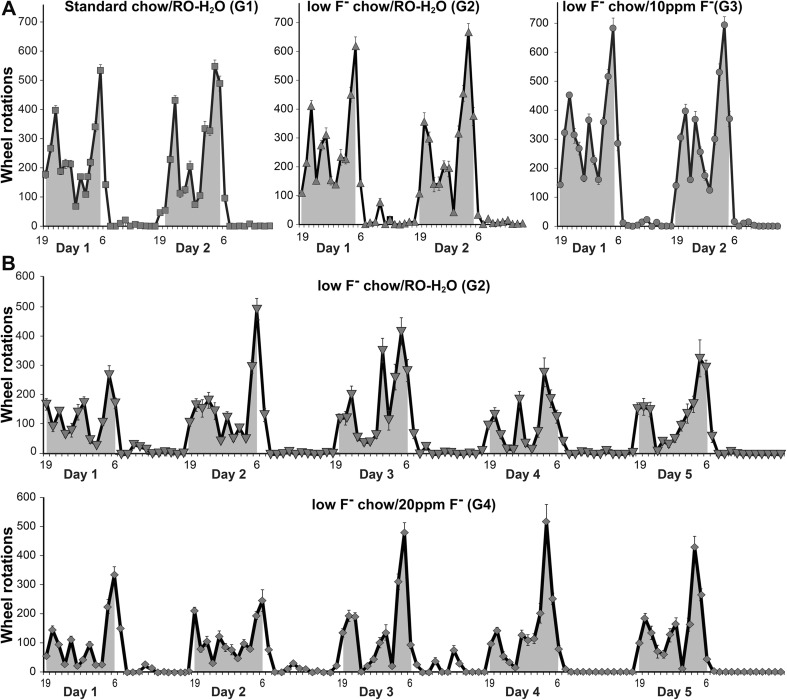
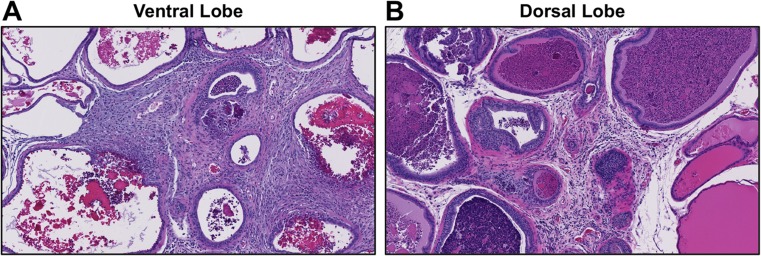
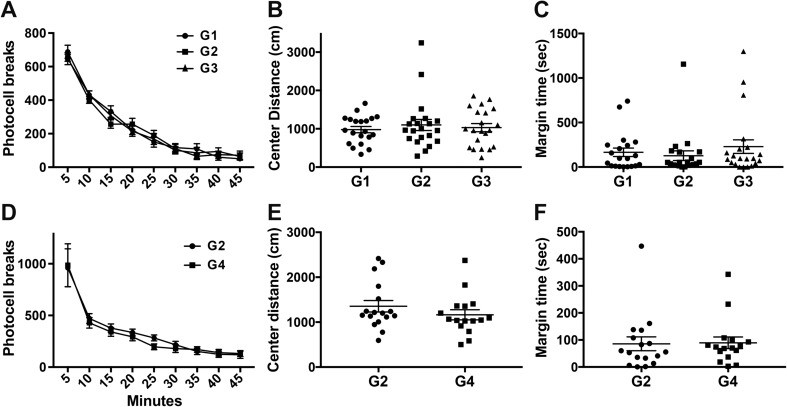
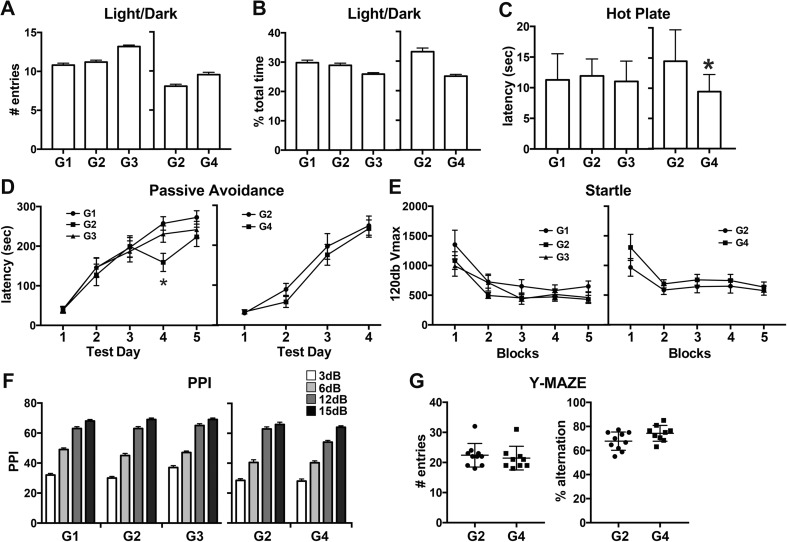
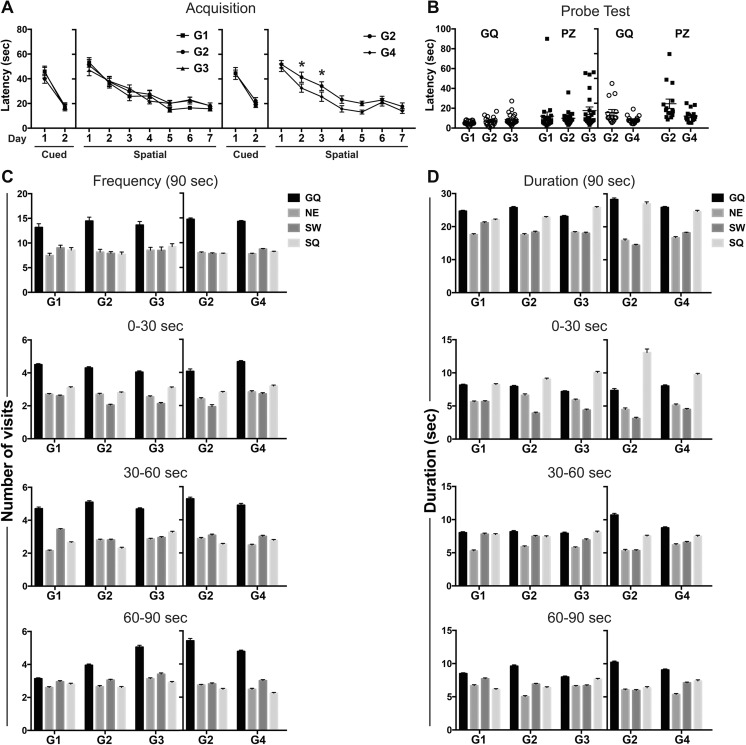
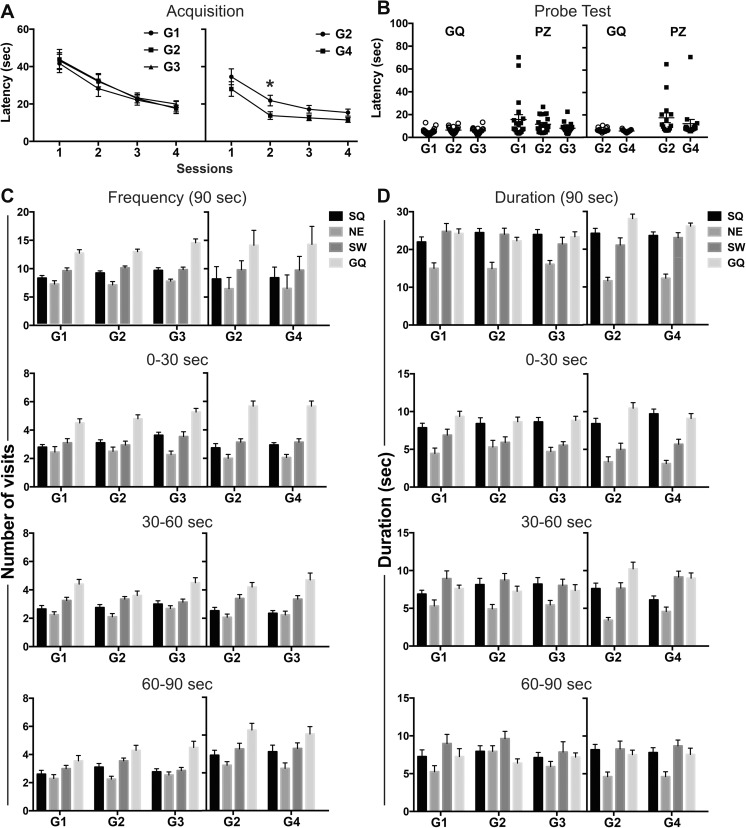
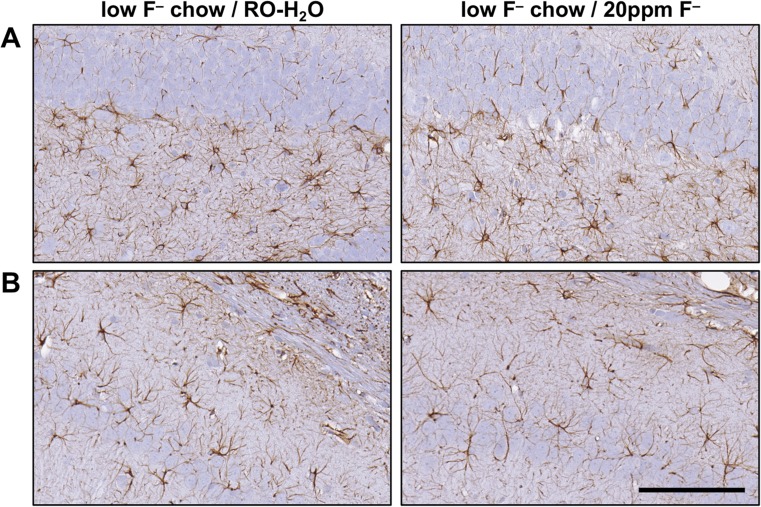
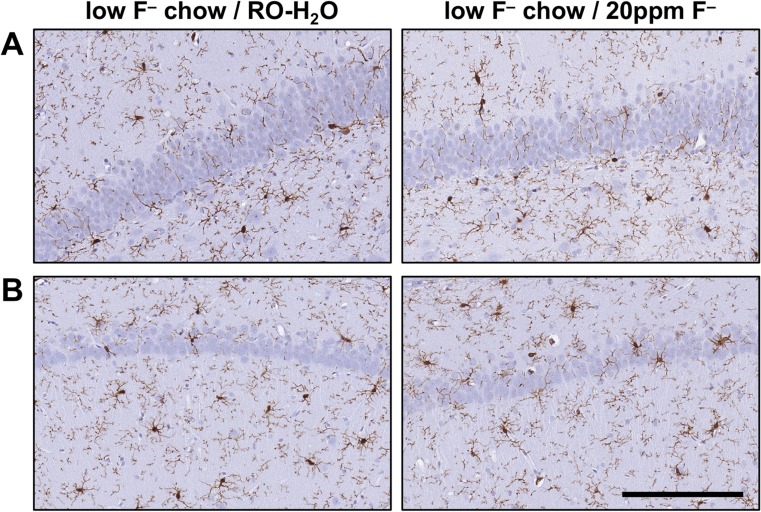
At elevated levels, fluoride (F) exposure has been associated with adverse human health effects. In rodents, F exposure has been reported to induce deficits in motor performance and learning and memory. In this study, we examined Long-Evans hooded male rats maintained on a standard diet (20.5 ppm F) or a low F diet (3.24 ppm F) with drinking water exposure to 0, 10, or 20 ppm F from gestational day 6 through adulthood. At postnatal day 25, brain F levels were 0.048 or 0.081 μg/g and femur 235 or 379.8 μg/g for 10 and 20 ppm F, respectively. Levels increase with age and in adults, levels for plasma were 0.036 or 0.025 μg/ml; for the brain 0.266 or 0.850 μg/g; and for the femur, 681.2 or 993.4 μg/g. At these exposure levels, we observed no exposure-related differences in motor, sensory, or learning and memory performance on running wheel, open-field activity, light/dark place preference, elevated plus maze, pre-pulse startle inhibition, passive avoidance, hot-plate latency, Morris water maze acquisition, probe test, reversal learning, and Y-maze. Serum triiodothyronine (T3), thyroxine (T4), and thyroid stimulating hormone (TSH) levels were not altered as a function of 10 or 20 ppm F in the drinking water. No exposure-related pathology was observed in the heart, liver, kidney, testes, seminal vesicles, or epididymides. Mild inflammation in the prostate gland was observed at 20 ppm F. No evidence of neuronal death or glial activation was observed in the hippocampus at 20 ppm F.
在较高水平上,氟化物 (F) 暴露与人类健康的不良影响有关。在啮齿动物中,已经有报道称 F 暴露会导致运动表现和学习记忆缺陷。在这项研究中,我们检查了长期暴露于含氟水(20.5 ppm F)或低氟水(3.24 ppm F)的雄性长耳大仓鼠,其饮水暴露于 0、10 或 20 ppm F 从妊娠第 6 天到成年。在出生后第 25 天,大脑中的 F 含量分别为 0.048 或 0.081μg/g,股骨中的 F 含量分别为 0.081μg/g 和 0.081μg/g。F 水平随年龄增长而增加,在成年期,血浆中的 F 水平分别为 0.036 或 0.025μg/ml;大脑中的 F 水平分别为 0.266 或 0.850μg/g;股骨中的 F 水平分别为 681.2 或 993.4μg/g。在这些暴露水平下,我们没有观察到与运动、感觉或学习和记忆表现相关的差异,例如在跑步轮、旷场活动、明暗偏好、高架十字迷宫、预脉冲抑制、被动回避、热板潜伏期、Morris 水迷宫获得、探针测试、反转学习和 Y 迷宫。血清三碘甲状腺原氨酸 (T3)、甲状腺素 (T4) 和促甲状腺激素 (TSH) 水平不因饮用水中 10 或 20 ppm F 而改变。在心脏、肝脏、肾脏、睾丸、精囊或附睾中没有观察到与暴露相关的病理学变化。在 20 ppm F 时观察到前列腺轻度炎症。在 20 ppm F 时,海马区没有观察到神经元死亡或神经胶质激活的证据。