Department of Biomedical Engineering, Rensselaer Polytechnic Institute, Troy, NY 12182, USA; Center for Biotechnology and Interdisciplinary Studies, Rensselaer Polytechnic Institute, Troy, NY 12182, USA.
Department of Biomedical Engineering, Rensselaer Polytechnic Institute, Troy, NY 12182, USA; Center for Biotechnology and Interdisciplinary Studies, Rensselaer Polytechnic Institute, Troy, NY 12182, USA.
Bone. 2018 May;110:128-133. doi: 10.1016/j.bone.2018.01.028. Epub 2018 Feb 2.
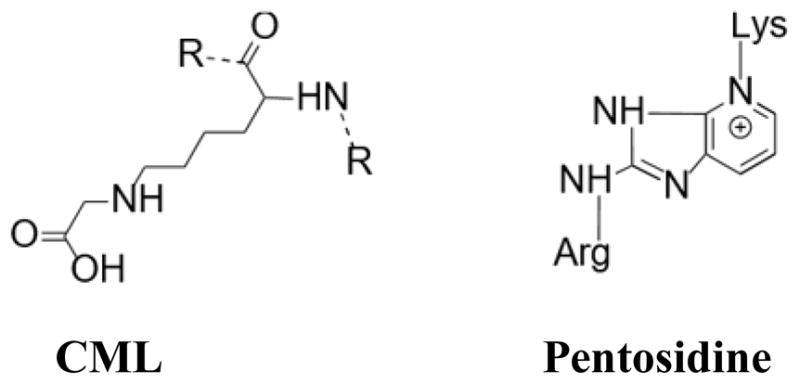
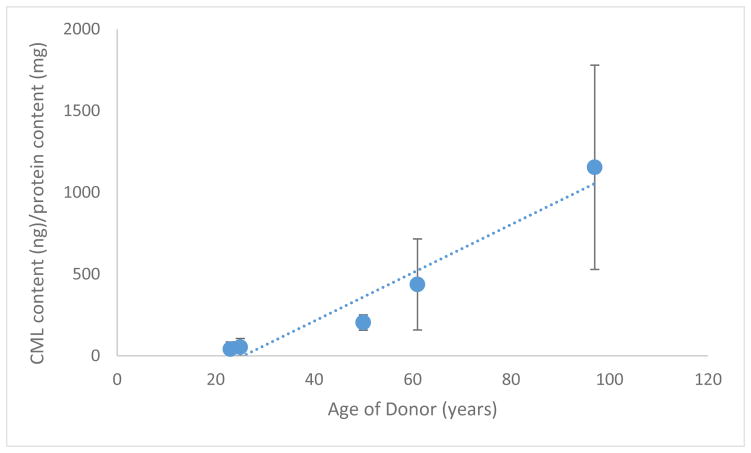
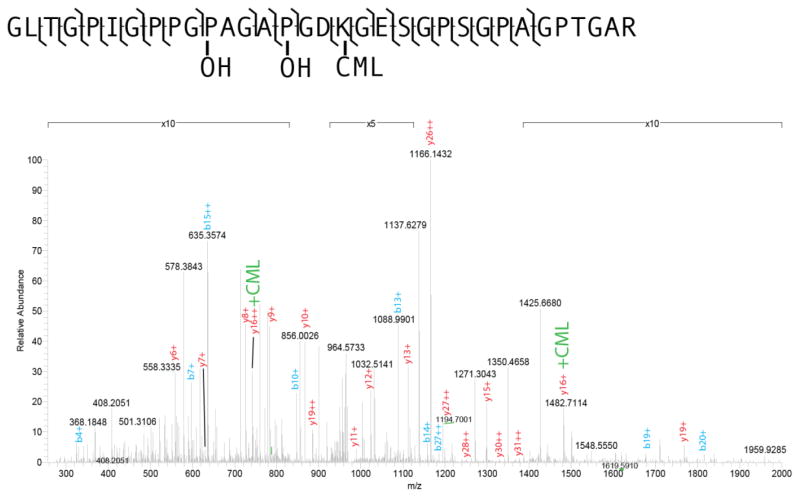
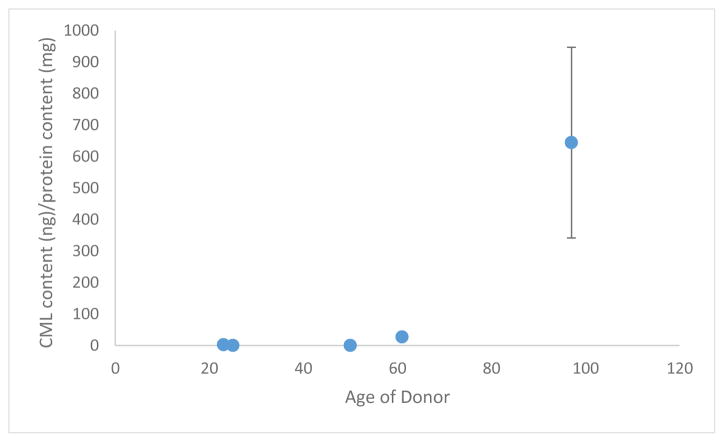
Advanced glycation end-products (AGEs) are a category of post translational modification associated with the degradation of the structural properties of multiple different types of tissues. Typically, AGEs are the result of a series of post-translational modification reactions between sugars and proteins through a process known as non-enzymatic glycation (NEG). Increases in the rate of NEG of bone tissue are associated with type 2 diabetes and skeletal fragility. Current methods of assessing NEG and its impact on bone fracture risk involve measurement of pentosidine or total fluorescent AGEs (fAGEs). However, pentosidine represents only a small fraction of possible fAGEs present in bone, and neither pentosidine nor total fAGE measurement accounts for non-fluorescent AGEs, which are known to form in significant amounts in skin and other collagenous tissues. Carboxymethyl-lysine (CML) is a non-fluorescent AGE that is often measured and has been shown to accumulate in tissues such as skin, heart, arteries, and intervertebral disks, but is currently not assessed in bone. Here we show the localization of CML to collagen I using mass spectrometry for the first time in human bone. We then present a new method using demineralization followed by heating and trypsin digestion to measure CML content in human bone and demonstrate that CML in bone is 40-100 times greater than pentosidine (the current most commonly used marker of AGEs in bone). We then establish the viability of CML as a measurable AGE in bone by showing that levels of CML, obtained from bone using this technique, increase with age (p<0.05) and are correlated with previously reported measures of bone toughness. Thus, CML is a viable non-fluorescent AGE target to assess AGE accumulation and fragility in bone. The method developed here to extract and measure CML from human bone could facilitate the development of a new diagnostic assay to evaluate fracture risk and potentially lead to new therapeutic approaches to address bone fragility.
糖基化终产物(AGEs)是一类与多种不同类型组织结构特性降解相关的翻译后修饰产物。通常,AGEs 是糖和蛋白质之间一系列翻译后修饰反应的结果,这个过程被称为非酶糖基化(NEG)。骨组织中 NEG 速率的增加与 2 型糖尿病和骨骼脆弱有关。目前评估 NEG 及其对骨折风险影响的方法涉及测定戊糖或总荧光 AGE(fAGEs)。然而,戊糖仅代表骨中存在的少量可能的 fAGEs,并且戊糖或总 fAGE 测量均未考虑非荧光 AGEs,已知其在皮肤和其他胶原组织中大量形成。羧甲基赖氨酸(CML)是一种非荧光 AGE,通常被测量,并且已被证明在皮肤、心脏、动脉和椎间盘等组织中积累,但目前在骨中未被评估。在这里,我们首次使用质谱法在人骨中首次显示 CML 定位于 I 型胶原。然后,我们提出了一种新的方法,使用脱矿质,然后加热和胰蛋白酶消化来测量人骨中的 CML 含量,并证明骨中的 CML 比戊糖(目前最常用于骨 AGEs 的标志物)高 40-100 倍。然后,我们通过显示使用该技术从骨中获得的 CML 水平随年龄增加(p<0.05)并与先前报道的骨韧性测量值相关,证明了 CML 作为骨中可测量 AGE 的可行性。因此,CML 是评估骨中 AGE 积累和脆弱性的可行非荧光 AGE 靶标。这里开发的从人骨中提取和测量 CML 的方法可以促进新的诊断检测方法的开发,以评估骨折风险,并可能导致解决骨骼脆弱性的新治疗方法。