Poundarik Atharva A, Wu Ping-Cheng, Evis Zafer, Sroga Grazyna E, Ural Ani, Rubin Mishaela, Vashishth Deepak
Center for Biotechnology and Interdisciplinary Studies, Department of Biomedical Engineering, Rensselaer Polytechnic Institute Troy, Troy, NY 12180, USA.
Center for Biotechnology and Interdisciplinary Studies, Department of Biomedical Engineering, Rensselaer Polytechnic Institute Troy, Troy, NY 12180, USA; Middle East Technical University, Department of Engineering Sciences, Ankara, 06800, Turkey.
J Mech Behav Biomed Mater. 2015 Dec;52:120-130. doi: 10.1016/j.jmbbm.2015.08.012. Epub 2015 Aug 15.
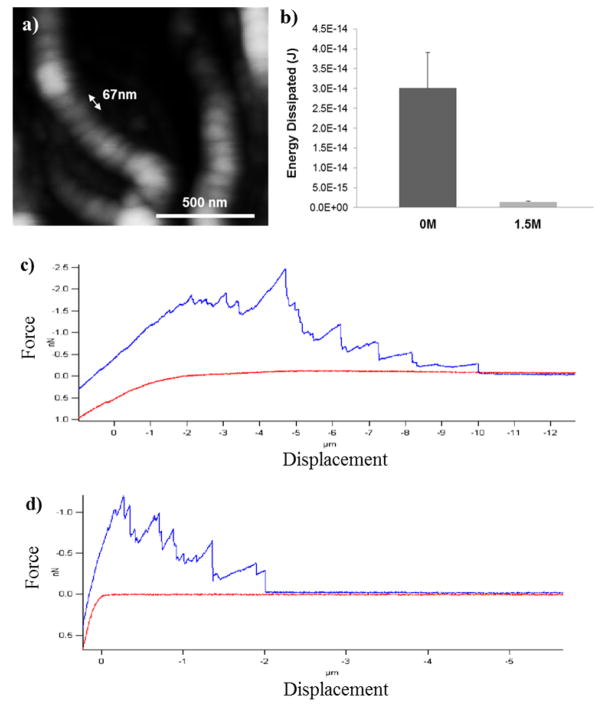
Non-enzymatic glycation (NEG) is an age-related process accelerated by diseases like diabetes, and causes the accumulation of advanced glycation end-products (AGEs). NEG-mediated modification of bone's organic matrix, principally collagen type-I, has been implicated in impairing skeletal physiology and mechanics. Here, we present evidence, from in vitro and in vivo models, and establish a causal relationship between collagen glycation and alterations in bone fracture at multiple length scales. Through atomic force spectroscopy, we established that NEG impairs collagen's ability to dissipate energy. Mechanical testing of in vitro glycated human bone specimen revealed that AGE accumulation due to NEG dramatically reduces the capacity of organic and mineralized matrix to creep and caused bone to fracture under impact at low levels of strain (3000-5000 μstrain) typically associated with fall. Fracture mechanics tests of NEG modified human cortical bone of varying ages, and their age-matched controls revealed that NEG disrupted microcracking based toughening mechanisms and reduced bone propagation and initiation fracture toughness across all age groups. A comprehensive mechanistic model, based on experimental and modeling data, was developed to explain how NEG and AGEs are causal to, and predictive of bone fragility. Furthermore, fracture mechanics and indentation testing on diabetic mice bones revealed that diabetes mediated NEG severely disrupts bone matrix quality in vivo. Finally, we show that AGEs are predictive of bone quality in aging humans and have diagnostic applications in fracture risk.
非酶糖基化(NEG)是一个与年龄相关的过程,糖尿病等疾病会加速该过程,并导致晚期糖基化终产物(AGEs)的积累。NEG介导的骨有机基质(主要是I型胶原蛋白)修饰与骨骼生理和力学受损有关。在这里,我们展示了来自体外和体内模型的证据,并在多个长度尺度上建立了胶原蛋白糖基化与骨折改变之间的因果关系。通过原子力光谱法,我们确定NEG会损害胶原蛋白的能量耗散能力。对体外糖基化的人体骨标本进行的力学测试表明,NEG导致的AGE积累显著降低了有机和矿化基质的蠕变能力,并使骨骼在通常与跌倒相关的低应变水平(3000 - 5000微应变)下受到冲击时发生骨折。对不同年龄的NEG修饰的人类皮质骨及其年龄匹配的对照进行的断裂力学测试表明,NEG破坏了基于微裂纹的增韧机制,并降低了所有年龄组的骨扩展和起始断裂韧性。基于实验和建模数据,开发了一个综合的力学模型来解释NEG和AGEs如何导致并预测骨脆性。此外,对糖尿病小鼠骨骼进行的断裂力学和压痕测试表明,糖尿病介导的NEG在体内严重破坏了骨基质质量。最后,我们表明AGEs可预测老年人的骨质量,并在骨折风险诊断中具有应用价值。