Zahr Natalie M
Department of Psychiatry and Behavioral Sciences, Stanford University School of Medicine, Stanford, CA, United States of America.
Neuroscience Department, SRI International, Menlo Park, CA, United States of America.
PLoS One. 2018 Feb 6;13(2):e0191586. doi: 10.1371/journal.pone.0191586. eCollection 2018.
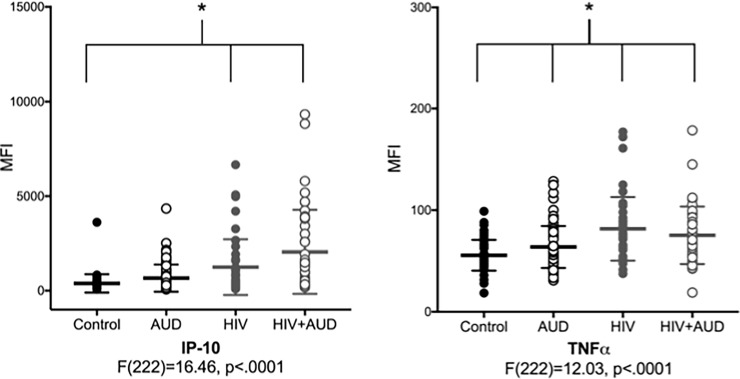
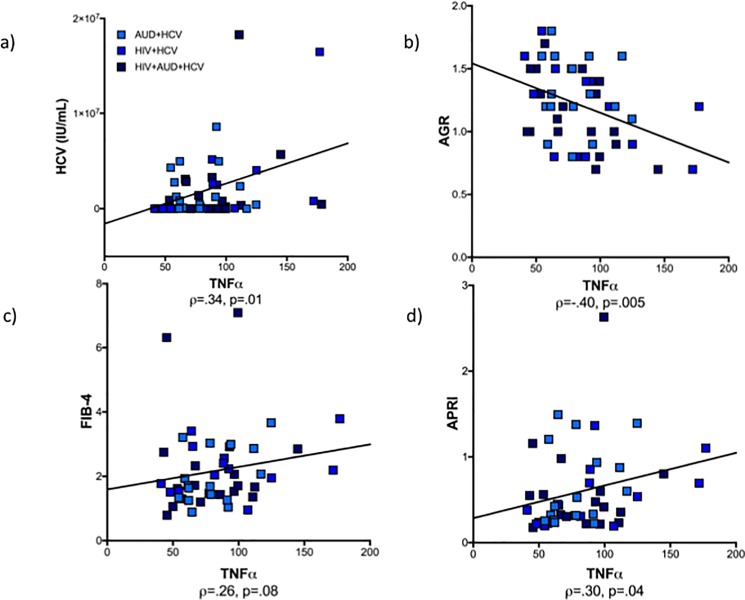
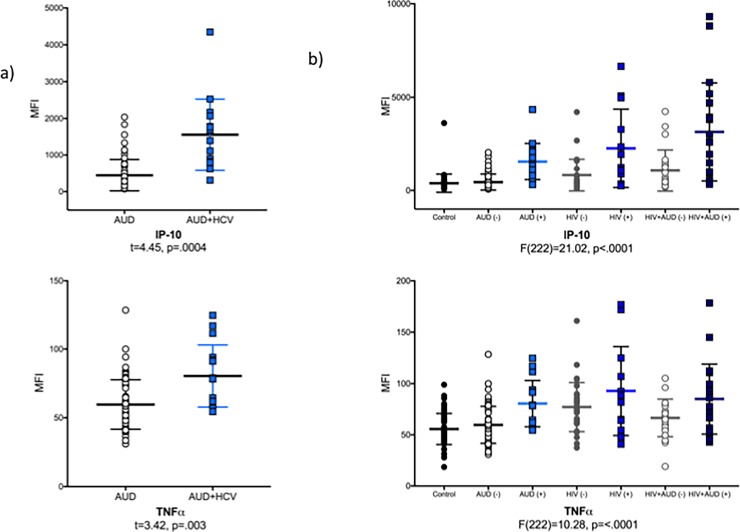
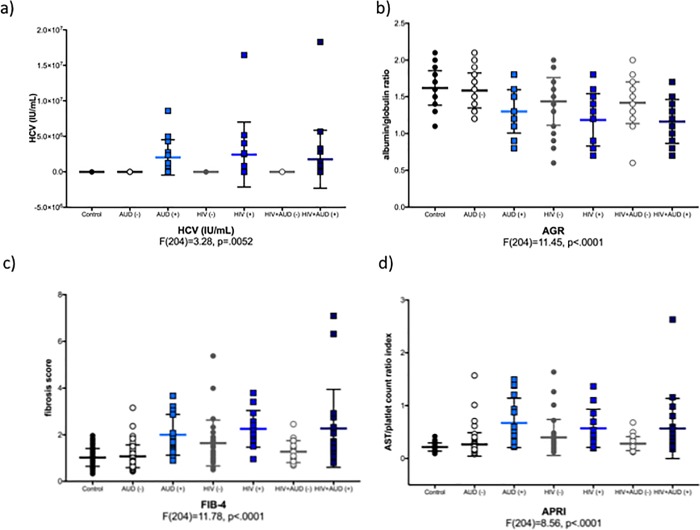
Substantial evidence supports the view that inflammatory processes contribute to brain alterations in HIV infection. Mechanisms recently proposed to underlie neuropathology in Alcohol Use Disorder (AUD) include elevations in peripheral cytokines that sensitize the brain to the damaging effects of alcohol. This study included 4 groups: healthy controls, individuals with AUD (abstinent from alcohol at examination), those infected with HIV, and those comorbid for HIV and AUD. The aim was to determine whether inflammatory cytokines are elevated in AUD as they are in HIV infection. Cytokines showing group differences included interferon gamma-induced protein 10 (IP-10) and tumor necrosis factor α (TNFα). Follow-up t-tests revealed that TNFα and IP-10 were higher in AUD than controls but only in AUD patients who were seropositive for Hepatitis C virus (HCV). Specificity of TNFα and IP-10 elevations to HCV infection status was provided by correlations between cytokine levels and HCV viral load and indices of liver integrity including albumin/globulin ratio, fibrosis scores, and AST/platelet count ratio. Because TNFα levels were mediated by HCV infection, this study provides no evidence for elevations in peripheral cytokines in "uncomplicated", abstinent alcoholics, independent of liver disease or HCV infection. Nonetheless, these results corroborate evidence for elevations in IP-10 and TNFα in HIV and for IP-10 levels in HIV+HCV co-infection.
大量证据支持这样一种观点,即炎症过程会导致HIV感染中的脑部病变。最近提出的酒精使用障碍(AUD)神经病理学基础机制包括外周细胞因子升高,使大脑对酒精的破坏作用敏感。本研究包括4组:健康对照者、AUD患者(检查时戒酒)、HIV感染者以及HIV和AUD合并感染者。目的是确定AUD中炎症细胞因子是否像在HIV感染中一样升高。显示组间差异的细胞因子包括γ干扰素诱导蛋白10(IP-10)和肿瘤坏死因子α(TNFα)。后续的t检验显示,AUD患者中TNFα和IP-10高于对照组,但仅在丙型肝炎病毒(HCV)血清学阳性的AUD患者中如此。细胞因子水平与HCV病毒载量以及包括白蛋白/球蛋白比值、纤维化评分和AST/血小板计数比值在内的肝脏完整性指标之间的相关性,为TNFα和IP-10升高对HCV感染状态的特异性提供了依据。由于TNFα水平由HCV感染介导,本研究没有提供证据表明在“未合并其他疾病”的戒酒者中,外周细胞因子升高与肝脏疾病或HCV感染无关。尽管如此,这些结果证实了HIV中IP-10和TNFα升高以及HIV+HCV合并感染中IP-10水平升高的证据。