Department of Surgery, University of South Alabama School of Medicine, Mobile, AL; Department of Molecular and Cellular Pharmacology, University of South Alabama School of Medicine, Mobile, AL; Center for Lung Biology, University of South Alabama School of Medicine, Mobile, AL.
Department of Surgery, University of South Alabama School of Medicine, Mobile, AL.
J Am Coll Surg. 2018 Apr;226(4):687-693. doi: 10.1016/j.jamcollsurg.2017.12.051. Epub 2018 Jan 31.
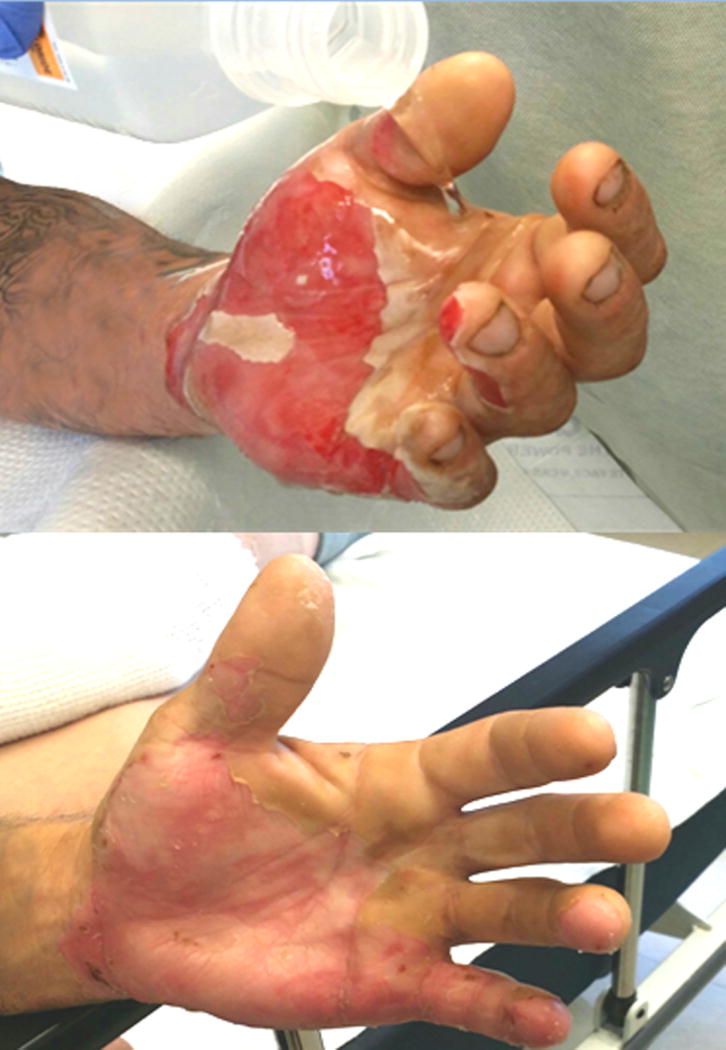
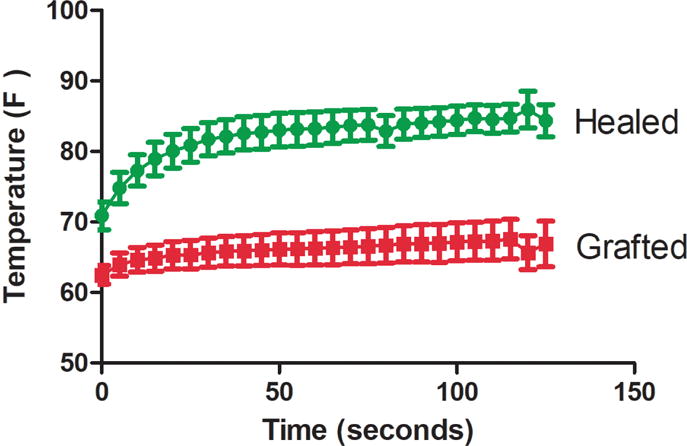
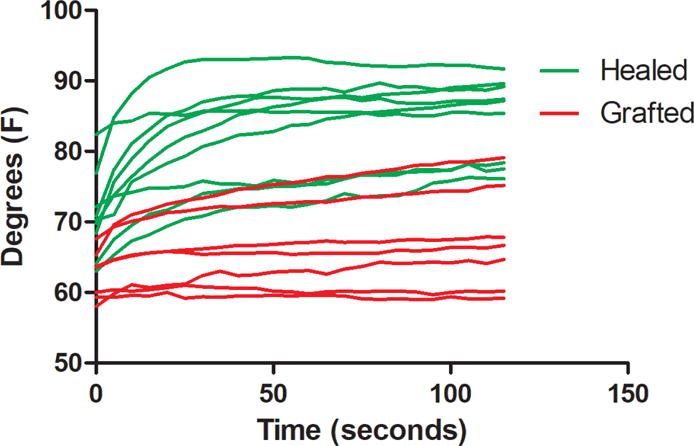
Diagnosing the extremes of superficial burns and full-thickness burns is straightforward. It is in the middle ground of partial-thickness burns where the diagnostic difficulties emerge; it can take up to 3 to 5 days for signs of healing to appear. We hypothesize that cooling partial-thickness burns and tracking the rate of rewarming will immediately reflect the condition of the burn: shallow partial-thickness burns that retain cell health and blood flow will rewarm rapidly, and deeper burns with damaged microvessels will rewarm slowly.
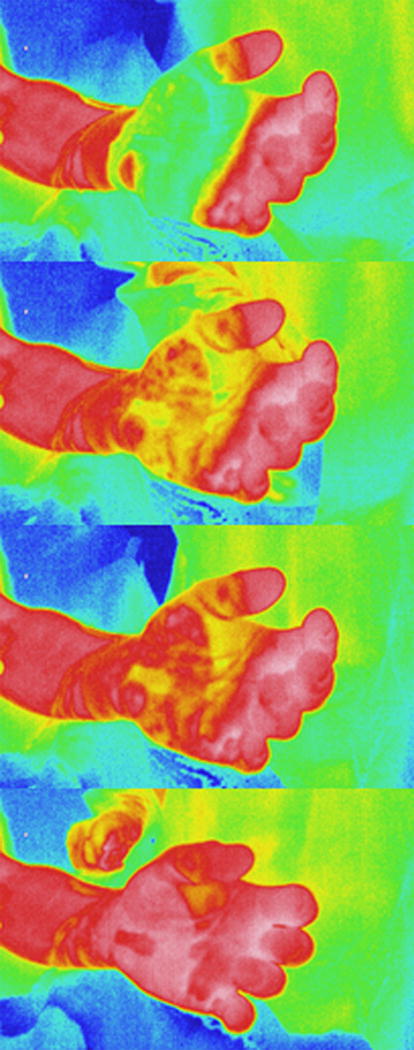
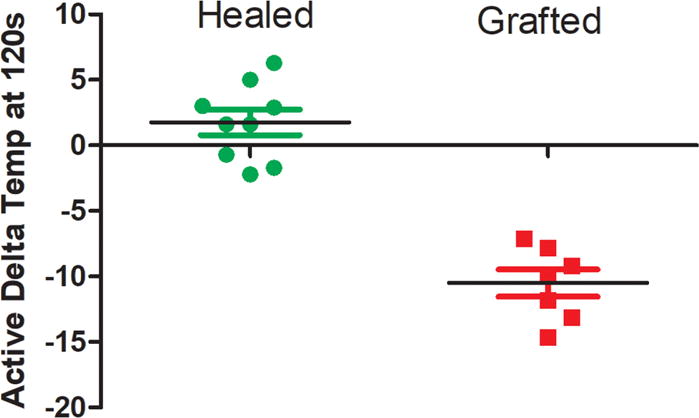
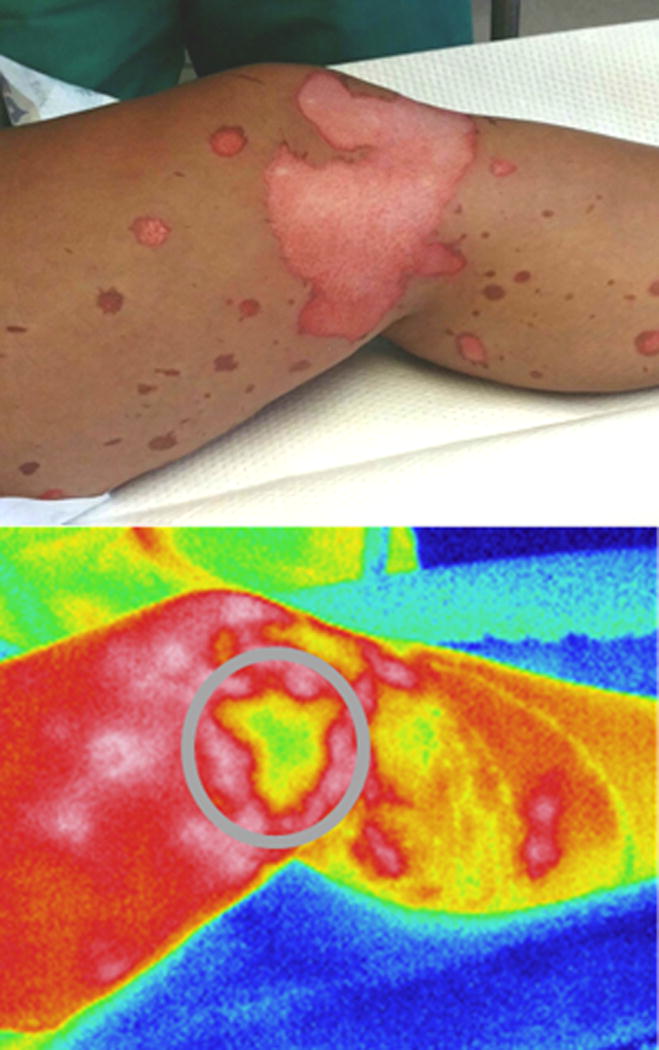
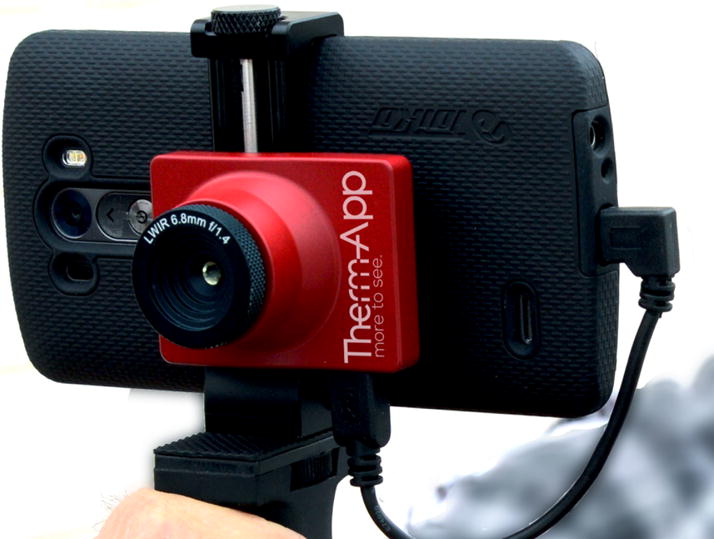
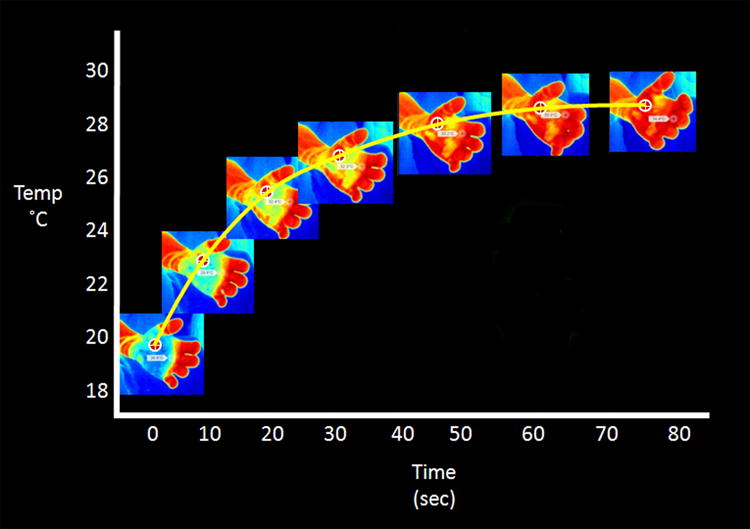
We enrolled 16 patients with isolated, partial-thickness burns on their extremities who were diagnosed as indeterminate by our burn surgeon. Within 24 hours after presentation, room-temperature saline was poured over the burn as a cooling challenge. An infrared camera that was sensitive to body temperature produced false-color images showing pixel-by-pixel temperatures. A time-lapse recording from the infrared camera images taken as the burn rewarmed produced a time-temperature curve that reflected the kinetics of rewarming. The outcomes variable was whether or not the patient received a skin graft, which was determined 72 hours after presentation.
The method correctly predicted whether or not the patient required a skin graft.
Here we report a new technique that permits determination of wound viability much earlier than clinical examination. Due to the simplicity of the method, non-experts can successfully perform the technique on the first day of the burn and make the correct diagnosis and decision to graft or not to graft.
诊断表浅烧伤和全层烧伤很简单。在部分厚度烧伤的中间地带出现了诊断困难;直到出现愈合迹象可能需要 3 到 5 天。我们假设冷却部分厚度烧伤并跟踪复温速度将立即反映烧伤的状况:保持细胞健康和血流的浅部分层烧伤会迅速复温,而血管受损的更深烧伤则会缓慢复温。
我们招募了 16 名患有孤立性肢体部分厚度烧伤的患者,这些患者被我们的烧伤外科医生诊断为不确定。在出现后 24 小时内,室温生理盐水倒在烧伤处作为冷却挑战。对体温敏感的红外摄像机产生假彩色图像,显示像素级别的温度。从红外摄像机拍摄的烧伤复温的延时记录产生了一个时间-温度曲线,反映了复温的动力学。结局变量是患者是否需要植皮,这是在出现后 72 小时确定的。
该方法正确预测了患者是否需要植皮。
在这里,我们报告了一种新的技术,可以比临床检查更早地确定伤口的存活能力。由于该方法简单,非专家可以在烧伤的第一天成功地进行该技术,并做出正确的诊断和是否植皮的决定。